


Mid Century Landscape Art
Mid century landscape art captures views of rivers, coasts and towns through the brush and lens of mid-century makers.
Mid Century Landscape Art
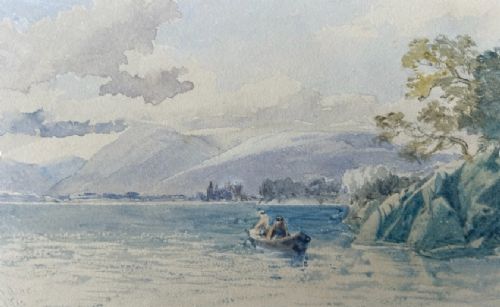
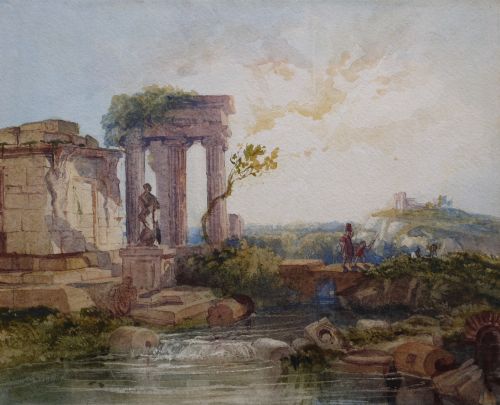
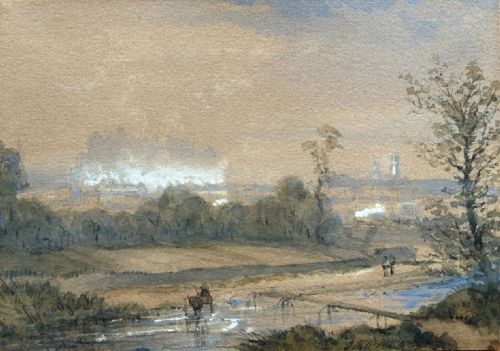
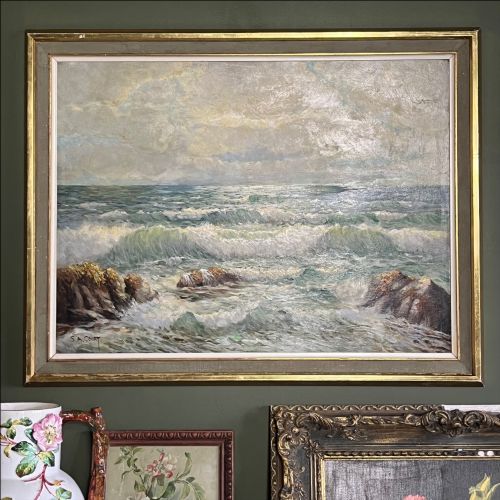
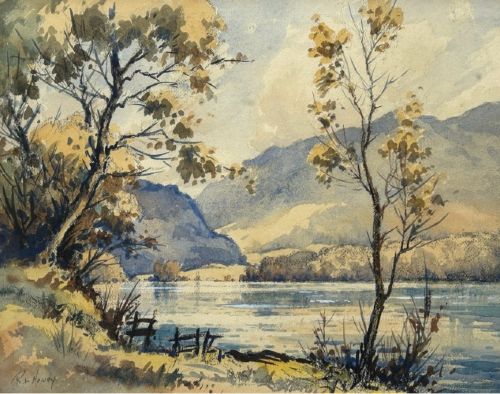
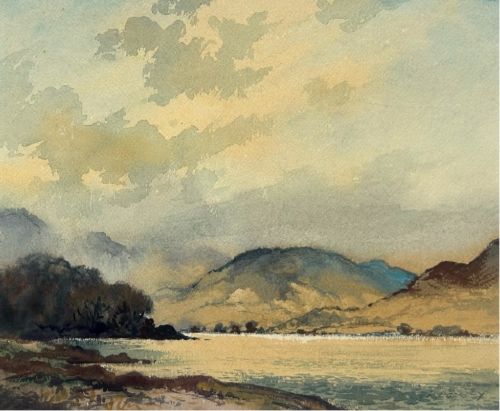
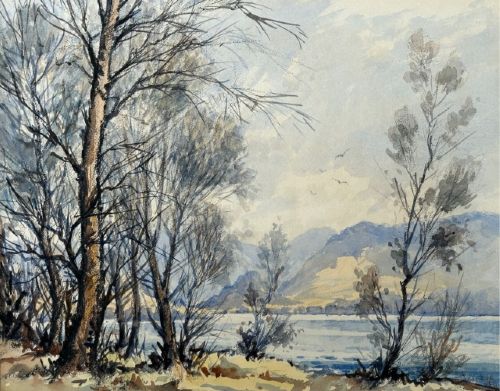
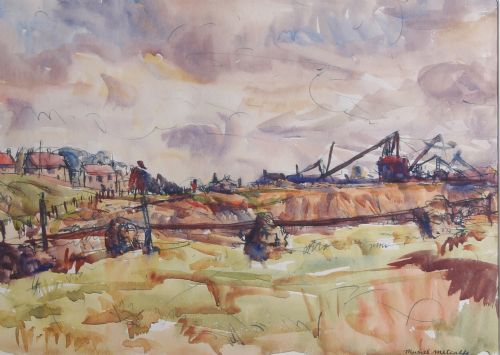
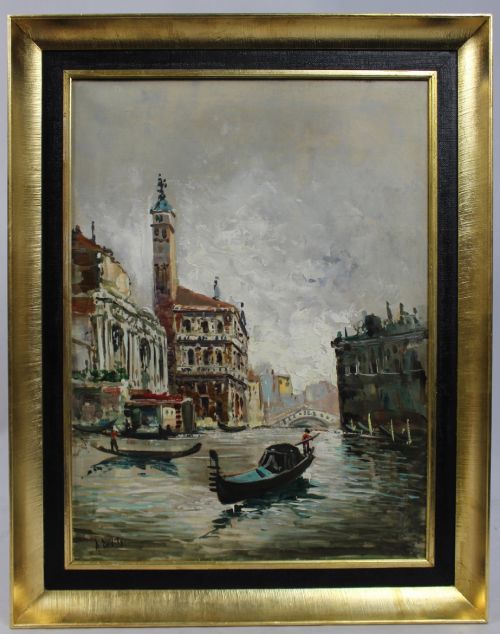
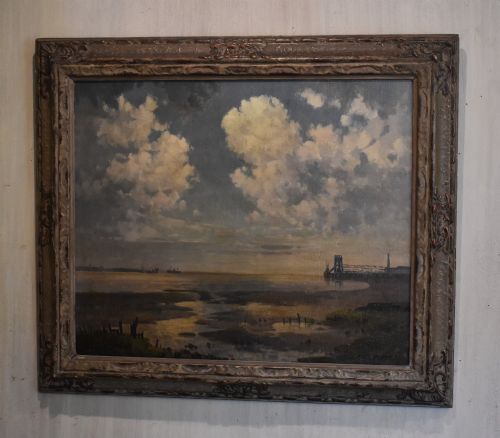
Mid century landscape art encompasses paintings, watercolours and prints focused on scenery, towns and coastal views. The versions most commonly met on this page date from the middle decades of the twentieth century, alongside select pieces from the nineteenth century. Makers capture subjects ranging from Scottish lochs and Yorkshire dales to French rivers and Italian canals.
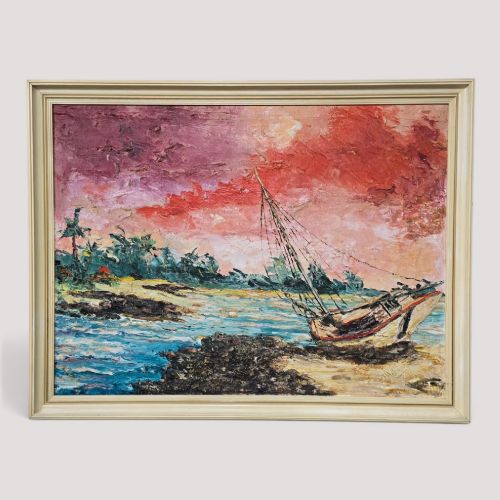
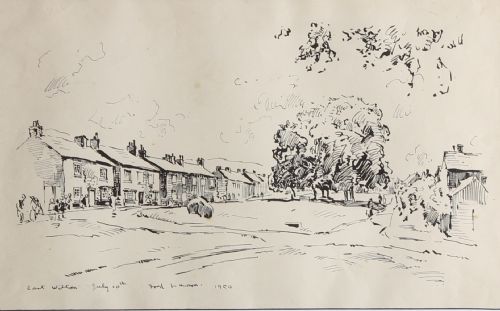
Works appear in formats such as oil paintings on canvas and board, delicate watercolours, ink drawings and lithographic prints. These pieces reflect movements including Post-Impressionism, Modern British and twentieth-century realism. Buyers find works framed in original settings or mounted on paper and board ready for display.
Materials and construction
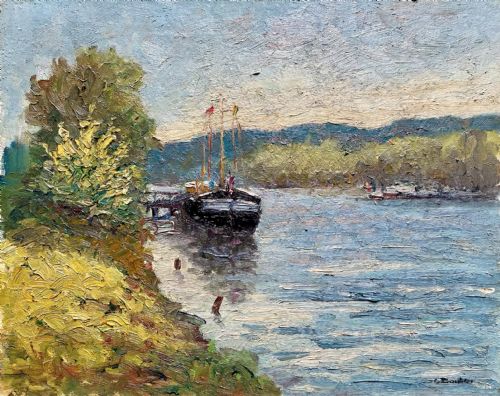
Artists painted primarily with oil paint and watercolour, applying pigments to surfaces of stretched canvas, prepared wood board, heavy paper and card. Oil paint allows for textured impasto layers and rich depth, whereas watercolour offers translucent washes applied en plein air or finished in the studio.
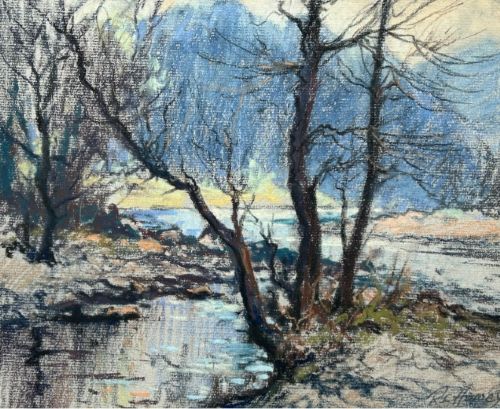
Works on paper incorporate ink and pastel drawing mediums, sometimes combined as mixed media. Lithographs and woodblock prints utilise inked matrices pressed onto paper to replicate graphic compositions.
Mid Century Landscape Art Retail Price Guide 2026
Typical asking prices for mid century landscape art among the pieces listed under this phrase on Sellingantiques today, from the lower quarter to the upper quarter. They describe what is for sale here now, not the wider market.
Look closely for stray brush hairs left behind by artists working quickly outdoors.
Markers of quality
Quality rests upon the confidence of the brushwork and the clarity of the composition. Skilled handling of light and pigment gives depth to a scene, whereas weaker works lack tonal balance and spatial definition.
The choice of support and framing affects preservation. Stable boards and canvases paired with artist-grade pigments retain their visual impact over decades, while inferior materials show surface cracking or discoloration.
Kenneth Cozens·Thomas Miles Richardson Jnr·Richard Principal Leitch·John R Prentice·Donald Grant·Sidney A Court·Robert Leslie Howey·Muriel Metcalfe·Fred Lawson·Antonio DeVity·Clive Browne·Peter Brannan·Paul Bret·James Fry·Cyril Walduck Edwards·Eric Brown·Willem Bos·Christine Nesbit·Donald McIntyre·L De Gent·Erich Mercker·Henry de Waroquier·Stuart Walton·Lilian Colbourn·Ronald Ossory Dunlop
The Mid Century Landscape Art Glossary
- Oil paint
- A slow-drying paint made by mixing pigments with oils such as linseed. This medium allows artists to build up thick textures and rich colour tones.
- Watercolour
- A paint consisting of water-soluble pigments applied in translucent washes. It provides a luminous quality well suited to outdoor landscape sketching.
- Impasto
- Paint applied thickly to a canvas or board so that the strokes stand out from the surface. This technique adds tactile dimension to the visual scene.
- En plein air
- The practice of painting outdoors directly from nature. Artists use this approach to capture shifting light and atmospheric conditions firsthand.
- Lithograph
- A print produced from a flat stone or metal plate treated to retain ink in image areas. It enables the reproduction of detailed graphic compositions.
Mid Century Landscape Art: Frequently Asked Questions
What periods do these paintings cover?
The selection spans multiple decades, with a strong concentration of pieces created around the middle years of the twentieth century. Examples also reach back through the Victorian era and the nineteenth century.
Buyers encounter works from distinct movements such as Post-Impressionism and twentieth-century realism alongside contemporary modern British styles.
How should I care for watercolour art?
Watercolour paintings and works on paper require protection from direct sunlight to prevent fading of the pigments. Framing behind glass with acid-free mounts preserves the paper from environmental degradation.
Keep these pieces in rooms with stable humidity levels to avoid warping or moisture damage to the paper support.
Are these works signed by the artists?
Many pieces feature visible signatures, monograms or studio stamps left by the makers. Signatures often appear in the lower corners of the painted surface or within the margins of works on paper.
Unsigned works are attributed based on stylistic characteristics, subject matter and recorded provenance matching known artists of the period.
What subjects appear in these landscapes?
The imagery records coastal views, lakes, rivers, harbours and rural countryside scenes. Urban settings such as townscapes, street scenes and canal views also feature prominently across the works.
Locations range across British sites in Cumbria, Yorkshire and Scotland alongside continental European views in France, Italy and the Netherlands.