


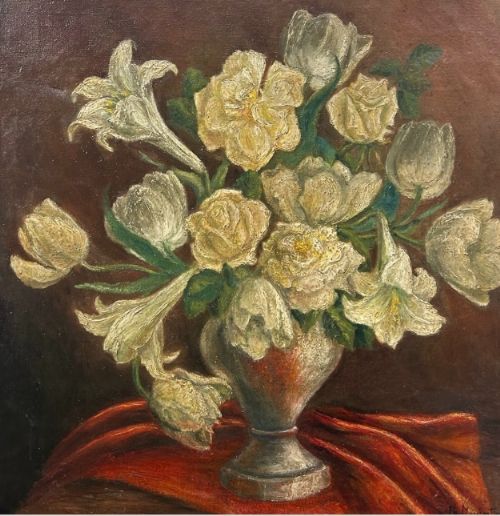


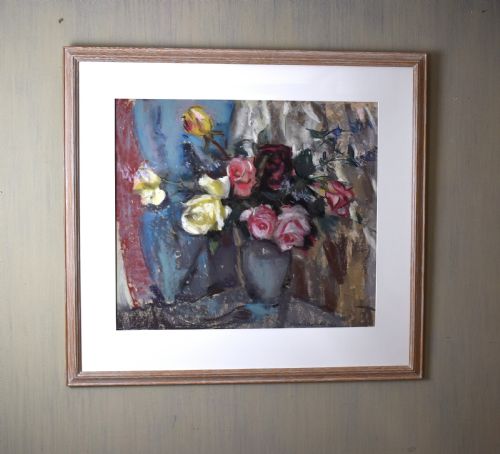


Mid Century Floral Picture
A mid century floral picture brings mid-century modern character and botanical colour into a room through original paint and textile work.
Mid Century Floral Picture
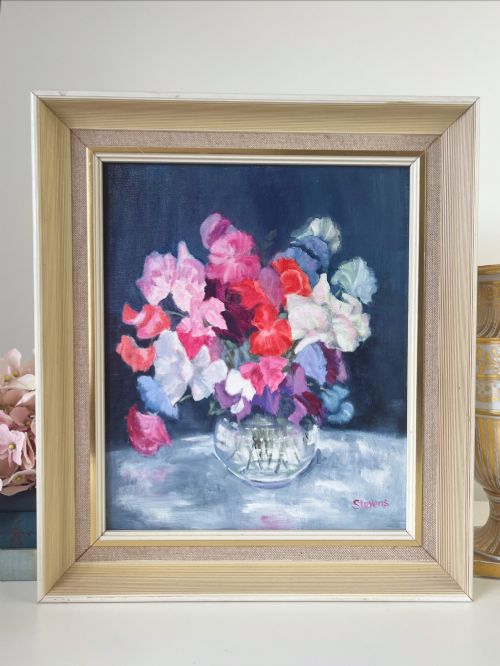
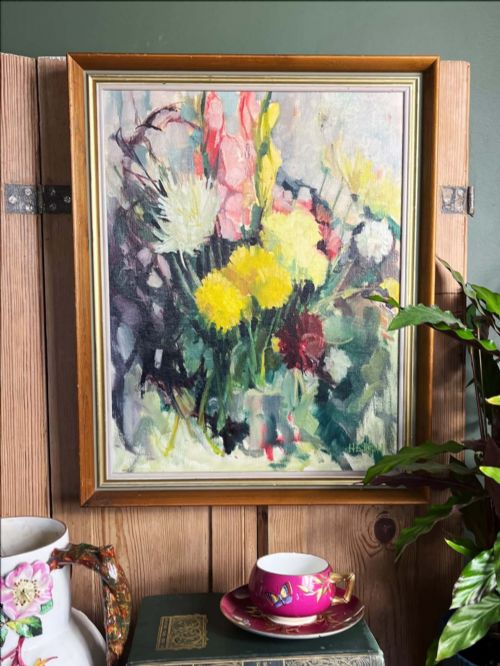
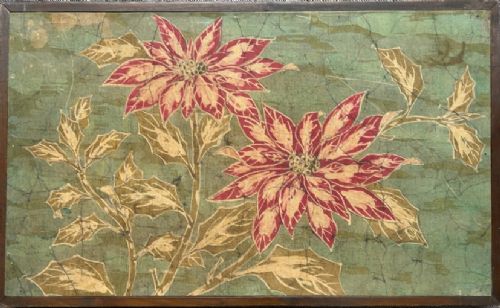
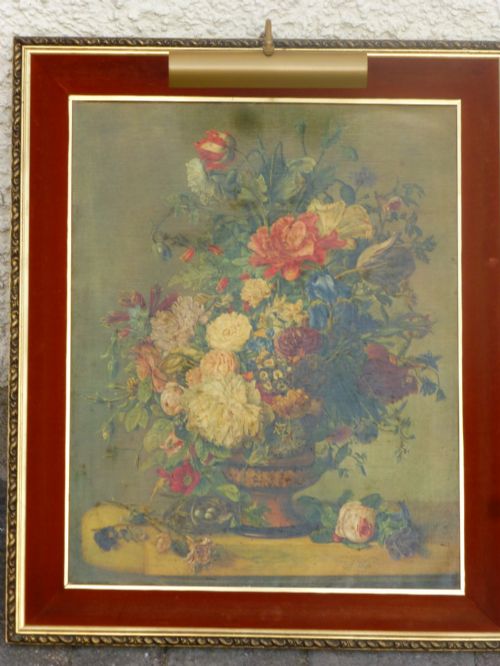
A mid century floral picture encompasses wall art produced across the nineteen-forties, nineteen-fifties, and nineteen-sixties in styles ranging from traditional still life to impressionism. Buyers encounter diverse subjects such as gladioli in jugs, white lilies, orchids, and poinsettia panels created during this vibrant era of design.
The objects on this page take the form of framed paintings, watercolour paintings, and textile art panels intended for wall display. These pieces capture floral displays through the specific artistic lenses of mid-century modern British, Belgian impressionist, and Dutch golden age traditions.
Most examples originate from the mid-century period, reflecting the materials and artistic techniques favoured by artists working between nineteen-forties and nineteen-sixties. The selection offers various scales, from large canvas paintings to delicate watercolour studies on paper.
Materials and methods
Artists painted these works using oil paint, watercolour, gouache, tempera, and pastel applied to supports including canvas, wood, board, and paper. Some pieces incorporate mixed media and batik textile techniques on fabric panels to achieve their floral imagery.
Frames frequently complement the artworks, utilising wood and gilt finishes to present the paintings. The combination of traditional drawing and painting materials with mid-century framing defines the physical presence of these pieces.
Gladioli, lilies, roses, orchids, and cockscomb flowers bloom endlessly across these mid-century walls without needing a single drop of water.
Factors of quality
Quality in a mid century floral picture rests upon the execution of the brushwork, the handling of the chosen medium such as oil or watercolour, and the compositional strength of the floral arrangement. Works by documented artists demonstrate distinct technical assurance in capturing light and colour within the still life genre.
The condition of the painted surface, paper, or textile panel, alongside the preservation of the original framing, distinguishes superior examples. Stronger pieces display confident application and clear provenance associated with named painters and textile artists of the period.
Anton Weiss·James Tower·Amile Coppieters·Robin MacKertich·Stuart Armfield·Margaret Laing·Phyllis I Hibbert·Lena M Alexander
The Mid Century Floral Picture Glossary
- Oil paint
- A slow-drying paint made from pigment suspended in a drying oil, commonly linseed. It allows for rich colour depth and textured application on canvas or board.
- Watercolour
- A painting method in which the paints are made of pigments suspended in a water-based solution. It produces translucent washes on paper supports.
- Gouache
- An opaque water-based paint consisting of pigment, water, and a binding agent such as gum arabic. It provides solid, flat areas of colour in botanical studies.
- Batik
- A wax-resist dyeing technique applied on whole cloth. This method creates patterned textile art panels with distinct linear qualities.
- Tempera
- A permanent, fast-drying painting medium consisting of coloured pigment mixed with a water-soluble binder medium. It yields a matte surface finish.
Mid Century Floral Picture: Frequently Asked Questions
How do I date a mid century floral picture?
Dating relies on stylistic clues, framing materials, and documentation linked to the specific artist or period between nineteen-forties and nineteen-sixties.
Examining the backing boards, signatures, and medium helps place the work accurately within its decade of creation.
What is the difference between oil and watercolour floral works?
Oil works utilise pigment in drying oil on canvas or board, offering heavy texture and rich colour saturation.
Watercolour pieces employ water-soluble pigments on paper, resulting in lighter, translucent botanical representations.
Where should I hang a floral art panel?
These framed pictures suit living spaces, dining rooms, or hallways where wall space allows adequate viewing distance.
Direct sunlight should be avoided to protect sensitive watercolours, gouaches, and textile batik panels from fading over time.
How do I care for a textile batik floral piece?
Textile art requires stable indoor humidity and protection from prolonged direct exposure to bright sunlight.
Keeping the glazed frame clean with a soft cloth preserves both the fabric panel and its wooden housing.