



Pink Floral Wall Art
Pink floral wall art spans delicate 19th-century botanical watercolours and bold mid-century oils, bringing botanical life and colour to an interior.
Pink Floral Wall Art
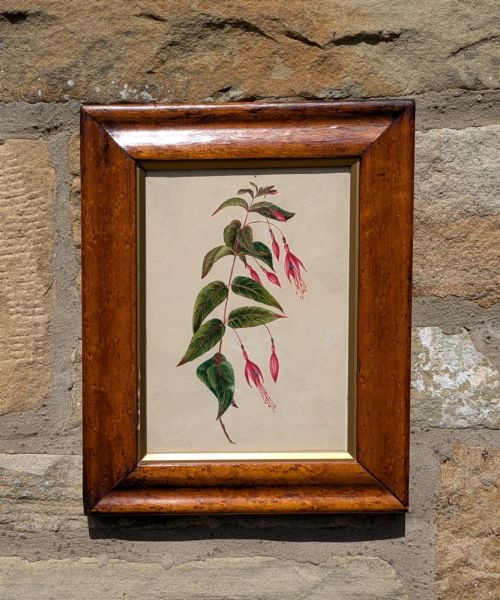
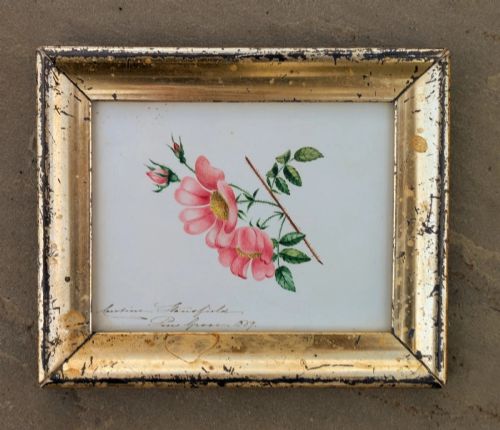
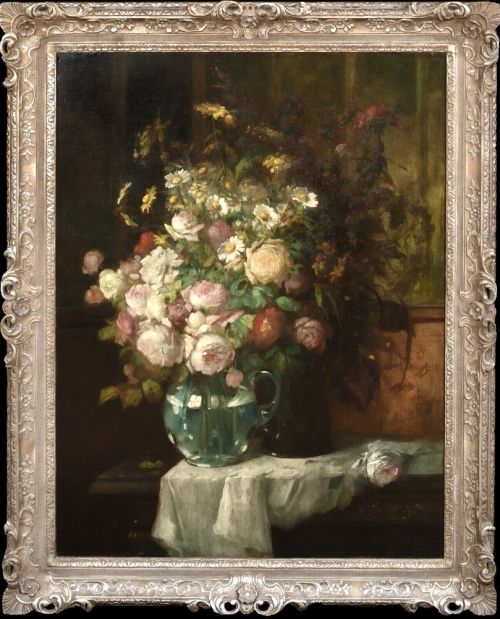
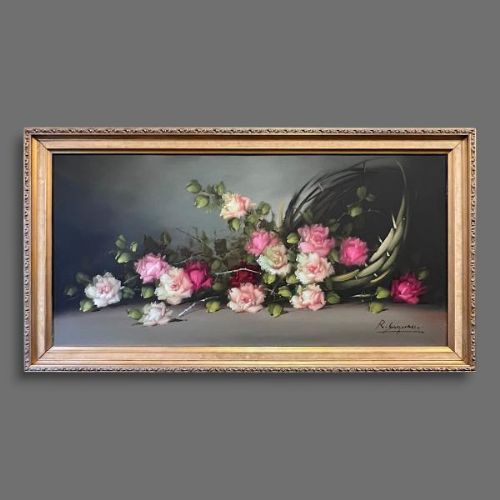
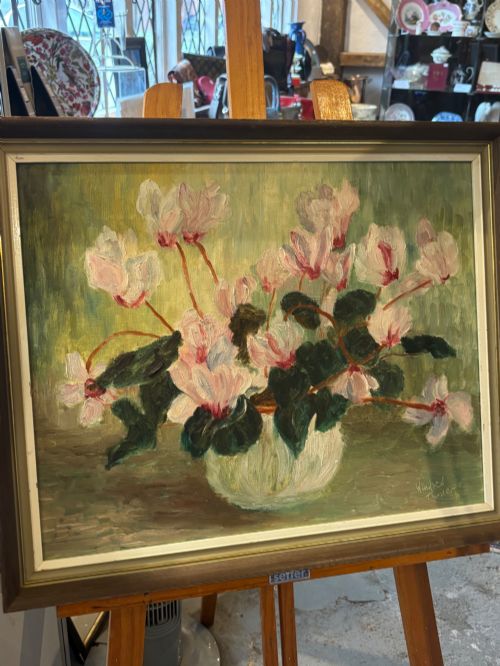
When you search for pink floral wall art, you encounter a varied selection of botanical studies, still life oil paintings, and woven textiles created across multiple centuries. The selection ranges from Victorian watercolour studies of roses and pelargoniums to mid-century modernist compositions and large French tapestries.
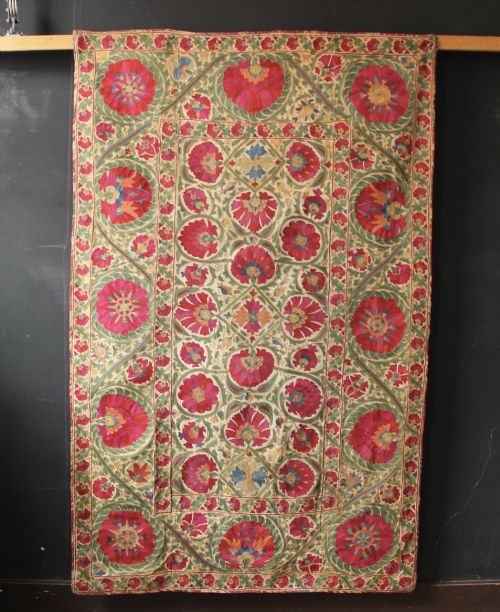
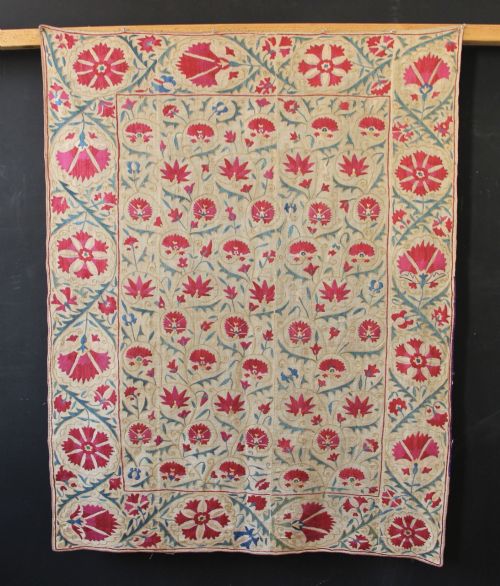
The material forms on this page include watercolours on paper, oil paintings on canvas or board, hand-coloured engravings, and embroidered textiles such as Central Asian suzanis. These works capture floral subjects from English garden scenes to stylised French compositions and botanical illustrations.
Materials and techniques
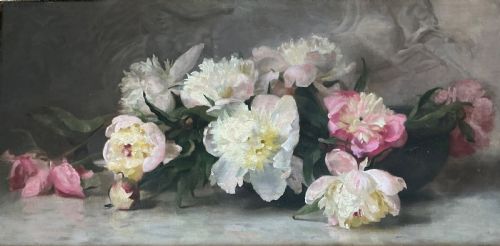
The works utilise traditional media such as watercolour, oil paint, tempera, and gouache applied to paper, canvas, or wood board. Watercolour pieces often employ fine washes to delineate petals and leaves, while oil paintings build up rich textures on canvas or board to depict roses, peonies, and garden scenes.
Textile pieces on this page involve woven techniques, including hand-woven tapestries on wool and cotton, alongside intricate embroidery on velvet and cotton fabrics. Engravings employ hand-colouring applied over printed botanical plates.
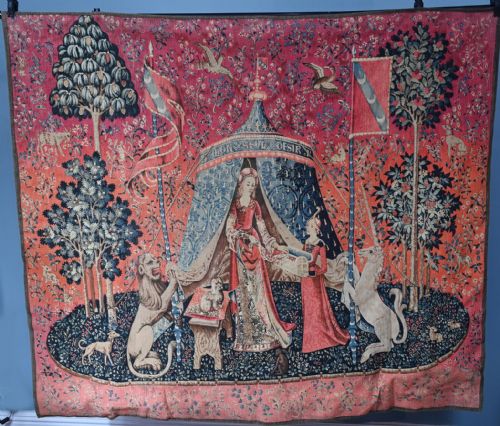
Among the blooms are depictions of cockscomb flowers and unicorns, proving that antique walls have accommodated both botany and myth.
What varies in quality
The distinction between standard decorative works and finer pieces rests upon the surety of the brushwork, the depth of composition, and the handling of light within the floral arrangement. Master watercolourists and established painters capture botanical accuracy alongside fluid painterly gesture, whereas lesser pieces remain stiff or formulaic.
Preservation also marks the upper tier of the range, where paper surfaces remain free from heavy foxing and canvas supports display stable paint layers without excessive craquelure. Textiles retain their original density of weave and colour saturation without major losses to the embroidered threads.
Konstantin Stoitzner·Winifred Turner·Ernest Higgins Rigg·Lilian Stannard·William Hough·Freda Marston·Stuart Armfield·Jabez Bligh·Henry Schouten·Marion Broom·Annie Mary Youngman·William Thomas Wood·Edith Alice Andrews·Helen Cordelia Angell·Wiliam Stephen Coleman·Jules Felix Ragot
The Pink Floral Wall Art Glossary
- Watercolour
- A painting method where fine pigments are suspended in a water-based, solution for use on paper. This technique allows for translucent washes that suit botanical illustration.
- Suzani
- A type of embroidered and decorative tribal textile produced in Central Asia. These large wall hangings often feature bold floral motifs.
- Still life
- An artwork depicting inanimate subject matter, typically commonplace objects such as vases of cut flowers, fruit, and vessels. It tests the artist's ability to render light, form, and texture.
- Impressionism
- A 19th-century art movement characterised by relatively small, thin, yet visible brush strokes and an emphasis on accurate depiction of light. The style often translates outdoor garden scenes onto canvas.
Pink Floral Wall Art: Frequently Asked Questions
What subjects do these artworks show?
The pieces predominantly depict botanical subjects, including roses, pelargoniums, sweet williams, orchids, and peach blossom arranged in vases, jugs, or natural garden settings.
Alongside painted floral studies, the selection incorporates woven tapestries and embroidered textiles featuring elaborate plant and floral motifs.
How were these wall pieces displayed historically?
Smaller watercolours and botanical engravings were typically framed and hung in private sitting rooms, libraries, or bedrooms as study pieces and decorative accents.
Larger oil paintings and heavy woven tapestries occupied prominent positions on principal reception room walls to add warmth and colour to domestic interiors.
How do I care for antique works on paper?
Works executed on paper, such as watercolours and engravings, require protection from direct sunlight to prevent fading of the delicate pink pigments and discolouration of the paper support.
Framing with acid-free mounts and ultraviolet-filtering glass helps preserve the integrity of these sensitive works over time.
How do I distinguish between periods?
Victorian and Edwardian watercolours often display tight botanical precision and soft, muted colour palettes focused on individual flower specimens.
Mid-century paintings and post-war studies tend toward looser brushwork, bolder colour blocking, and broader modernist interpretations of still life arrangements.