




Mid Century Cityscape Painting
A mid century cityscape painting captures the urban energy of Paris, Venice, and London through textured brushwork and atmospheric light.
Mid Century Cityscape Painting
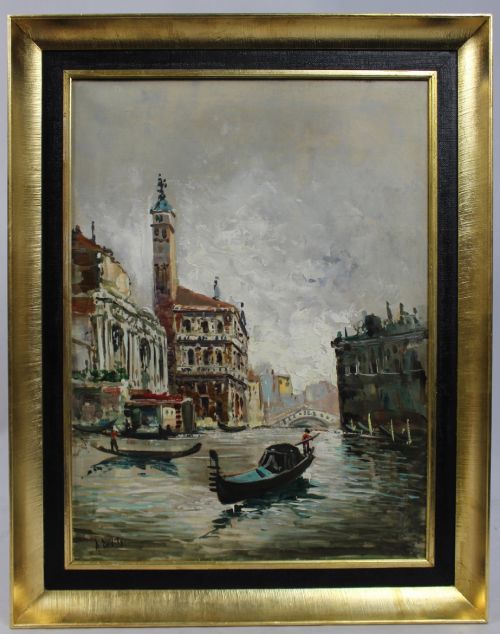
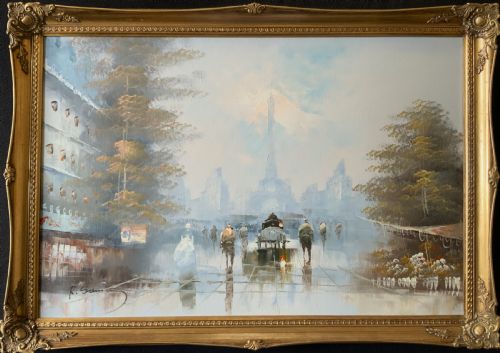
When you search for a mid century cityscape painting, you encounter works spanning the decades from the nineteen twenties to the nineteen sixties. These pieces frequently depict urban scenes, Parisian streets, Venetian canals, and river views rendered in various twentieth-century artistic movements.
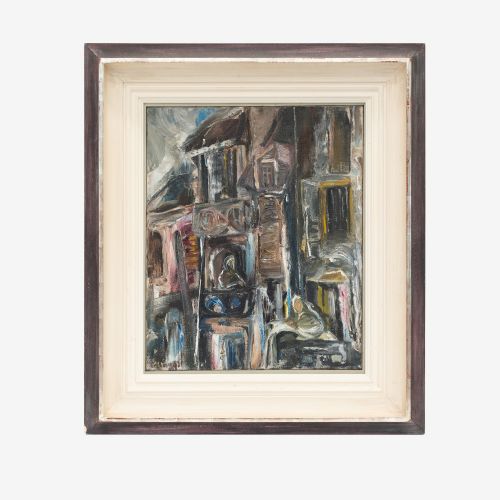
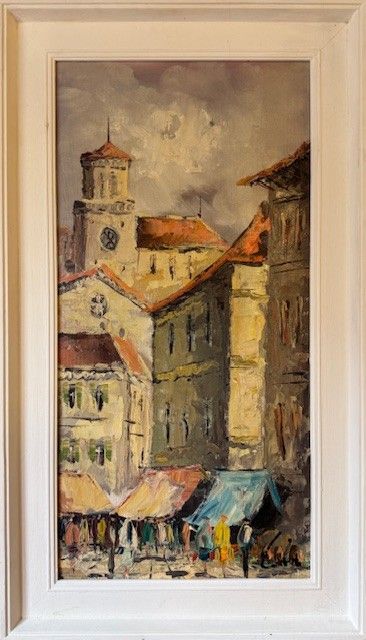
The selection on this page centres on framed artworks created with oil paint on canvas or board, alongside occasional watercolours. Subjects range from specific locations like the Eiffel Tower and Notre Dame to abstract architectural compositions and market squares.
Most examples originate from European artists working within impressionist, expressionist, and modernist traditions. You find both signed works by known painters and atmospheric compositions by anonymous hands.
How they were made
Artists built these compositions primarily using oil paint applied to canvas or board supports, sometimes incorporating thick impasto layers to create physical texture on the surface. Mixed media and watercolour on paper also appear across the selection.
Works are typically housed in wooden frames, frequently finished with gilt or carved details that complement the painterly style. The combination of pigment, canvas, and original framing defines the physical structure of these mid-century pieces.
Several artists captured the exact same Parisian bridges and snowy Montmartre streets decades apart.
What varies in quality
Quality rests in the confidence of the brushwork and the handling of light and perspective within the urban setting. Stronger pieces demonstrate a deliberate command of tone and composition, whether the style leans toward impressionism or abstract expressionism.
The integrity of the canvas and the preservation of the pigment layer influence the overall standard of the artwork. Original frames that suit the period and scale of the painting also contribute to the success of the piece.
Antonio DeVity·Lilian Colbourn·Caroline Burnett·Paul-Jean Anderbouhr·Gabriel Dauchot·Ron Folland·Claude Jousset·Hein Hoppmann·Job de Vogel·Jack Merriott·Emanuele Cappello·Letitia Marion Hamilton·Emerson H Groom
The Mid Century Cityscape Painting Glossary
- Impasto
- Paint applied thickly to a canvas, standing out in relief from the surface. This technique adds tactile depth and catches light across urban elements like buildings and water.
- Gilt wood
- Wood decorated with gold leaf or gold-coloured gilt pigment. This finish frequently appears on the frames enclosing mid-century canvases.
- Impressionism
- An art movement focusing on accurate depiction of light and its shifting qualities. Painters working in this style capture the atmosphere of city streets rather than exact architectural detail.
- Post-Impressionism
- A subsequent artistic development extending impressionist methods while emphasising geometric forms and expressive use of colour. Works in this vein often use bold outlines and distinctive brush marks.
- Board
- A rigid wooden or fibrous panel used as a painting support instead of stretched canvas. Artists frequently employed this material for smaller townscape studies.
Mid Century Cityscape Painting: Frequently Asked Questions
What subjects do these paintings show?
The artworks depict urban views, including Parisian boulevards, Venetian canals, bridges, and river scenes.
Compositions range from recognisable landmarks like the Eiffel Tower to abstracted townscapes and quiet winter rooftops.
How should I hang a mid century cityscape painting?
These works suit various interior settings, often serving as focal points above mantelpieces or within living spaces.
Ensure the painting is displayed away from direct sunlight and damp conditions to protect the oil paint and canvas.
What materials were used by these artists?
Painters primarily utilised oil paint on stretched canvas or wooden board supports.
Watercolour and mixed media on paper also feature, alongside traditional wooden and gilt frames.
How do I identify the period of the artwork?
Dates are often indicated by the stylistic conventions of mid-century impressionism, expressionism, and modernist abstraction.
Signatures, artist biographies, and framing materials provide further context for dating individual pieces.