


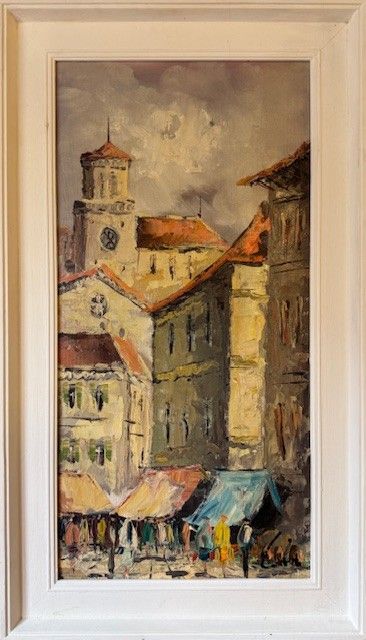


Framed Original Cityscape
A framed original cityscape captures the stone, water, and movement of urban life through the direct hand of an artist.
Framed Original Cityscape
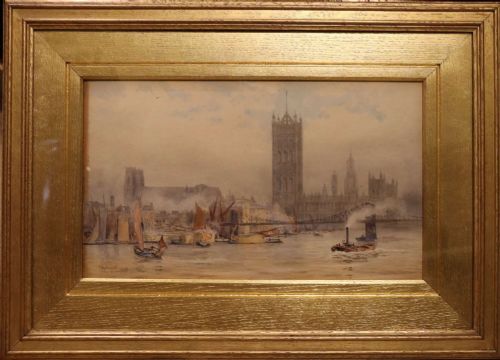
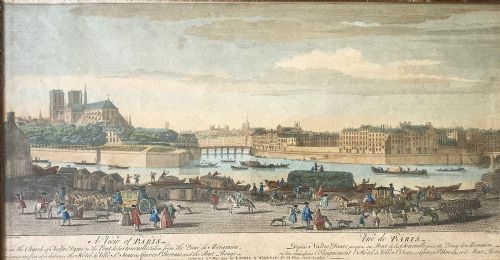
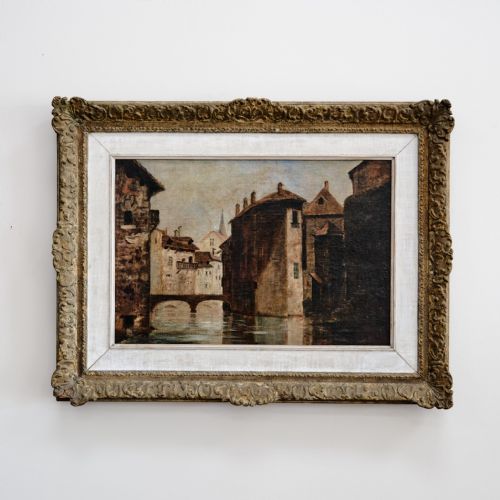
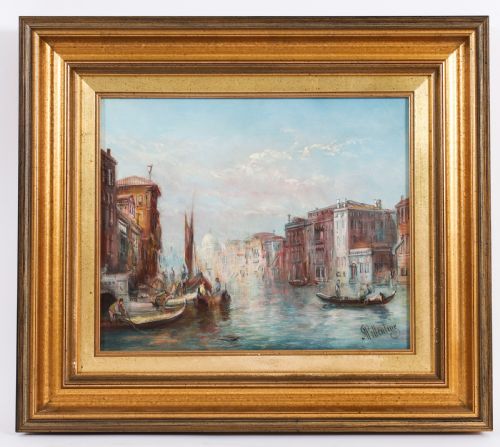
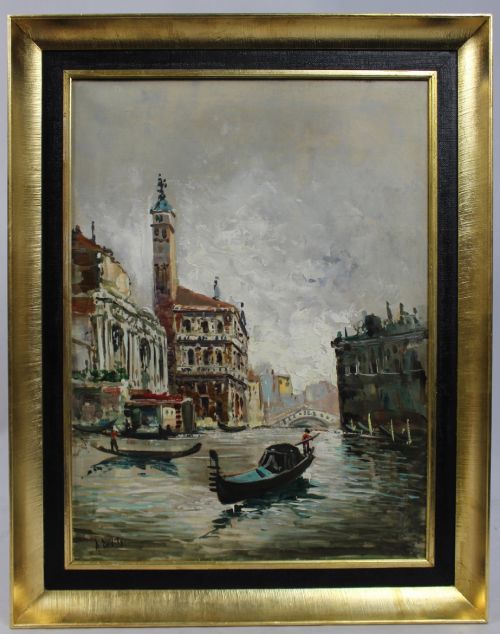
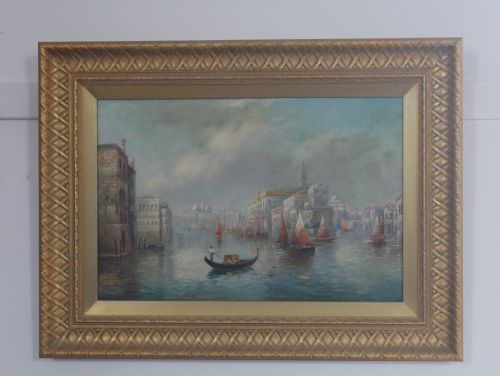
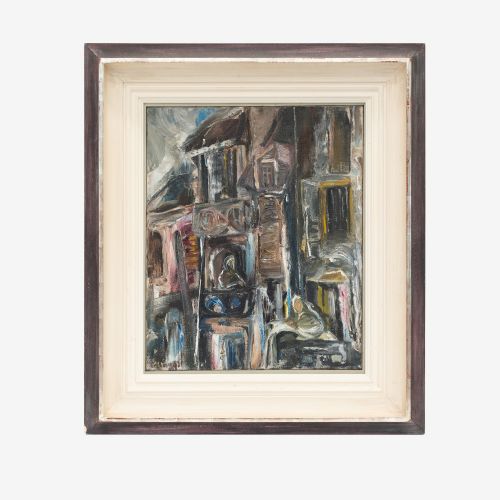
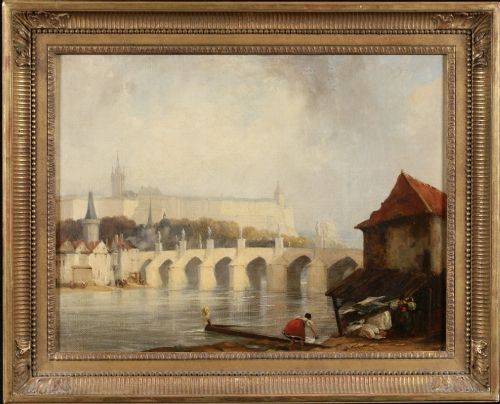
A framed original cityscape brings historical urban views, bustling streets, and architectural landmarks directly into an interior space through hand-painted or hand-drawn media. When searching for a framed original cityscape, a buyer encounters works ranging from detailed nineteenth-century watercolours of river bridges to mid-century impressionist oils of continental market squares and canals.
How they were made
Artists painted these urban views using oil paint or watercolour applied to canvas, paper, wood, or board. Oil on canvas allowed for rich textures, impasto application, and layered depth, while watercolour on paper offered swift, translucent washes to capture shifting light on stone and water.
The supporting frames are constructed from wood or giltwood, serving to protect the paper or canvas while completing the presentation of the wall art. Hand colouring occasionally enhances engravings or works on paper, adding specific tonal depth to architectural details.
Urban subjects on this page include Paris, Venice, London, Prague, and Ghent.
What varies in quality
The distinction between ordinary and superior works lies in the confidence of the brushwork and the artist's command of perspective and light. Stronger compositions handle the complex geometries of buildings, bridges, and waterways with assured tonal contrast rather than rigid, mechanical lines.
The harmony between the artwork and its original frame also influences overall merit. Pieces that retain their period wood or giltwood frames maintain a more unified historical character than those housed in mismatched modern surrounds.
H Medlycott·Alfred Pollentine·Antonio DeVity·Lilian Colbourn·Paul-Jean Anderbouhr·Fred Lawson·Ron Folland·Cornelis Christian Dommersen·E A Minardo·Claude Jousset·Frederick Tully Lott·Lewis J Wood·William Raymond Dommersen·George Whyatt·Antoine Bouvard Senior·Vittore Zanetti Zilla·Job de Vogel·David Law
The Framed Original Cityscape Glossary
- Impasto
- Paint applied thickly to a canvas or board, leaving visible brush or palette knife marks that give physical texture to the surface. This technique is frequently seen in mid-century expressionist and impressionist urban views.
- Giltwood
- Wood carved and coated with a thin layer of gold leaf or gilt finish, commonly used for nineteenth-century and early twentieth-century picture frames.
- Watercolour
- A paint consisting of pigment suspended in a water-based solution, applied to paper to create transparent washes of colour.
- Post-Impressionism
- An art style developing from impressionism that focuses on symbolic motifs and expressive use of colour rather than purely optical recording.
- Gouache
- An opaque water-based paint that dries to a matte finish, sometimes combined with watercolour in works on paper.
Framed Original Cityscape: Frequently Asked Questions
How do I date a cityscape painting?
Dating relies on stylistic clues, costume of any figures depicted, architectural changes in the shown city, and materials such as canvas preparation or framing style. Signatures and exhibition labels on the reverse also provide firm chronological markers.
Comparing the handling of light and pigment to documented works from specific periods helps narrow the decade of creation.
Where were these cityscapes displayed historically?
These works hung primarily in domestic drawing rooms, parlours, and studies of Victorian and twentieth-century homes. They served as keepsakes of grand tours or reflections of familiar local streets.
Collectors and urban residents prized them for bringing the atmosphere of distant capitals or home cities indoors.
How do I choose a frame for an old cityscape?
The choice depends on matching the period and aesthetic weight of the painting. Nineteenth-century oils typically suit heavy giltwood mouldings, while watercolours require mounts and simpler wooden frames under glass.
Preserving an original frame maintains the historical integrity of the piece.
What is the difference between an oil and a watercolour cityscape?
Oils offer rich textures, heavier paint layers, and greater durability on canvas or board. Watercolours provide delicate transparency and luminous paper grounds.
Oils were suited to grand interior display, while watercolours often recorded rapid plein-air impressions.