




Impressionist Urban Landscape
Impressionist urban landscape works capture the movement and light of city streets, offering a vivid window into daily life through loose brushwork.
Impressionist Urban Landscape
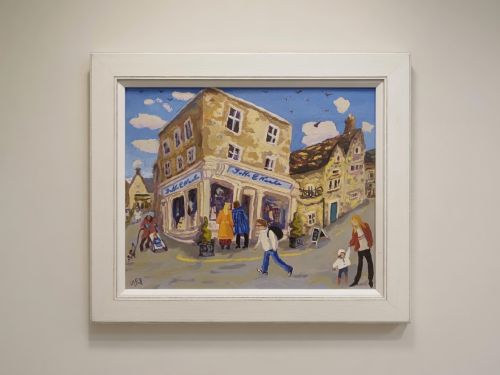
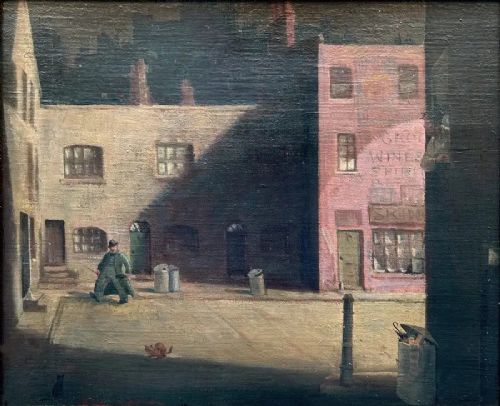
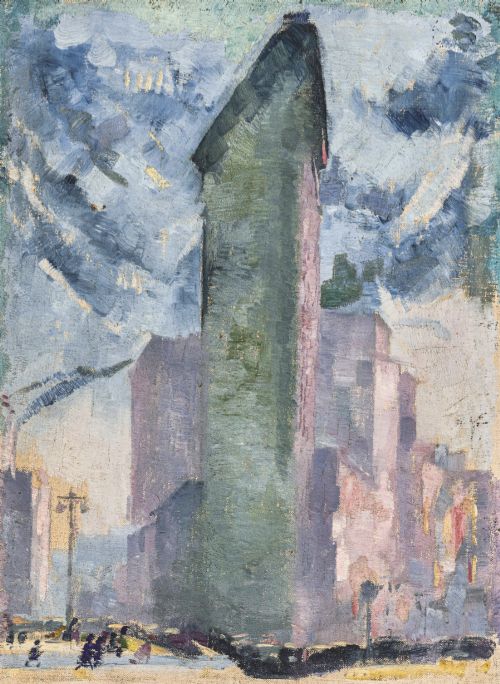
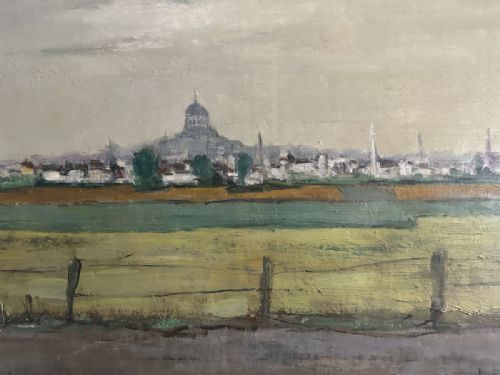
An impressionist urban landscape captures the movement and light of city streets, rooftops, and bridges through loose brushwork and atmospheric colour. These works focus on public spaces, capturing the energy of metropolitan life rather than rigid architectural precision.
On this page, buyers will most commonly encounter oil paintings on canvas or board, alongside watercolours on paper. The periods span from the nineteenth century through the mid-twentieth century and later, encompassing British Impressionism, Post-Impressionism, and Victorian styles.
The subjects range from specific locations such as London, Paris, and Ghent to broader continental cityscapes and winter rooftops. Artists render figures in motion, bridges, and local landmarks to convey the transient mood of the urban environment.
How they were made
Artists built these scenes primarily using oil paint applied to canvas, wood panels, or boards, which allowed for rich texture and layered tones. The handling of the medium often relies on visible, rapid brushstrokes to suggest light falling on stone and pavement.
Watercolour paint on paper appears frequently, offering a lighter touch for capturing twilight or winter atmospheres. Support materials such as wood and canvas provide the structural base for both delicate sketches and larger finished cityscapes.
Listings span from the 19th century through the mid-20th century, utilising canvas, wood, paper, and oil paint.
What varies in quality
The distinction between works rests on the confidence of the brushwork and the artist's ability to command light and atmosphere within a restricted palette. Stronger examples use paint handling to evoke the temperature of the air and the bustle of the street without relying on laboured detail.
Compositional balance also separates works, as successful pieces guide the eye naturally through streets and bridges while maintaining the spontaneous feel inherent to the style.
Francisco Sancha·Alfred Wolmark·Florence Hess·E A Minardo·Rowland Henry Hill·Matthew Hale
The Impressionist Urban Landscape Glossary
- Canvas
- A heavy woven fabric stretched across a wooden frame to serve as a support for oil paint.
- Watercolour
- A paint consisting of pigment suspended in a water-based solution, typically applied to paper.
- Post-Impressionism
- An art movement extending the limits of impressionism while rejecting its limitations, often emphasising symbolic content and heavier outlines.
- Wood Panel
- A rigid wooden support used by artists as an alternative to canvas for oil paintings.
Impressionist Urban Landscape: Frequently Asked Questions
What defines an impressionist urban landscape?
These works focus on the atmosphere and movement of city environments, utilising visible brushstrokes and atmospheric light rather than photographic precision.
Subjects typically include streets, bridges, rooftops, and public gatherings observed in various weather conditions and times of day.
What materials were used?
Artists painted primarily with oil on canvas, wood panel, or board, building up rich textures and layered colours.
Watercolour paint on paper was also employed to capture lighter atmospheric effects, particularly in smaller sketches and twilight scenes.
How do I date a piece?
Dating relies on stylistic markers, framing methods, and the recorded periods of the specific artists or movements represented.
Signatures, inscriptions on the reverse, and the type of canvas or paper support provide additional chronological clues.
How should I display them?
These paintings suit traditional or modern interiors where adequate wall space allows the brushwork and composition to be viewed from a distance.
Protection from direct sunlight helps preserve the integrity of oil and watercolour pigments over time.