
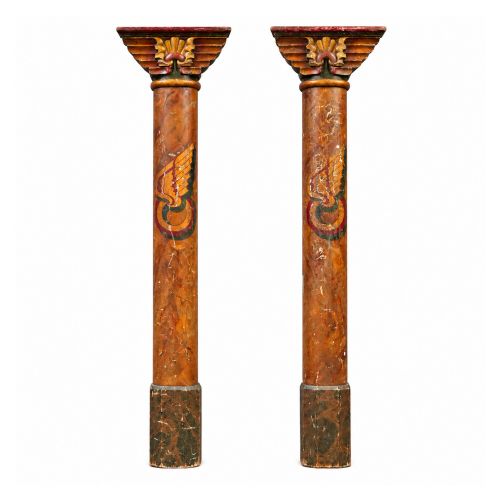

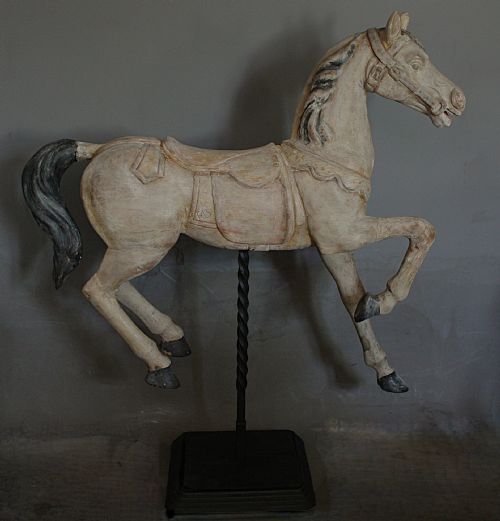


Vintage Fairground Painting
These vintage fairground painting pieces bring bold colour and carnival history directly into domestic spaces.
Vintage Fairground Painting
Most pieces date from the early twentieth century or the nineteenth century, reflecting periods when fairgrounds relied heavily on hand-painted artistry. You are likely to meet carousel panels, game boards, and traditional watercolours depicting scenes from feasts and shows.
The offerings combine folk art traditions with practical entertainment structures, ranging from carousel figures to framed works on paper. These items carry the visual language of historic amusements into modern interiors.
How they were made
Makers utilised paint applied to wood bases, carved wood elements, and paper supports. The primary materials recorded across these items are paint and wood, frequently combined with iron and glass components in architectural panels and mirrors.
Workshops employed traditional techniques of hand carving and direct painting on structural timber and canvas or paper. Artisans decorated carousel figures, ride fragments, and game panels with durable pigments designed to withstand outdoor fairground environments.
Listings span the nineteenth century, the Edwardian period, and the nineteen-twenties through to nineteen-fifty, featuring paint, wood, iron, glass, and paper.
What varies in quality
Quality depends upon the clarity of the brushwork and the expressive power of the hand carving within each wooden fragment or panel. Pieces attributed to specific historic makers or prominent workshops display superior sculptural detail and pigment preservation.
The degree of original surface retention distinguishes standard examples from exceptional survivals. Items retaining their authentic painted decoration without extensive modern overpainting offer greater integrity for collectors.
Florence Hess·Denis William Reed·Sonia Lawson R.A.·Bayol·Limonaire·Gavioli
The Vintage Fairground Painting Glossary
- Carousel panel
- A decorated wooden section removed from a vintage roundabout. These boards often feature pictorial scenes or decorative motifs.
- Ride fragment
- A surviving portion of an amusement park attraction. These pieces demonstrate the robust construction methods required for travelling entertainment structures.
- Watercolour
- A painting method where fine pigment is suspended in a water-based solution. Works in this medium capture lively fairground scenes and regional feasts on paper supports.
Vintage Fairground Painting: Frequently Asked Questions
What periods do these pieces come from?
The selection spans the nineteenth century, the Edwardian era, and the early twentieth century up to the nineteen-fifties. This timeline covers the golden age of travelling amusements and traditional fairgrounds.
Items range from nineteenth-century ride panels and carousel figures to mid-century watercolours depicting regional shows and feasts.
What materials are used in these items?
Primary materials include wood, painted wood, and carved wood, decorated with traditional paint. Additional components feature iron, glass, and paper in watercolours and pastels.
These durable materials reflect the practical demands of fairground rides, games, and architectural elements.
How were fairground panels utilised originally?
Panels and decorative boards served as functional ornamentation on carousels, boat rides, and fun houses. They attracted visitors with bright imagery and theatrical storytelling.
Over time, surviving fragments transitioned from working amusement structures into collectible pieces of folk art.
How do I care for painted wood and paper art?
Keep wooden panels and carved elements away from direct sunlight and fluctuating humidity to protect the underlying paint layers. Stable indoor environments prevent the wood from drying out.
Watercolours and pastel drawings on paper require framing behind protective glass to guard against moisture and light exposure.