




Mid Century Botanical Art
Mid century botanical art brings vibrant floral studies and natural forms into interiors through oil paintings, watercolours, and mixed media panels.
Mid Century Botanical Art
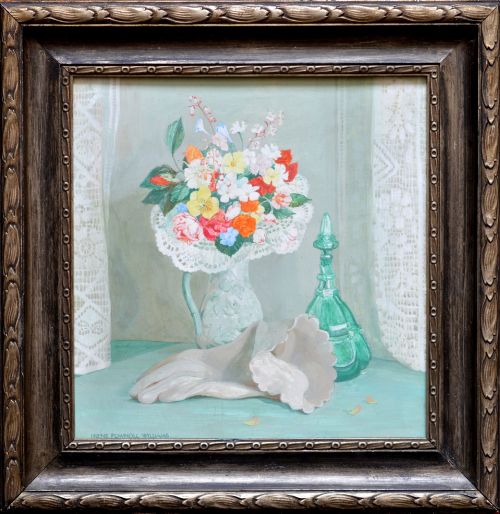
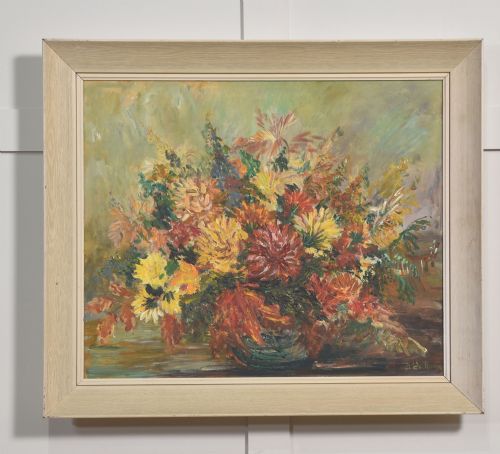
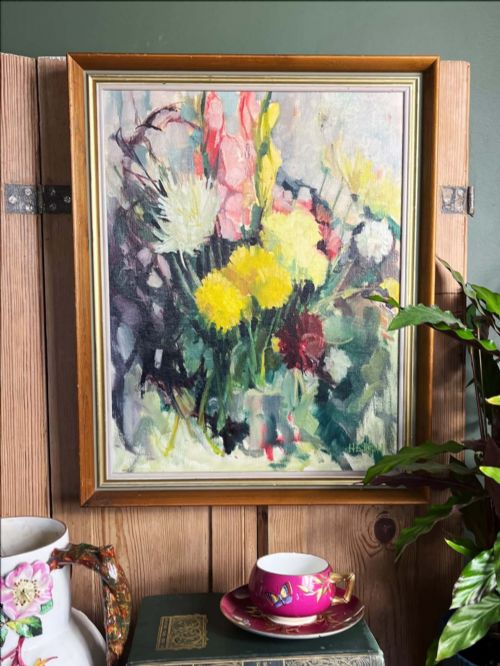
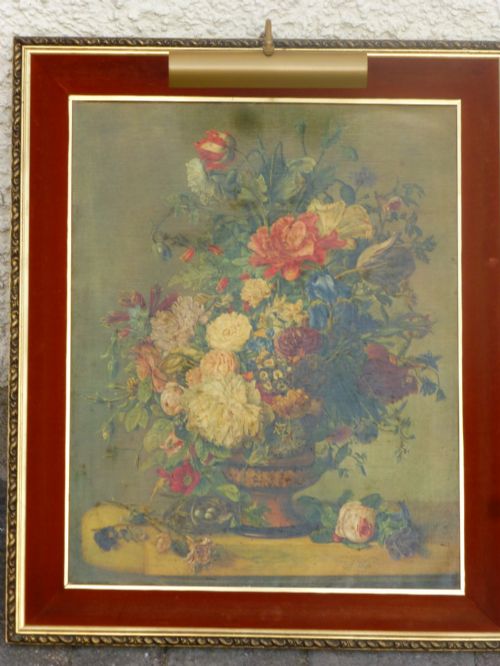
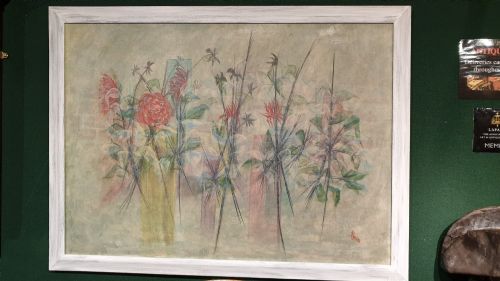
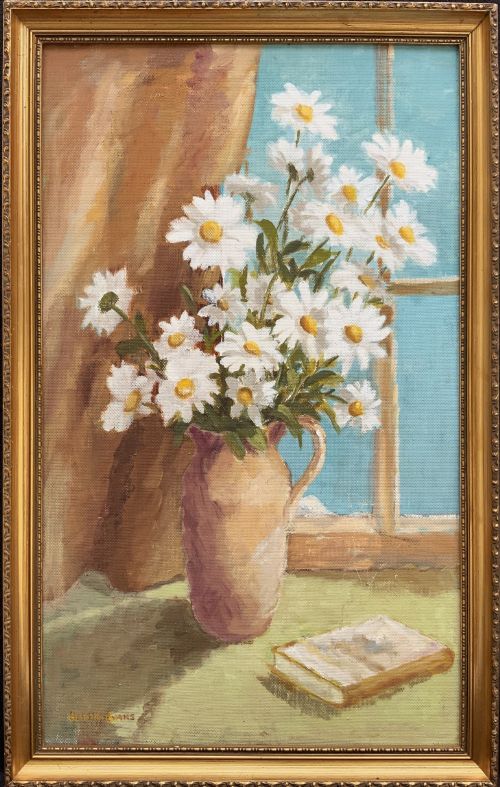
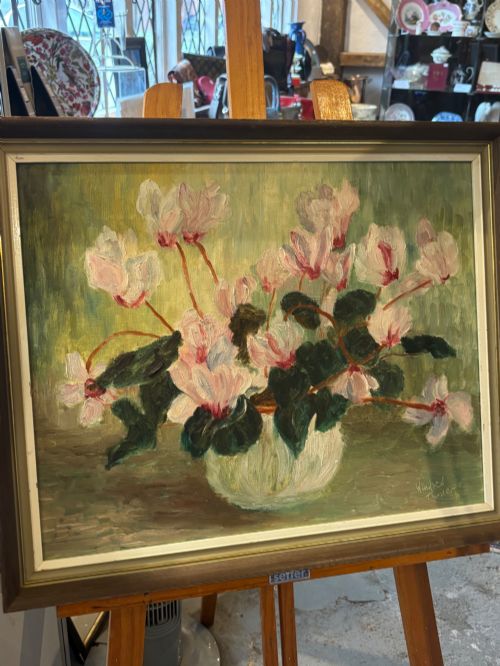
Mid century botanical art encompasses original paintings and wall art focusing on flowers, plants, and garden scenes produced primarily from the 1930s through the 1960s. A buyer browsing this selection encounters oil paintings on canvas and board, delicate watercolours, tempera panels, and occasional textile or mixed media pieces. These works range from impressionist floral displays in jugs to abstracted cubist plant studies and traditional still life arrangements.
The most common pieces on this page are mid-century oil paintings and watercolour studies created by British and continental European artists working in post-war and modernist styles. Subjects frequently feature familiar blooms such as roses, lilies, chrysanthemums, and dahlias, often arranged simply in pottery jugs or glassware. Pieces span several decades, reflecting the shifting aesthetic from pre-war realism towards freer post-century impressionism and modern British expression.
How They Were Made
Artists painted these botanical works using traditional pigments applied to prepared canvas, wooden panel, card board, or heavy paper support. Oil paint offered rich impasto textures and deep colour blending, while watercolours and gouache provided translucent washes that captured delicate petal details. Some creators utilised tempera or mixed media techniques, combining mediums to achieve specific surface qualities on panel.
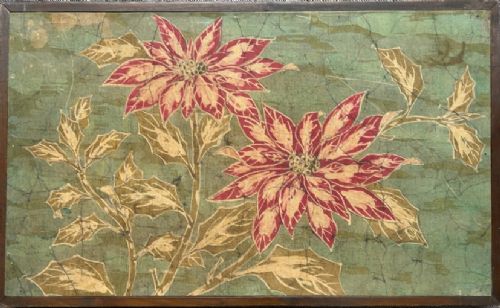
Framing played an integral role in presentation, utilising wood mouldings, often finished with gilt highlights or painted surfaces to complement the artwork. Textile pieces such as batik panels and embroidered Suzani items involved skilled needlework and dye application on woven fabric grounds. The physical support - whether stretched canvas, sturdy board, or antique paper - was selected to endure alongside the applied pigments.
One cheerful 1960s canvas presents lily of the valley explicitly offered as a painted lucky charm by a Franco-British painter.
What Varies In Quality
Quality in mid century botanical art rests upon the surety of the brushwork, the balance of composition, and the artist's ability to render light and form convincingly. Masterful pieces display confident handling of pigment, where loose impasto or delicate washes create genuine depth rather than flat decoration. The strength of the individual artist's vision separates ambitious canvases from more formulaic decorative studies.
Condition and originality also influence the standing of a piece, including the preservation of the original paint surface, stability of the panel or canvas, and retention of period framing. Works by documented painters with established exhibition histories carry greater artistic weight. The harmony between subject, palette, and medium ultimately defines the success of each floral study.
Irene Christobelle Pownoll Williams·James Tower·Amile Coppieters·Sir Matthew Smith·Bertoldo Taubert
The Mid Century Botanical Art Glossary
- Impasto
- Paint applied thickly to a canvas or board, standing visibly above the surface so that the marks of the brush or palette knife remain apparent. This technique adds tactile dimension and lively texture to floral petals and foliage.
- Tempera
- A permanent, fast-drying painting medium consisting of coloured pigments mixed with a water-binder agent, commonly egg yolk. It produces a durable, matte surface favoured for detailed panel paintings.
- Gouache
- An opaque water-based paint consisting of pigment, water, and a binding agent such as gum arabic, often featuring added white filler. It dries to a smooth, flat finish ideal for botanical studies on paper.
- Oleograph
- A mechanical print textured to imitate an oil painting, produced using lithographic plates. These reproductions recreate the appearance of genuine brushstrokes on canvas or paper.
Mid Century Botanical Art: Frequently Asked Questions
How do I identify a mid century botanical painting?
Look for stylistic cues characteristic of the period, such as impressionistic brushwork, simplified modern compositions, or post-war British and continental palettes. The materials used, including canvas stretched over older wedge frames or specific board types, also help indicate the era.
Signatures, dates inscribed on the reverse, and framing styles provide additional context for dating the artwork accurately.
Where should I hang these floral artworks?
These pieces suit domestic living spaces, dining rooms, or hallways where natural light enhances the painted colours of the flowers. Pair them with neutral walls to let the vibrant pigments of the oil or watercolour compositions stand out.
Keep framed works away from direct sunlight and damp environments to protect the canvas, paper, and wooden supports over time.
Are these paintings original works?
The selection primarily comprises original hand-painted works in oil, watercolour, gouache, and tempera created directly by the artists. Each piece reflects individual hand-application of pigment onto canvas, board, or paper rather than modern digital reproduction.
Occasional pieces may include vintage textile panels or period print techniques like oleographs, which are specifically noted in individual descriptions.
How do watercolours differ from oil paintings here?
Watercolour paintings utilise water-soluble pigments on paper supports, offering a transparent, luminous quality that captures delicate botanical details. Oil paintings employ pigment suspended in drying oils applied to canvas or board, allowing for thicker impasto textures and reworkable blending.
Watercolours generally require protective glass framing, whereas oil paintings on canvas remain open to the air within their outer frames.