
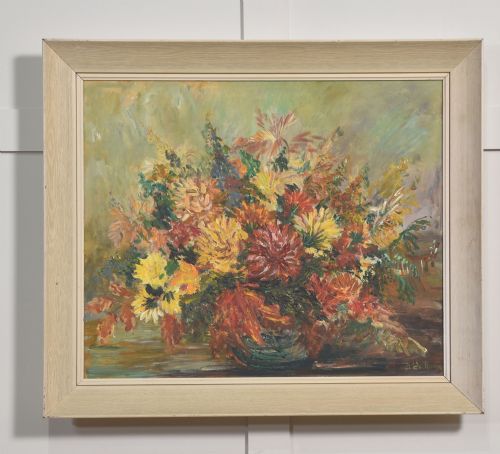
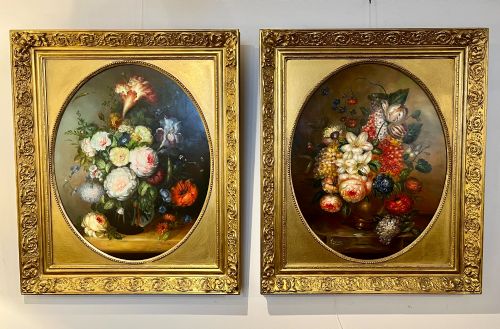
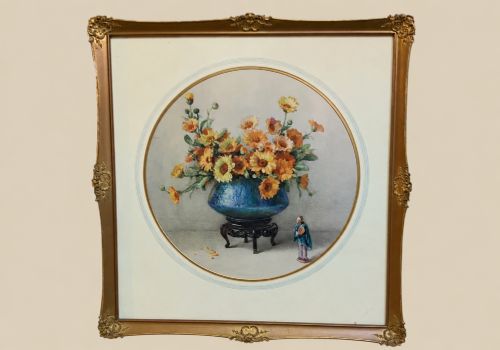
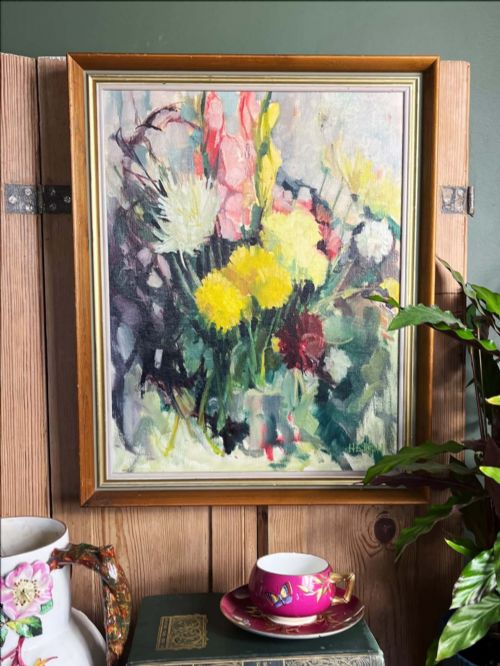
Framed Flower Still Life
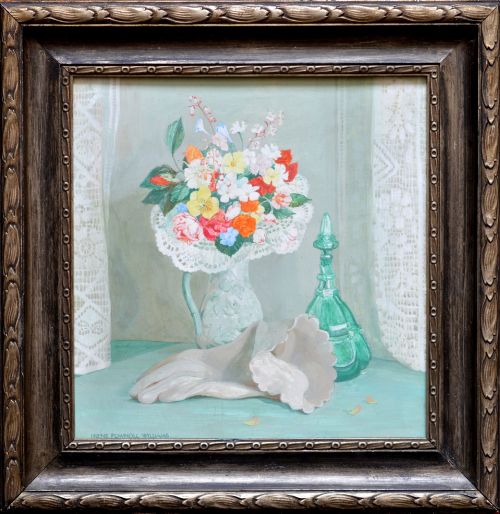
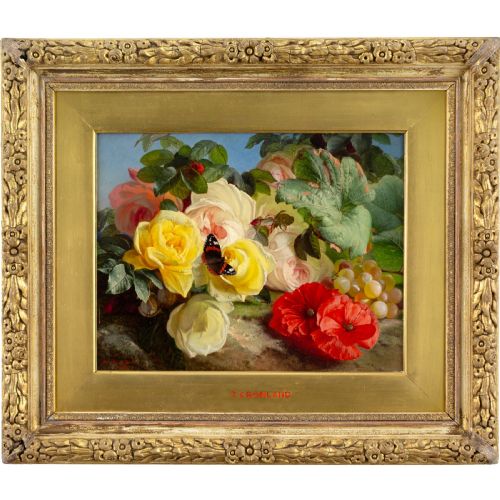
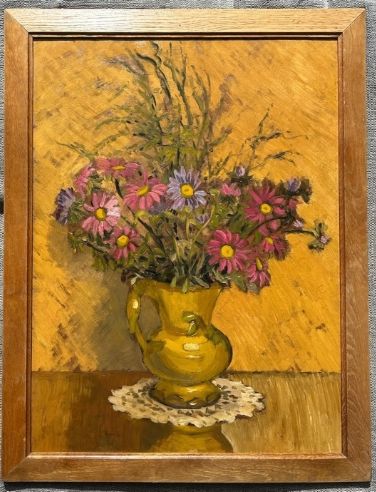
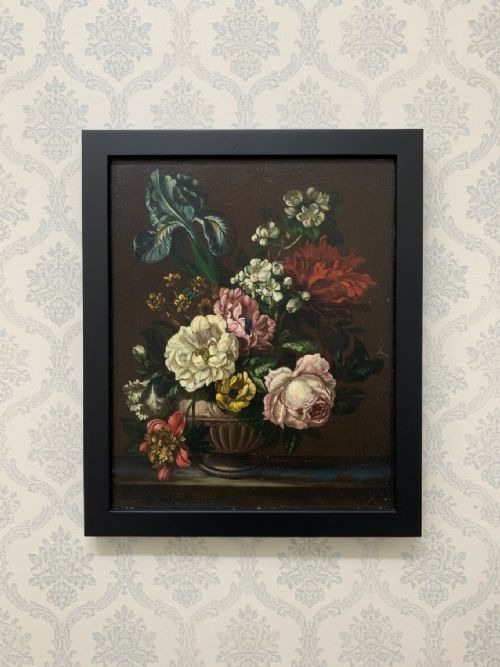
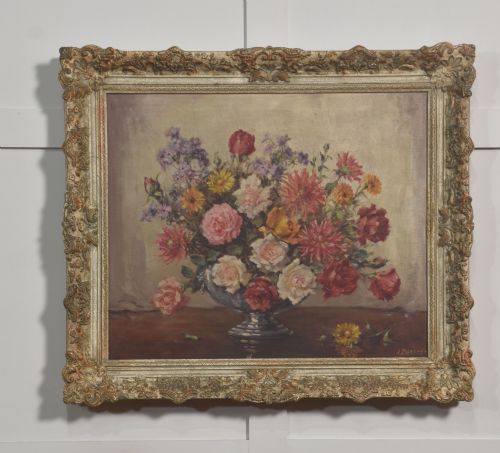
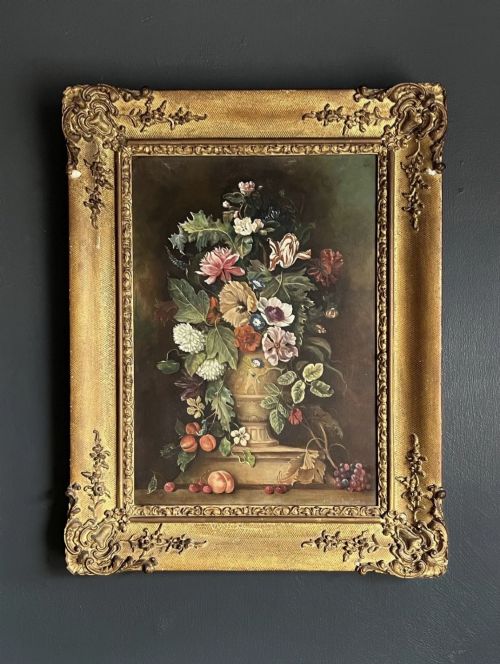
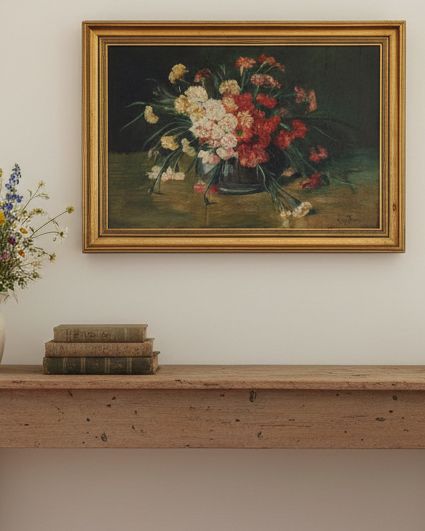
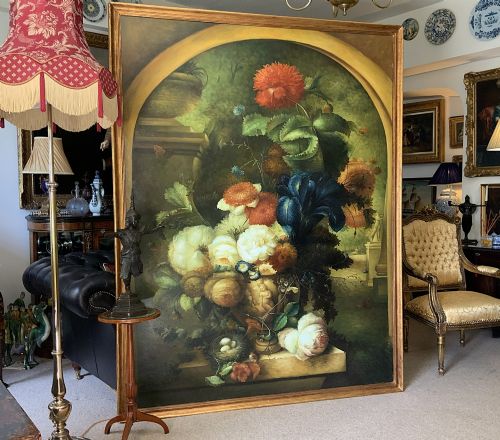
When you search for a framed flower still life, you are looking for botanical compositions captured across centuries in oil, canvas and wood.
Framed Flower Still Life
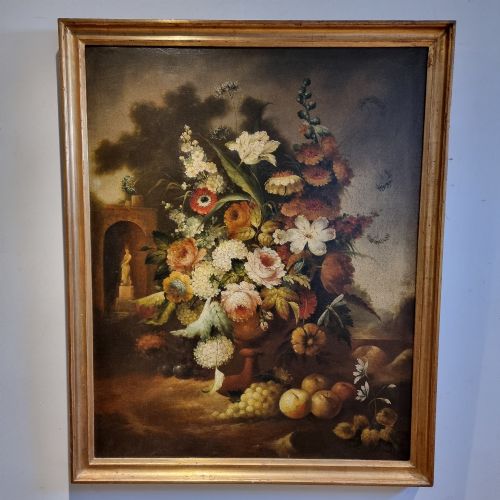
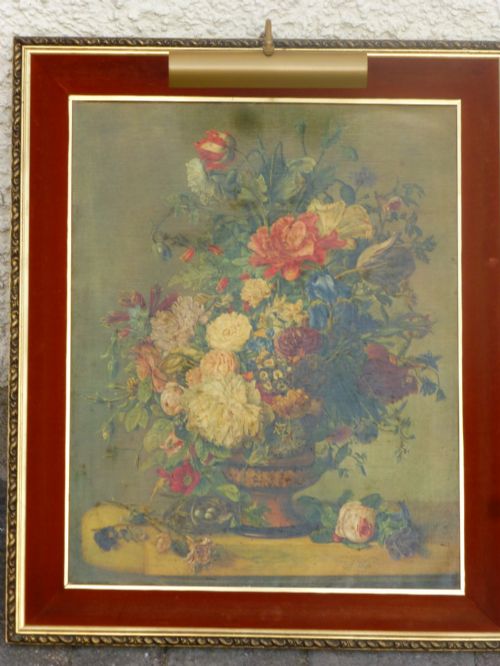
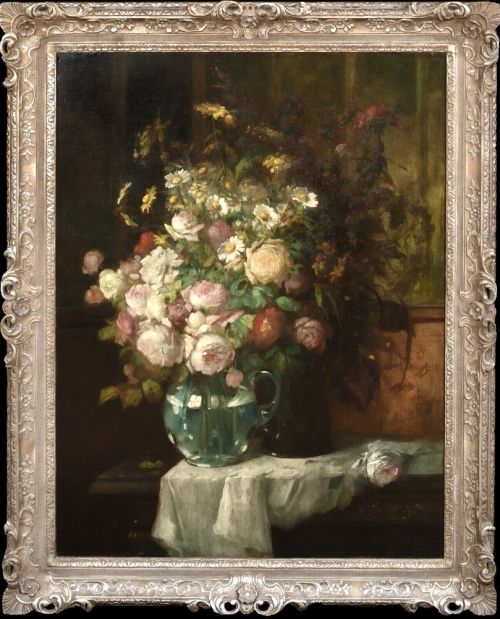
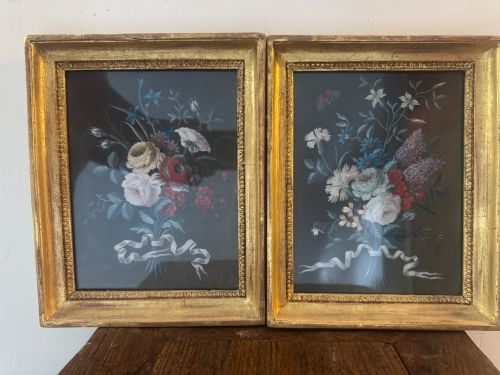
A framed flower still life brings botanical subjects indoors, ranging from intimate watercolours on paper to monumental Dutch style oil paintings on panel.
You are most likely to meet mid-twentieth century oil paintings on board or canvas alongside nineteenth-century works, often housed in original gilt frames.
The selections span British, Dutch, Belgian and Austrian hands, recording cut blooms in vessels from simple pottery jugs to ornate urns.
How they were made
Artists painted primarily with oil or watercolour, applying pigment to stretched canvas, wooden panels, heavy paper or board.
Frames play a structural and aesthetic role, frequently formed of wood finished with gold leaf, gilt gesso or simple moulding.
Some floral compositions casually include stray butterflies or plates of fruit sharing the table.
What varies in quality
The strength of a framed flower still life rests in the handling of light across petals and foliage, distinguishing hurried student studies from confident professional output.
Original frames that match the period of the artwork elevate the piece, particularly when moulded in gilt gesso or carved wood.
Theude Grönland·Emma Fordyce MacRae·Gaspar Peeter Verbruggen·Harold Clayton·James Tower·Konstantin Stoitzner
The Framed Flower Still Life Glossary
- Gesso
- A plaster-like mixture applied to wood frames before gilding. It provides a smooth base for intricate moulding and gold leaf application.
- Panel
- A flat wooden board used as a painting support instead of canvas. Artists often favoured panels for stability during the seventeenth and nineteenth centuries.
- Oleograph
- A mechanical colour print imitating an oil painting, popular in the nineteenth and twentieth centuries. It transfers ink onto textured paper or canvas to mimic brushstrokes.
- Still life
- An artwork depicting inanimate subject matter, typically everyday objects or cut flowers. This genre allows artists to focus entirely on colour, composition and texture.
- Impressionism
- A style of painting emphasising quick brushstrokes and the shifting effects of light. Mid-century and British examples capture flowers with loose, expressive marks rather than rigid botanical precision.
Framed Flower Still Life: Frequently Asked Questions
How do I hang a heavy framed painting?
Heavy works require picture wire secured to sturdy wooden frame battens and wall fixings anchored directly into masonry or wall studs. Avoid relying solely on standard plasterboard hooks for large oil paintings.
Ensure the hanging height places the centre of the canvas at eye level. This creates a balanced focal point within your room.
Can I place these paintings in direct sunlight?
Direct sunlight causes pigments in both watercolours and oil paints to fade over decades. Ultraviolet rays also damage paper supports and dry out wooden panels.
Position your artwork on interior walls away from south-facing windows. Indirect natural light preserves the original vibrancy of the floral tones.
How do I identify the period of the artwork?
Examine the stretcher bars, canvas weave and backing boards for clues of age. Nineteenth-century works often feature hand-planed wooden panels and rusted iron nails.
Signatures, artist stamps and frame styles provide additional chronological markers. Compare these details against known working dates of the painter.