
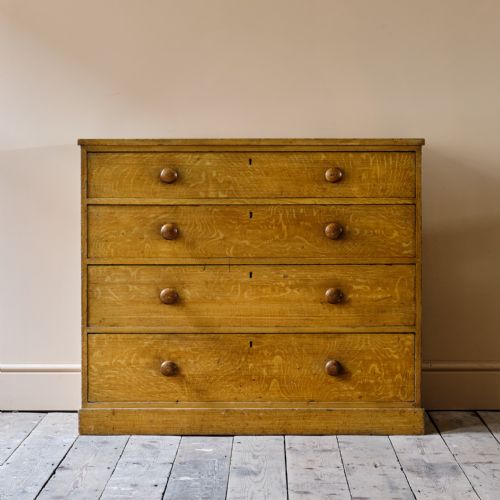


Mid 19th Century Tallboy
These mid 19th century tallboy pieces are substantial storage items in mahogany, burr walnut and pine, prized for vertical capacity and deep timber figuring.
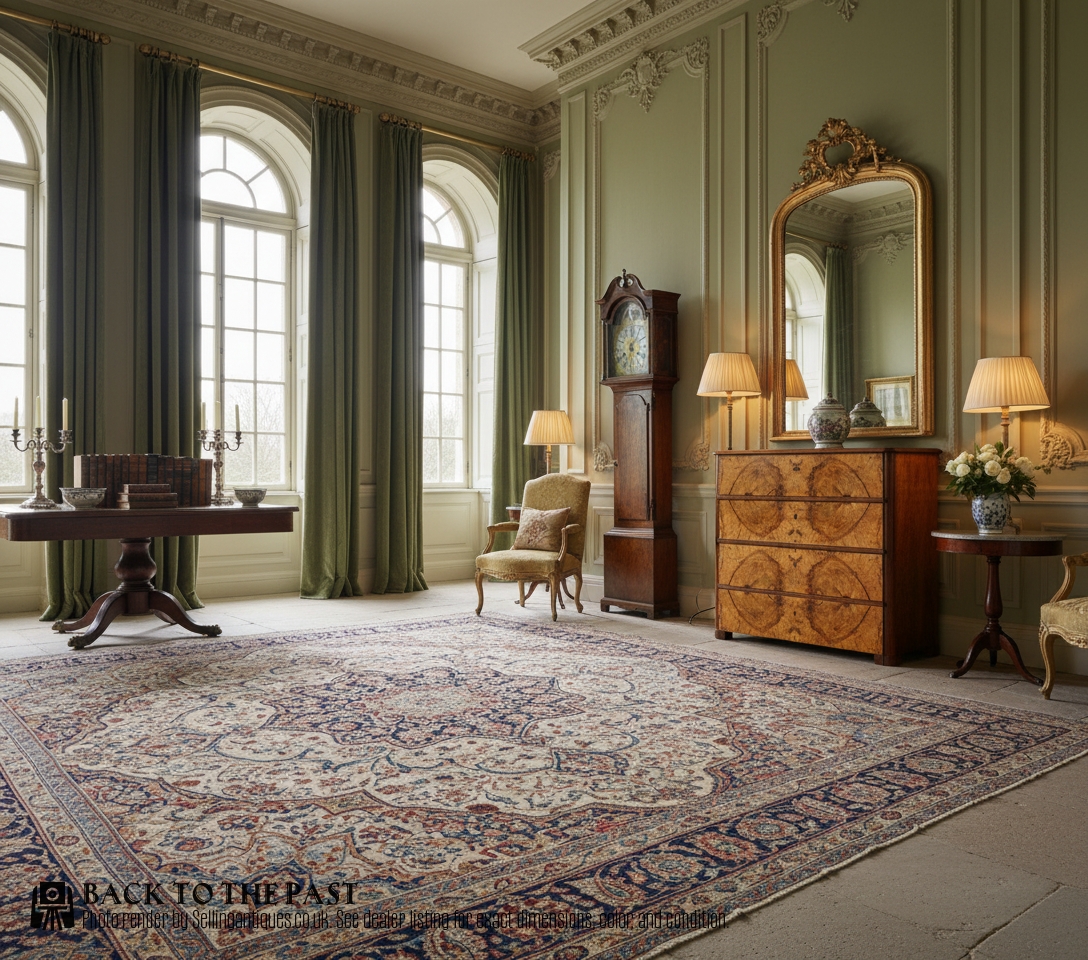
Mid 19th Century Tallboy
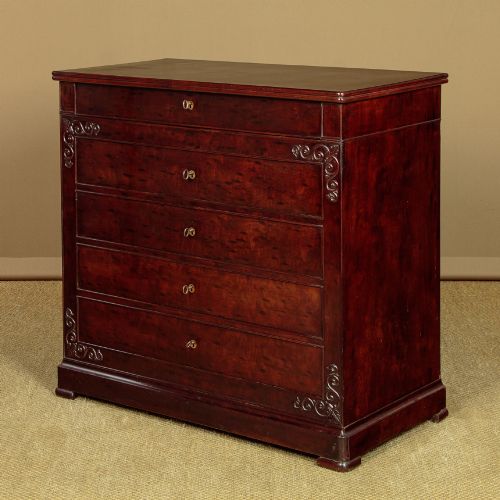
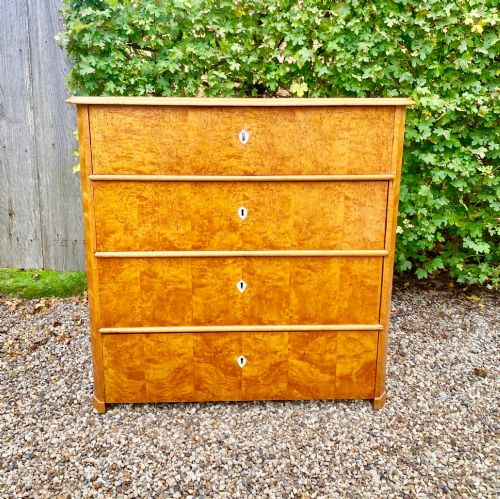
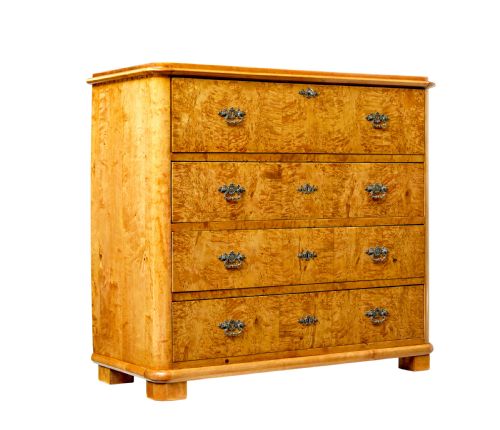
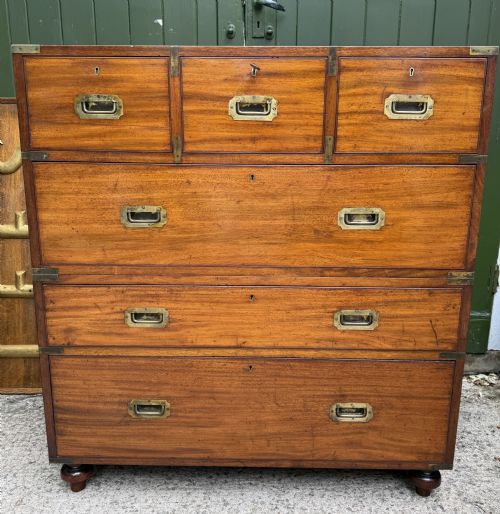
When you search for mid 19th century tallboy forms, you find tall storage chests designed to maximise vertical space without claiming extra floor area in a room. The examples appearing on this page span Victorian and Scandinavian traditions, including specialised Wellington chests, military campaign pieces in two parts, and secretaire chests of drawers with integrated writing surfaces.
The most frequent versions you meet here are made from mahogany, burr walnut and pine, ranging from formal flame mahogany to painted Scandinavian country pieces. These items often feature configurations of four or more straight drawers, occasionally paired with galleried backs or brass mounts depending on their regional origin.
What varies in quality
The standard of a piece rests largely on the choice of timber and the ambition of its construction, from simple northern pine carcases to intricately figured burr walnut veneers. Cabinetmakers who matched grain patterns across successive drawer fronts achieved a visual continuity that elevates the piece.
Hardware and internal detailing also separate standard utility furniture from finer examples, seen in the precision of brass binding on military pieces or the complexity of fitted secretaire drawers. The integrity of original painted surfaces on Scandinavian examples determines their historical weight.
Periods represented span from the 1850s through to the late Victorian era and mid-nineteenth-century Scandinavia.
The Mid 19th Century Tallboy Glossary
- Wellington chest
- A tall, narrow chest of drawers typically secured by a single hinged locking stile on the right edge. This locking bar fastens over the drawer edges to secure the entire stack at once.
- Secretaire chest of drawers
- A piece featuring a fitted top drawer that pulls down to reveal a writing surface and small compartments. It combines the functions of a desk and a chest into one vertical carcase.
- Flame mahogany
- A timber veneer sliced from the junction where branches join the main trunk, producing a distinctive leaping flame pattern. Cabinetmakers prized this figure for principal drawer fronts.
- Campaign chest
- Modular furniture built in two separate stacking sections with recessed brass handles and corner brackets designed for easy transport. Military officers utilised these sturdy chests during active service.
- Galleried back
- A raised wooden border attached to the top rear surface of a chest to prevent items from sliding off. This feature appears frequently on mid-nineteenth-century domestic pieces.
Mid 19th Century Tallboy: Frequently Asked Questions
Where did people use these tall chests?
These tall pieces served primarily in bedrooms and dressing rooms to store folded garments, linens, and personal accessories without occupying excessive floor space.
Their vertical proportions made them ideal for rooms with limited wall width but adequate ceiling clearance.
How do I spot a campaign chest?
Military campaign chests divide into distinct upper and lower sections designed for ease of travel during the nineteenth century. Look for flush-fitting brass handles and reinforced corner brackets.
These additions protected the edges from heavy handling during transport by sea or land.
What is a Wellington chest?
A Wellington chest is a tall, narrow drawer unit distinguished by a locking flap on one side that secures every drawer simultaneously. The design prioritised security and compact vertical storage.
They often appear in mahogany or burr walnut with numerous shallow drawers stacked vertically.
Are painted finishes original?
Many Scandinavian and country pieces retain early or original paint layers applied directly to pine carcases. These finishes vary from pale neutral tones to bolder regional pigments.
Examining the surface wear helps distinguish genuine early paint from later decorative coatings.