

Victorian Wellington Cabinet
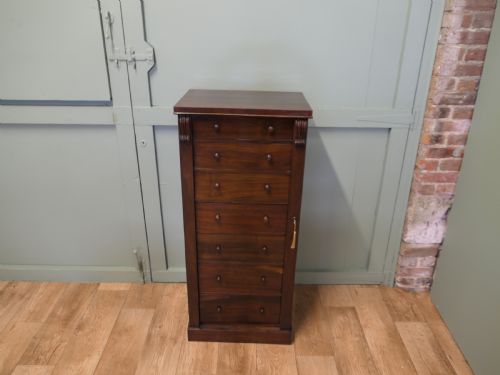
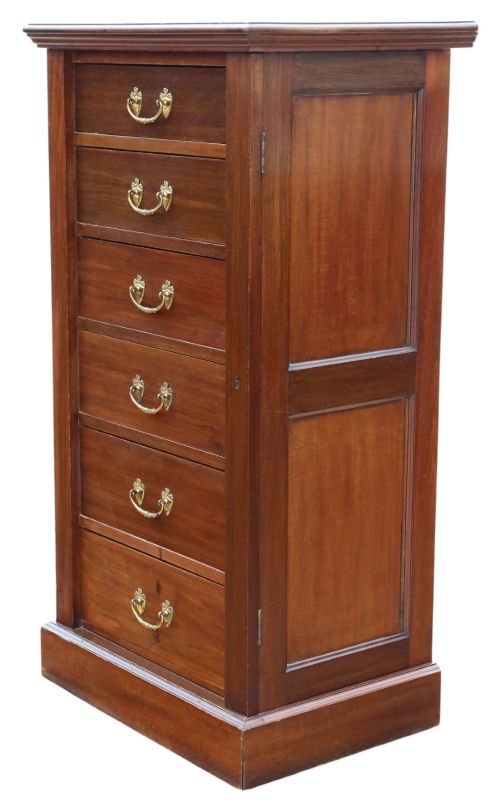
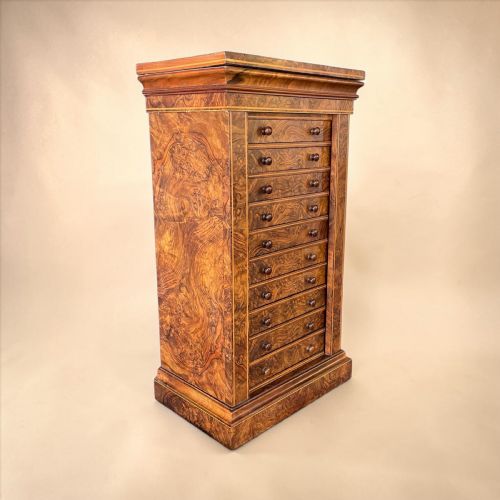
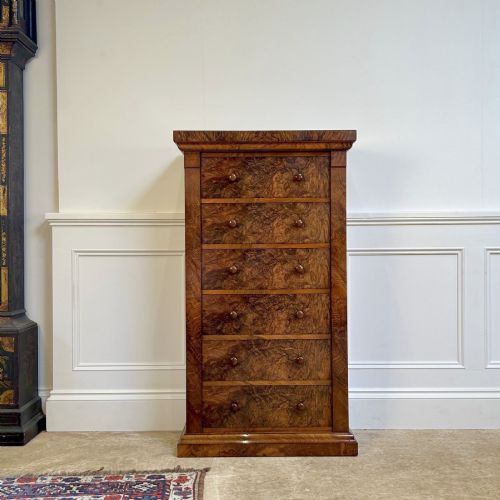
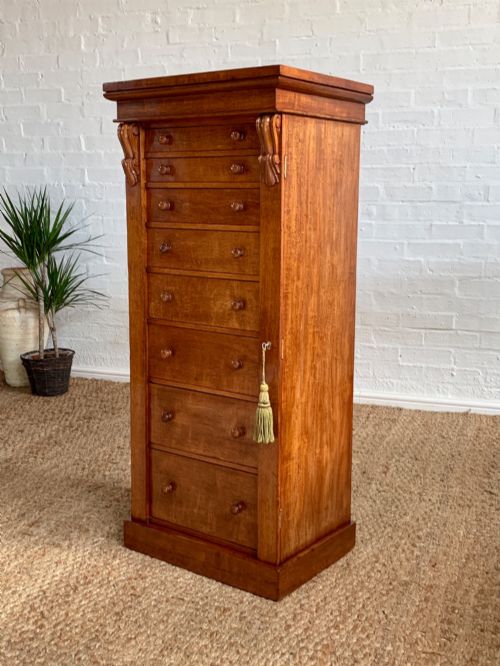
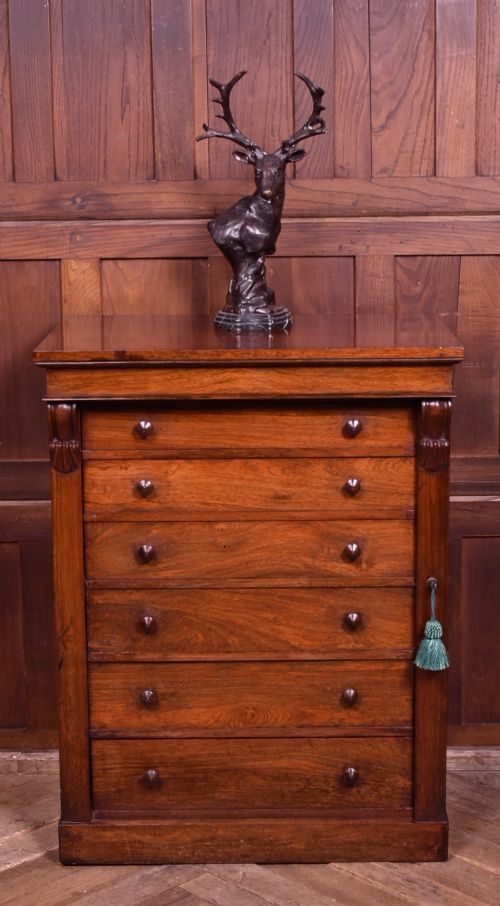
A Victorian Wellington cabinet provides a secure, narrow stack of drawers locked behind a hinged, locking side stile.
Victorian Wellington Cabinet
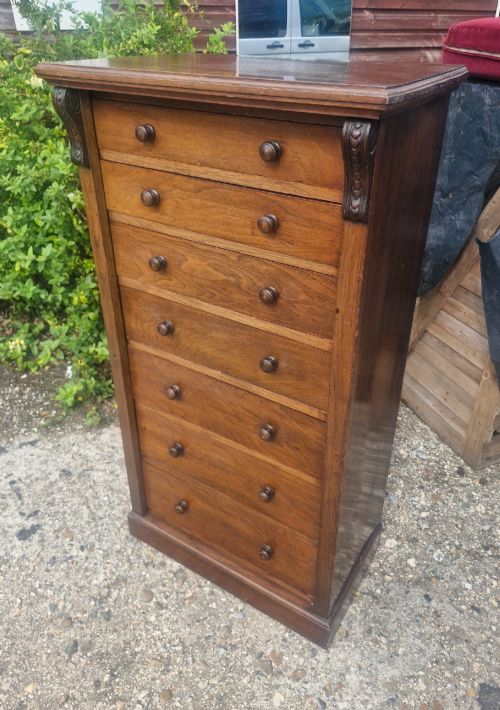
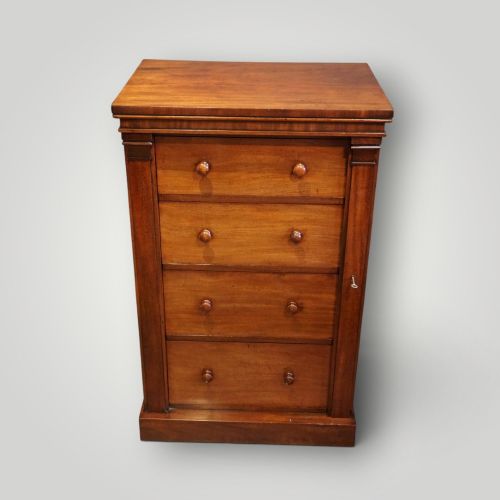
A Victorian Wellington cabinet is a tall, narrow chest distinguished by a locking vertical wooden arm that secures the entire column of drawers simultaneously. These pieces appear primarily in nineteenth-century forms, originating as compact storage for papers, linen, or collectors' specimens in restricted spaces.
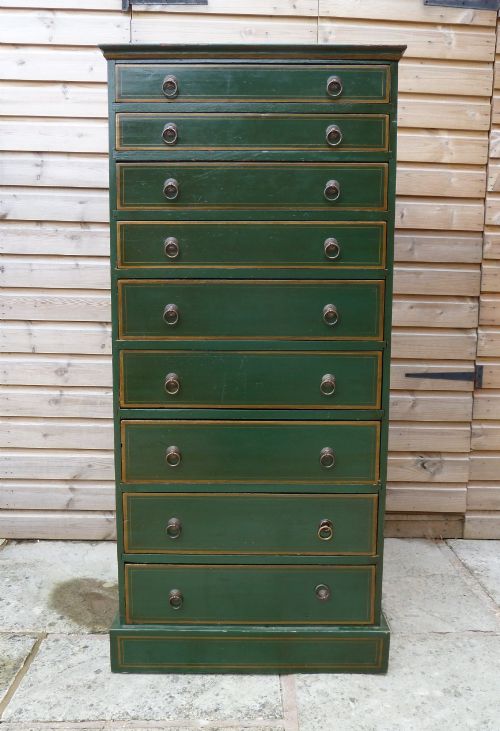
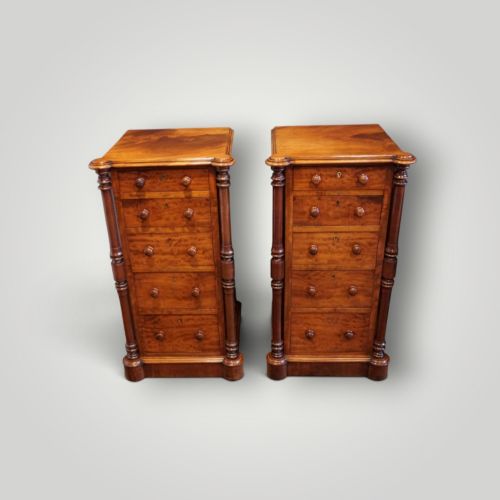
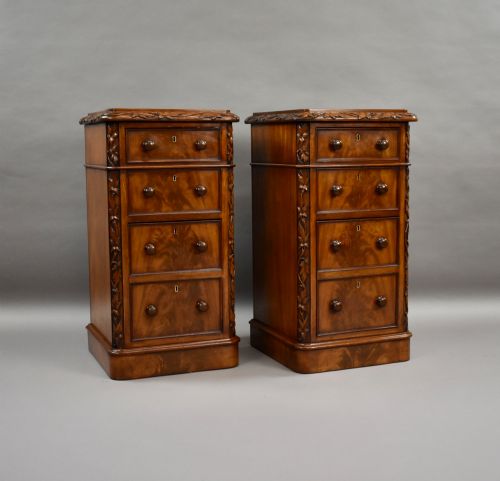
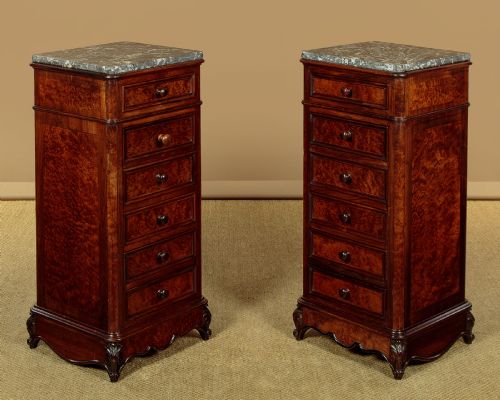
Buyers seeking a Victorian Wellington cabinet on this page will most commonly find mahogany and walnut iterations standing upright with multiple shallow drawers. Variations range from standard bedroom chests and bedside pairs to diminutive childs cabinets and specialised collector chests fitted with internal trays.
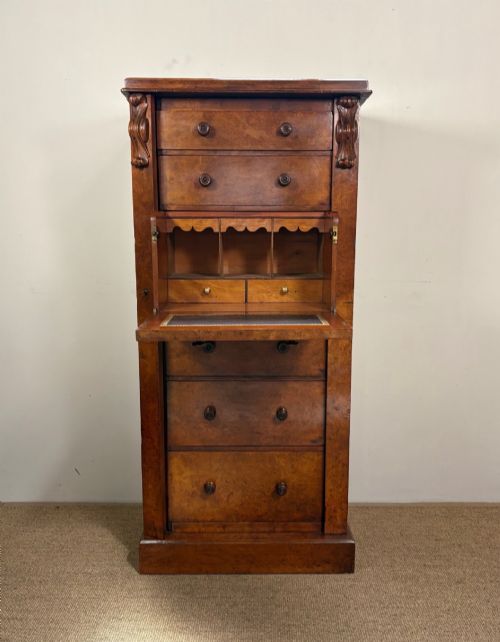
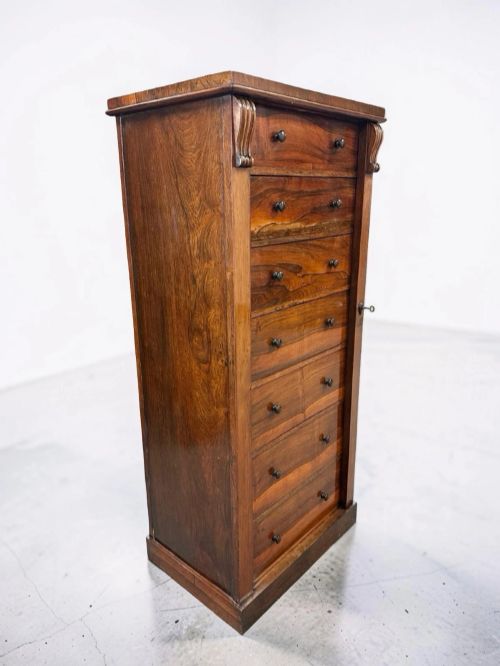
The format also surfaces in rosewood, oak, and pitch pine, sometimes displaying marquetry inlay, secretaire drawers, or brass mounts. Proportions remain uniformly slender, designed to fit narrow wall spaces where standard wider chests cannot go.
Materials and Construction
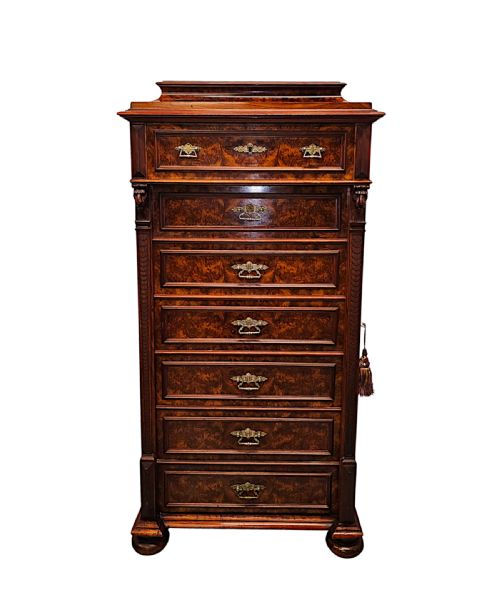
Cabinetmakers constructed these cabinets using dense native and imported timbers, notably figured mahogany, walnut, burr walnut, and rosewood, often laid as veneers over stable secondary woods. Flame mahogany and amboyna appear on decorative surfaces to create striking grain patterns across the drawer fronts.
The defining mechanical feature relies on a hinged locking side stile that fastens over the drawer edges, secured by a functional brass lock and key. Drawers feature precise dovetail joinery and are frequently fitted with original turned wooden knobs or brass pulls.
Several examples preserve historical insect collections, meaning a buyer might acquire a Victorian moth archive tucked inside their bedside drawers.
Assessing Quality
Quality in these cabinets rests upon the selection and matching of wood veneers, where symmetrical flame figures or burr walnut elevate the visual presence of a piece. Finer examples display meticulous attention to secondary timbers and the crispness of turned wooden knobs or inlaid marquetry.
The mechanical integrity of the locking side stile and its matching hinge system determines functional success. Smooth operation of the narrow drawers within their individual housings distinguishes superior workshop production from standard utilitarian office storage.
Warings Liverpool·Gillows·Holland & Sons
The Victorian Wellington Cabinet Glossary
- Wellington chest
- A tall, narrow chest of drawers secured by a hinged locking flap on one edge. This architectural feature distinguishes the form from standard bedside chests and chest of drawers.
- Side stile
- The vertical locking member that swings outward once the cabinet key is turned, releasing the individual drawers. It forms the distinct closing mechanism of the type.
- Secretaire
- A cabinet incorporating a drop-front writing drawer fitted with small compartments and pigeonholes. Examples of this form combine a writing desk with the standard narrow drawer stack.
- Collector's chest
- A specialised cabinet fitted with shallow interior drawers designed for housing specimens such as butterflies, coins, or minerals. These interiors often retain original green baize or velvet linings.
- Burr walnut
- A highly figured wood veneer taken from the growth excrescences of walnut trees. Cabinetmakers utilised this material to create richly patterned drawer fronts on high-grade pieces.
Victorian Wellington Cabinet: Frequently Asked Questions
What is a Wellington cabinet?
A Wellington cabinet is a tall, narrow nineteenth-century chest of drawers featuring a locking vertical side bar. This hinged timber piece secures all drawers at once when locked with a key.
The design originated to save space and secure private papers or valuable items in domestic and office settings. They remain popular for their compact footprint and deep vertical storage capacity.
How do you open a Wellington chest?
To open the chest, insert the key into the lock on the right-hand vertical locking flap and turn it. The side stile swings outward on its hinges, clearing the drawer edges.
Once the locking bar is swung clear, individual drawers pull outward normally. To lock the unit, close all drawers fully and swing the stile back before turning the key.
Where were Wellington chests used?
These cabinets served primarily in Victorian bedrooms, studies, and offices as secure storage for personal correspondence, ledgers, and small valuables. Their narrow profile allowed them to fit into tight alcoves and beside beds.
Specialised versions also served as collector cabinets for housing butterflies, moths, and coins. Today they function similarly as bedside tables, tall lamp stands, or compact organizers.
What woods were used for Wellington chests?
Cabinetmakers built these pieces using dense hardwoods such as mahogany, walnut, rosewood, oak, and pitch pine. Fine examples often feature decorative veneers like flame mahogany or burr walnut on the drawer fronts.
Secondary woods like pine or oak were used for internal drawer linings and carcases. Brass hardware and occasional amboyna or marquetry detailing completed the decorative scheme.