


Mid 19th Century Porcelain
Mid 19th century porcelain brings together ornate cabinet plates, painted jugs, and sculptural figures from the Victorian era that collectors prize for their intricate hand-painting and gilding.
Mid 19th Century Porcelain
Mid 19th century porcelain encompasses a wide variety of decorative and utilitarian objects, from delicate cabinet plates and armorial services to large jardinieres and clock panels. These items reflect the diverse tastes of the period, drawing on established European traditions and revivalist aesthetics.
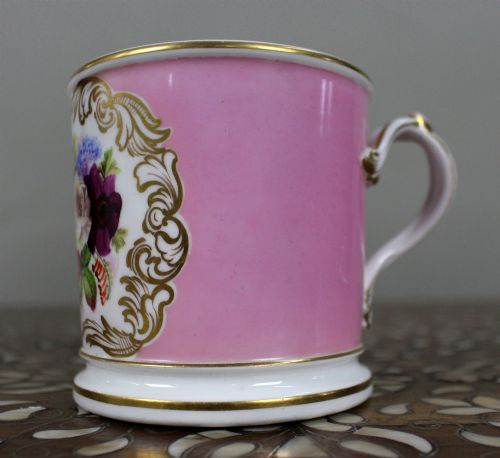
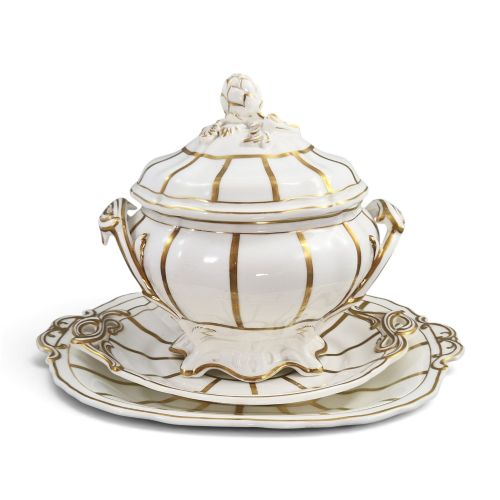
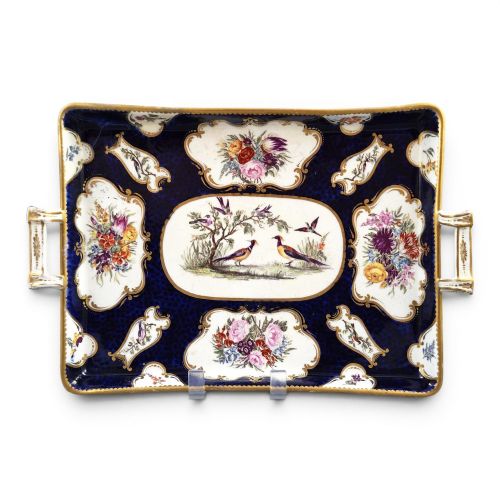
Figurines and sculptural groups dominate the available forms, ranging from single figures like sleeping children to mythological subjects and animals. Makers also produced functional vessels such as mugs, tankards, sauce tureens, and ewers, often enriched with cobalt blue grounds or exotic bird motifs.
Materials and technique
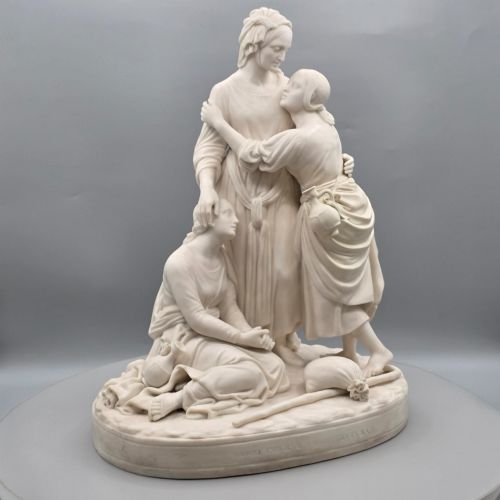
Potters and modellers utilised fine porcelain, bone china, and parian porcelain to achieve smooth bodies suitable for detailed modelling and smooth glazing. Parian ware gained popularity for its biscuit finish, which closely resembles carved marble and allows for sharp relief work on figures.
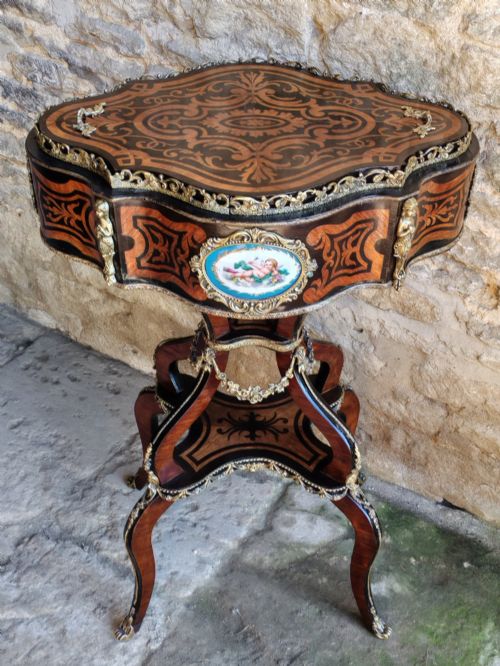
Decoration relied heavily on hand-painting, enamel colours, and applied gold leaf or gilding to create rich surface contrasts. Ormolu mounts and bronze components frequently frame French and English pieces, adding structural weight and a contrasting metallic lustre.
The listings show diverse forms including parian figures, cabinet plates, and ironstone ewers spanning several decades of the nineteenth century.
What varies in quality
The fineness of the hand-painted details, particularly in facial expressions, plumage, and botanical motifs, separates ordinary production from exceptional work. Pieces bearing recognisable factory marks or attributed to skilled modellers command greater attention for their artistic execution.
The preservation of delicate gilt highlights, enamel colours, and attached ormolu mounts significantly influences the integrity of each object. Clean, unblemished glazing and crisp moulding without distortion indicate superior kiln control and skilled craftsmanship.
Grainger Worcester·Davenport Bone China·Minton·Mason's Ironstone·Meissen·Thomas Parr·Copeland·Royal Worcester·Kerr and Binns·Samson Paris·Jacob Petit·Volkstedt
The Mid 19th Century Porcelain Glossary
- Parian porcelain
- A fine, unglazed biscuit porcelain developed to imitate marble. It was widely utilised during the Victorian era for portrait busts and sculptural figures.
- Ormolu
- Gilded bronze or brass applied as mounts, feet, or frames to ceramic bodies. It provides a bright metallic contrast to painted porcelain surfaces.
- Armorial plate
- A ceramic plate decorated with a family crest or coat of arms. These pieces were typically commissioned by prominent households.
- Ewer
- A large pitcher with a wide spout and a decorative handle, often used alongside a basin. Mid-century examples frequently feature cobalt blue grounds and grotesque handles.
Mid 19th Century Porcelain: Frequently Asked Questions
What is mid 19th century porcelain?
Mid 19th century porcelain refers to ceramic decorative and utilitarian objects produced roughly between 1845 and 1865. This span covers the height of the Victorian period and the Second Empire in France.
Items from this era include hand-painted cabinet plates, parian figures, ewers, and clock panels. They reflect diverse stylistic influences, including Rococo revival and Chinoiserie.
How do I identify parian porcelain?
Parian porcelain is characterised by its unglazed, matte surface that closely resembles carved white marble. It was typically moulded rather than thrown on a wheel to capture fine anatomical details.
Manufacturers used this body type primarily for sculptural figures, portrait busts, and literary groups. It feels heavier and denser than standard biscuit porcelain.
Were these pieces used daily?
While mugs, tankards, and dessert plates were designed for practical dining and entertaining, many cabinet plates and sculptural groups served purely decorative roles. Elaborate armorial services and gilded porcelain were reserved for formal dining.
Large items like jardinieres and oil lamps were integrated into domestic interiors as functional ornaments. Their survival in good condition suggests careful handling by past owners.
How should I display porcelain at home?
Porcelain objects benefit from stable placement away from high-traffic edges where they might be knocked over. Glass-fronted cabinets protect delicate painted surfaces and gilding from dust and accidental contact.
Keep pieces away from direct sunlight to prevent fading on enamel-painted birds and floral grounds. Ensure that heavier items with ormolu mounts rest on level surfaces.