
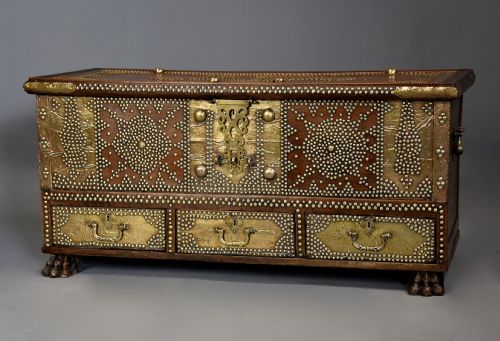


Mid 19th Century Coffer
These mid 19th century coffer pieces are robust storage chests that bring functional history and regional craftsmanship straight into the home.
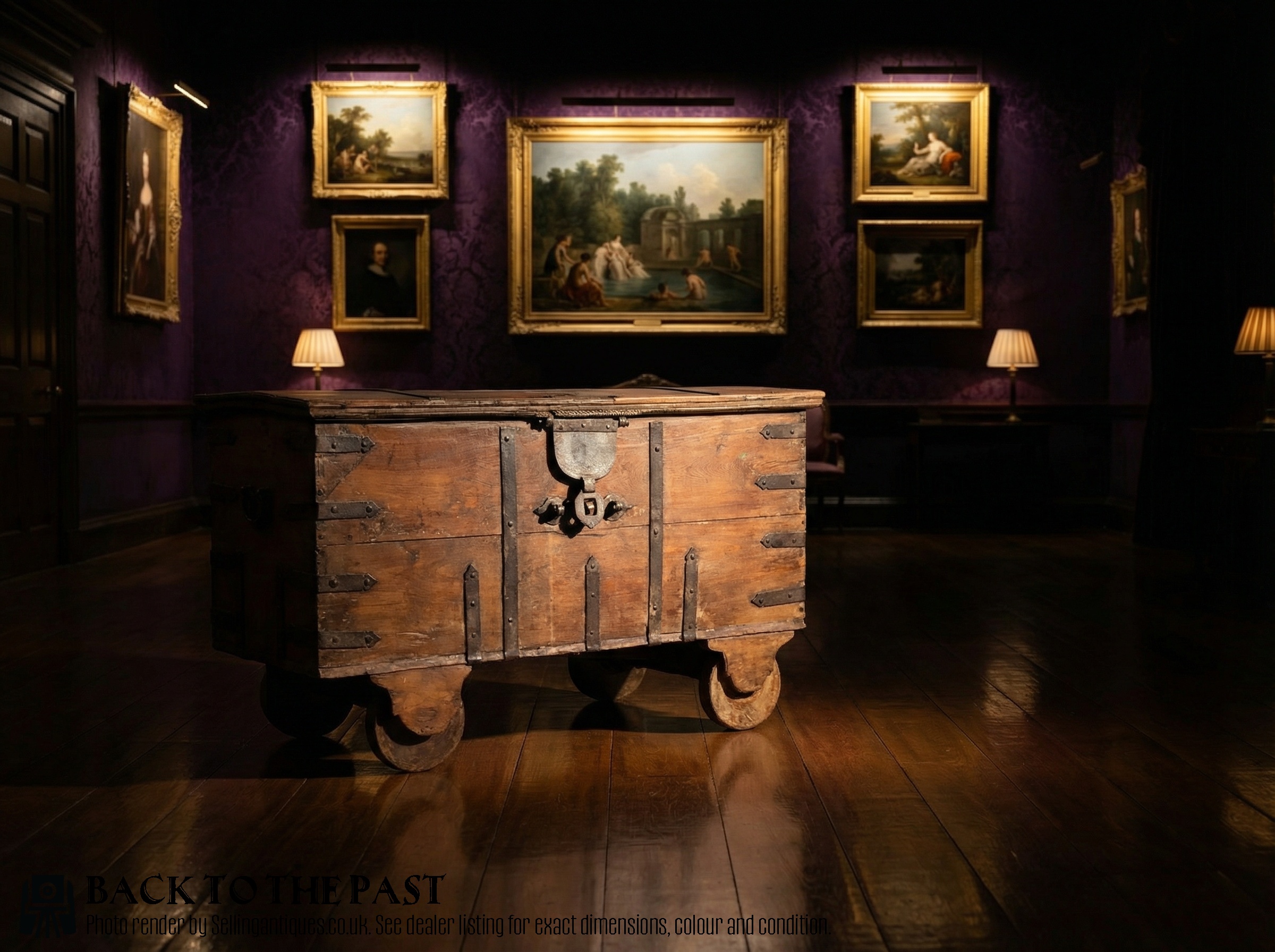
Mid 19th Century Coffer
A mid 19th century coffer provides heavy-duty storage through various regional forms such as strong boxes, dome top chests, and traders chests. Buyers searching this phrase will find pieces originating from Scandinavian country workshops, English country houses, Zanzibar, and colonial India.
The Scandinavian pieces lean heavily into folk art traditions, featuring hand painted pine surfaces and dome top constructions. Other iterations include robust oak silver chests, walnut dome coffers, and lacquered trunks on stands.
These items served practical purposes for travel, trade, and household storage before finding a place in modern interiors. The heavy iron and brass hardware on many examples highlights their utilitarian origins.
Materials and construction
Makers utilised native timbers like pine, oak, and walnut, often applying hand mixed paint or lacquered finishes to the exterior. Pine appears frequently in Scandinavian folk art strong boxes, whilst oak and walnut underpin heavier revival and silver chests.
Wrought iron and brass provide structural reinforcement and decorative detail through hinges, straps, and studwork. Brass stud decoration defines the Zanzibar traders chests, whereas wrought iron secures the corners of strong boxes.
Mid 19th Century Coffer Retail Price Guide 2026
Typical asking prices for mid 19th century coffer among the pieces listed under this phrase on Sellingantiques today, from the lower quarter to the upper quarter. They describe what is for sale here now, not the wider market.
Listings for this phrase frequently feature Scandinavian folk art painted pine, alongside oak silver chests and brass-studded Zanzibar traders chests.
Judging quality in a coffer
Quality rests in the preservation of original painted surfaces and the integrity of the timber joints. Pieces retaining their early hand painted folk art motifs or original brass studwork stand apart from later restorations.
The thickness of the wood, the weight of the ironwork, and the complexity of joinery define the upper tier of these chests. Simpler utilitarian boxes contrast with elaborately inlaid continental walnut or lacquered surfaces.
The Mid 19th Century Coffer Glossary
- Coffer
- A large wooden chest used for storing valuables, linen, or documents. These sturdy boxes often feature hinged lids and iron reinforcement.
- Strong box
- A heavily reinforced small chest designed to secure money or precious items. They frequently utilise robust wood and iron hardware.
- Dome top
- A rounded lid construction that sheds water and allows for greater internal volume. This shape appears frequently on Scandinavian and continental examples.
- Folk art
- Decorative work produced from an indigenous craft tradition rather than a formal academic school. Scandinavian painted coffers often display these charming regional motifs.
- Traders chest
- A large storage trunk associated with merchants and maritime commerce. Examples from Zanzibar are known for dense brass stud decoration.
Mid 19th Century Coffer: Frequently Asked Questions
What were coffers used for?
These chests stored valuable household goods, textiles, silver, and documents. Their sturdy construction protected contents during transport and daily domestic use.
Traders and merchants also utilised specialised trunks for carrying goods across maritime trade routes. Today, they function primarily as decorative storage furniture in living spaces.
How do I clean a painted pine coffer?
Dust the surface gently with a dry, soft cloth to remove everyday particles. Avoid using modern chemical cleaners or excessive water, which can damage historic paint.
Wax polish may be applied sparingly to unpainted wood sections, but painted folk art surfaces require minimal intervention to preserve their finish.
How do I tell Scandinavian folk art chests apart?
Scandinavian folk art chests usually feature distinctive hand painted floral or geometric motifs across pine or oak bodies. They often employ a dome top shape and retain regional colour palettes.
By contrast, English and continental versions rely on carved oak, walnut veneer, or heavy iron strapping rather than native folk painting.
Are these chests heavy?
Most of these pieces are constructed from solid timbers like oak, pine, or walnut, combined with iron and brass hardware. This makes them inherently heavy and sturdy.
Buyers should plan their placement carefully, as moving large oak silver chests or iron-strapped strong boxes requires more than one person.