
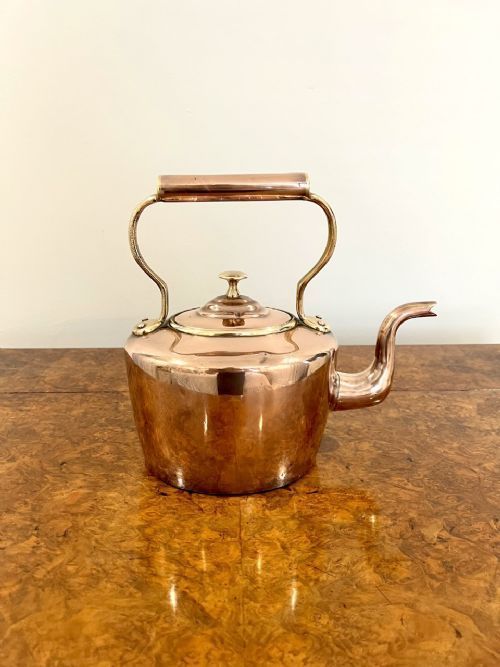


Metalware Tea Vessel
These metalware tea vessels are utilitarian and ceremonial containers forged from copper, brass, and bronze across the Georgian and Victorian periods.
Metalware Tea Vessel
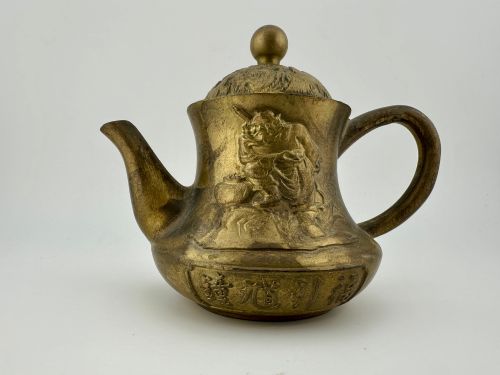
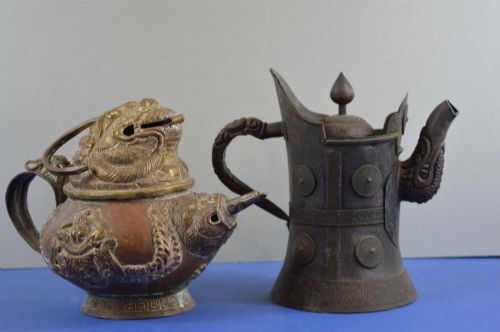
A metalware tea vessel encompasses utilitarian kettles, samovars, and ceremonial ewers designed for boiling and serving water or tea. When searching for a metalware tea vessel, buyers encounter domestic kitchen copper kettles alongside regional pieces such as Tibetan monks pots and Japanese sake kettles.
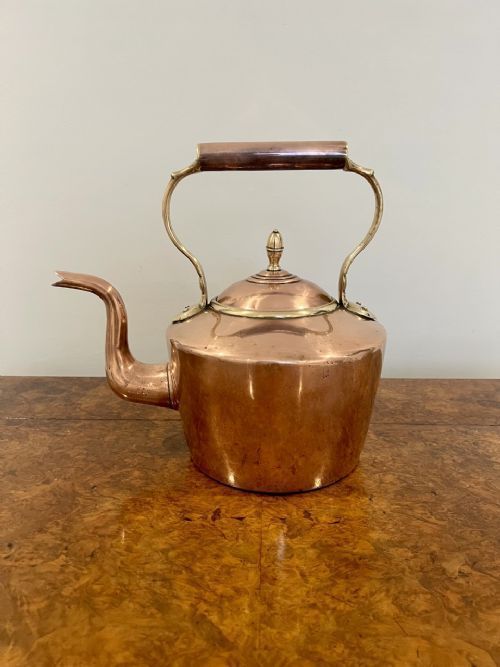
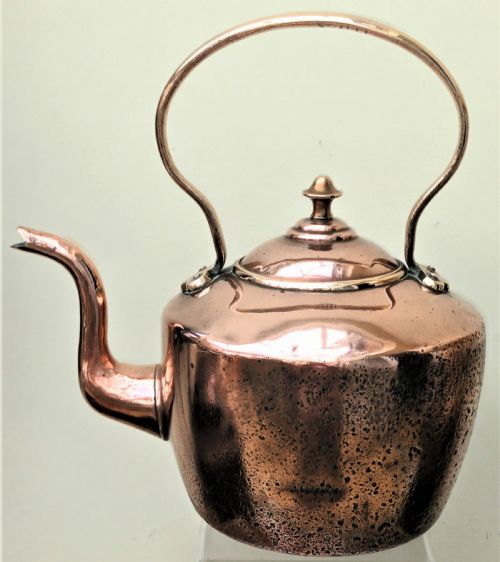
The domestic English examples span the Georgian and Victorian eras, taking forms from oval copper bodies to large polished brass and copper spirit kettles with stands. Alongside these stand Asian works including Chinese brass teapots and Edo period metalware.
Buyers select these objects for their functional heritage and traditional craftsmanship, placing them in domestic settings as decorative focal points or working fireplace accessories.
Materials and construction
The primary metal utilised across the domestic listings is copper, frequently paired with brass for handles, spigots, and decorative mounts. These metals provided the thermal conductivity necessary for boiling water over an open hearth or spirit burner.
Construction techniques involve hand-beaten sheet metal, folded seams, and riveted or cast attachments. Specialised pieces incorporate cloisonne enamel work, ebonised wood handles, and cast bronze to achieve their distinct ornamentation.
The listings combine British domestic copper and brass kettles from the Georgian and Victorian eras with Asian metalware from the Qing dynasty and Edo period.
Distinctions in quality
Quality rests in the weight of the metal gauge, the crispness of the hand-beaten finish, and the integrity of the original joints and handles. Superior pieces retain balanced proportions and uncompromised structural forms.
Additional merit lies in integrated stands, spirit burners, and decorative elements such as cloisonne lids or maker marks, which elevate simple utilitarian vessels into accomplished decorative art.
The Metalware Tea Vessel Glossary
- Samovar
- A heated metal container traditionally used to boil and heat water in Russia and surrounding regions. Victorian examples in the listings take the form of large copper tea urns.
- Cloisonne
- An ancient technique for decorating metalwork objects with coloured material held in place by thin metal strips. The listings feature this on Japanese Edo period kettle lids.
- Ewer
- A large jug with a slender-spouted shape, often used for ceremonial water pouring rather than domestic tea service. Tibetan examples appear alongside conventional teapots.
- George III
- The period of British history spanning from 1760 to 1820, defining the origin of multiple heavy copper kettles listed here.
Metalware Tea Vessel: Frequently Asked Questions
What is a spirit kettle?
A spirit kettle is a tea vessel mounted on a metal stand above a small burner fueled by alcohol spirits. This setup kept the water hot at the table.
These pieces date predominantly to the Victorian era and combine heavy copper bodies with brass frames.
How are copper kettles dated?
Copper kettles are dated by observing their construction methods, handle attachments, and overall silhouette. Earlier Georgian forms often feature distinct hand-beaten seams.
Later Victorian versions frequently incorporate standardised cast components and more elaborate brass mounts.
Were these vessels used daily?
Many domestic copper kettles served practical, daily roles for boiling water on coal fires or hearths. Their heavy metal construction was chosen specifically for durability.
Ceremonial pieces like Tibetan monks ewers and Japanese sake kettles served ritual or social functions distinct from British kitchenware.
How do I care for antique metalware?
Antique metalware is typically maintained by dusting and occasional gentle cleaning to preserve the natural patina developed over centuries. Aggressive polishing removes the aged surface character valued by collectors.
Displaying them away from excessive moisture protects ebonised wood handles and iron components from deterioration.