
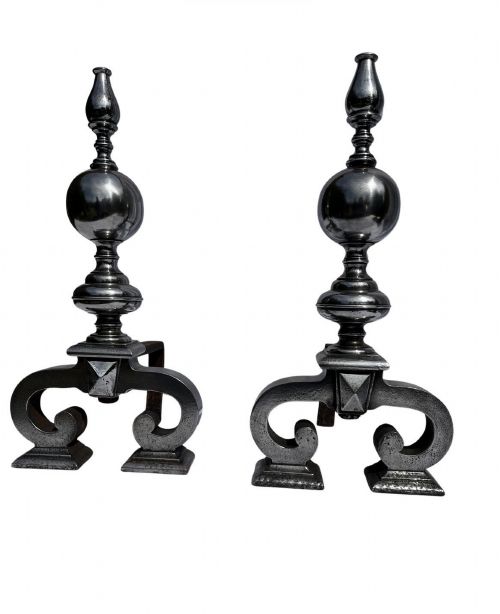


Metal Hearth Firedogs
Metal hearth firedogs hold logs above the hearth floor to improve draught and warm the room.
Metal Hearth Firedogs
When you search for metal hearth firedogs, you encounter pairs of upright metal supports designed to hold firewood inside a fireplace. The examples on this page span from the sixteenth century through the Victorian era and into the twentieth century.
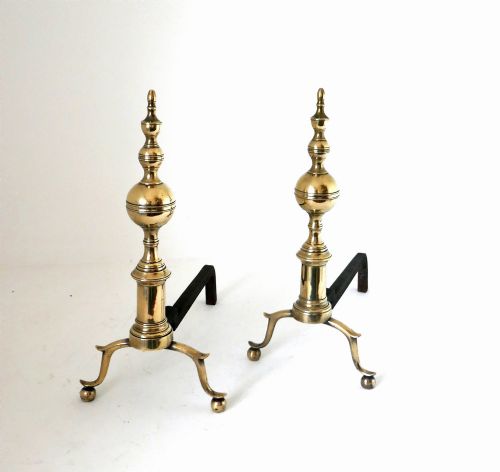
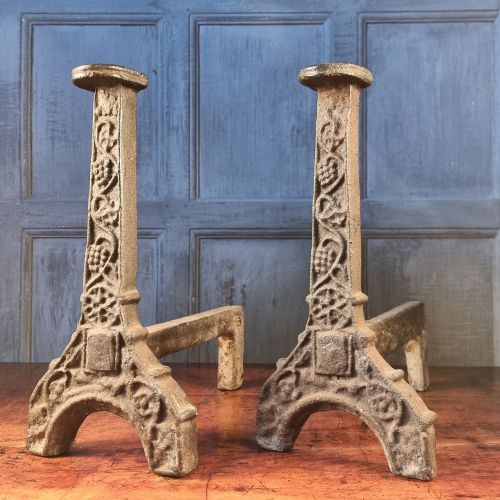
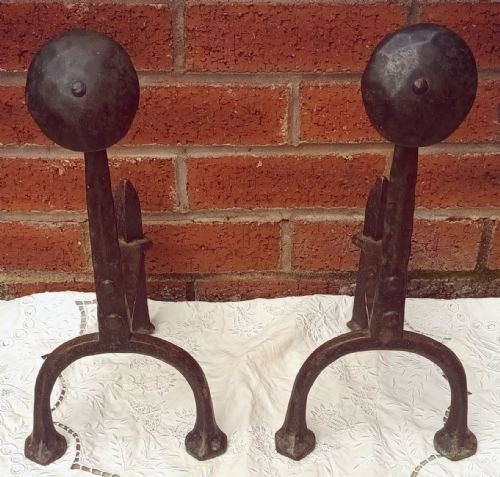
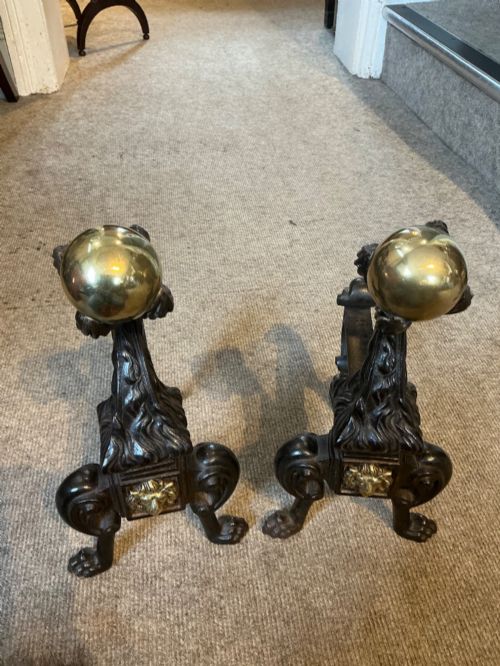
You meet various configurations, from simple hand-forged utility irons to ornate cast brass, bronze, and ormolu designs. Forms range from utilitarian wrought iron to elaborate Gothic, Arts and Crafts, and Regency styles.
Materials and construction methods
Blacksmiths shaped the earlier utility pieces by hand-forging wrought iron and steel over an anvil. This method produced sturdy, functional pairs intended for daily service on the hearth.
Later and more decorative pairs rely on founding techniques, using cast brass, bronze, and cast iron. Makers poured molten metal into moulds to achieve intricate surface details, figural motifs, and ornamental finials.
Listings feature periods ranging from the sixteenth century to the twentieth century, constructed in brass, wrought iron, bronze, and steel.
Distinctions in craftsmanship
Quality reveals itself in the crispness of the casting and the weight of the metal used. Substantial, heavily cast pairs demonstrate a higher grade of manufacture than lighter, thinner items.
Artisanal touches like hand-forged joinery and careful chasing on bronze or brass separate standard production items from finer work.
James Cartland and Son
The Metal Hearth Firedogs Glossary
- Andiron
- An alternative term for a firedog, consisting of a horizontal bar and an upright pillar. They support logs in an open hearth.
- Chenet
- The French term for a firedog, frequently applied to decorative ormolu and bronze pairs. These often feature sculptural mounts.
- Wrought iron
- Iron that is beaten and shaped by hand while hot. It yields a fibrous grain and high resilience.
- Ormolu
- Gilt bronze decoration applied to metalwork. It provides a bright golden surface finish on nineteenth-century pieces.
Metal Hearth Firedogs: Frequently Asked Questions
What are metal hearth firedogs used for?
Firedogs sit within an open fireplace to elevate logs off the hearth floor. This elevation allows air to circulate underneath the wood, improving the fire's draught and burning efficiency.
Beyond their practical utility, decorative pairs serve as prominent focal points within a room's fireplace surround, often matched with fenders and fire irons.
How do I clean brass firedogs?
Maintenance depends on the desired finish and the age of the metal. Gentle dusting and occasional wiping with a soft cloth preserve the surface without removing historic patination.
Harsh chemical polishes can strip away the aged character built up over centuries, so cleaning should be approached with caution.
Can I use antique firedogs in an active fireplace?
Many iron and steel examples remain robust enough to hold burning logs in a working hearth. Solid construction and heavy gauge metal withstand regular heat.
Delicate ormolu, thin brass, and figural bronze pairs suit decorative placement or gas-insert hearths better than heavy wood-burning fires.
How do I tell sixteenth-century firedogs from Victorian revivals?
Sixteenth-century Gothic pieces display hand-forged characteristics and distinct period joinery consistent with early blacksmithing methods. Their forms reflect structural utility rather than mass production.
Victorian revivals often utilise machine finishing, heavier uniform casting, or applied stylistic ornament that mimics earlier historical eras.