


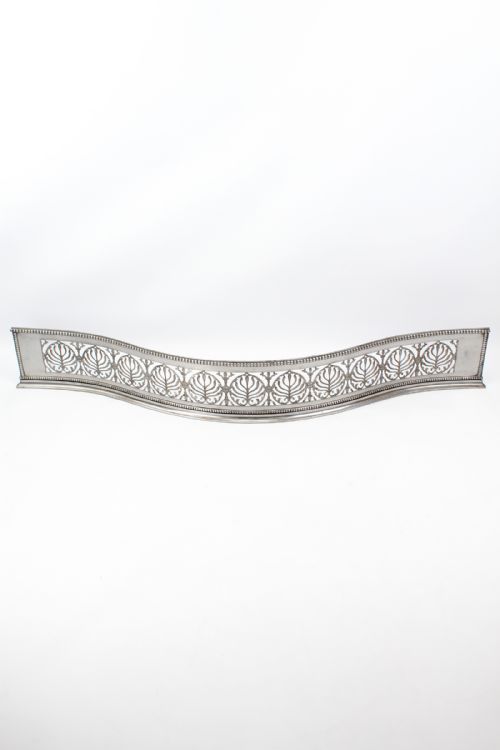

Metal Hearth Fender
A metal hearth fender protects the room from stray embers while framing the fireplace with period character.
Metal Hearth Fender
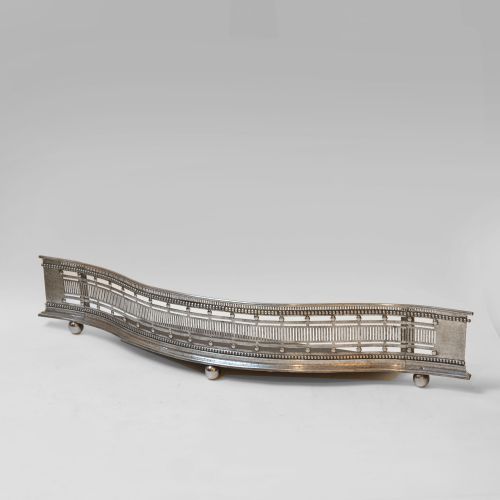
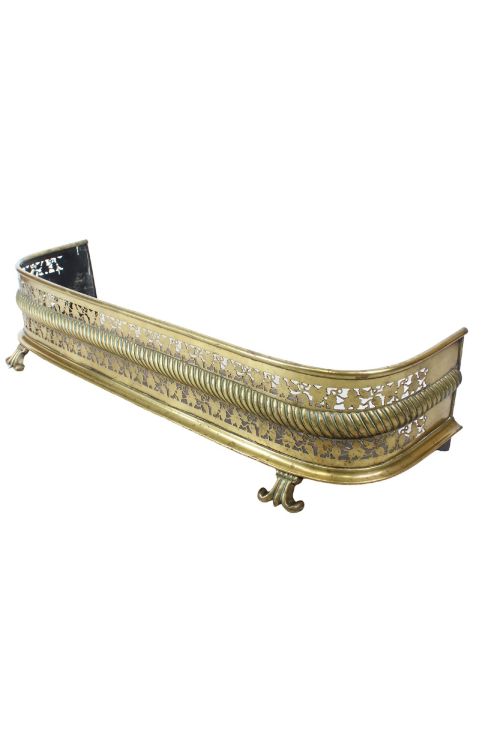
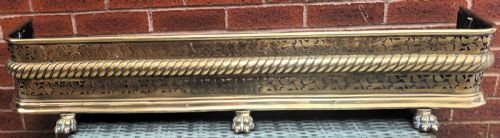
A metal hearth fender sits directly on the floor in front of a fireplace to contain ash and sparks, forming the boundary between the fire and the room. When you examine a metal hearth fender, you will encounter various forms ranging from low pierced brass frames to substantial steel structures.
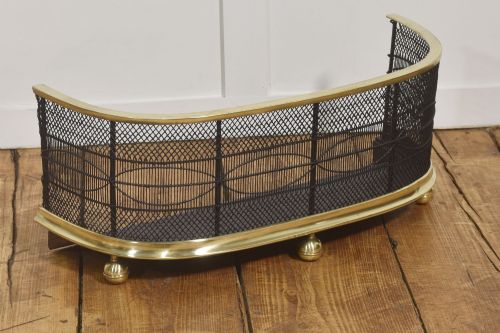
The selections span distinct periods including Georgian, Victorian, and Edwardian eras, reflecting changing domestic fashions around the fireplace. Many pieces incorporate specialised seating or protective elements such as leather club tops and mesh guards.
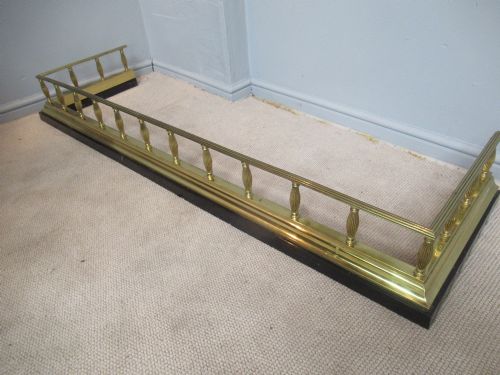
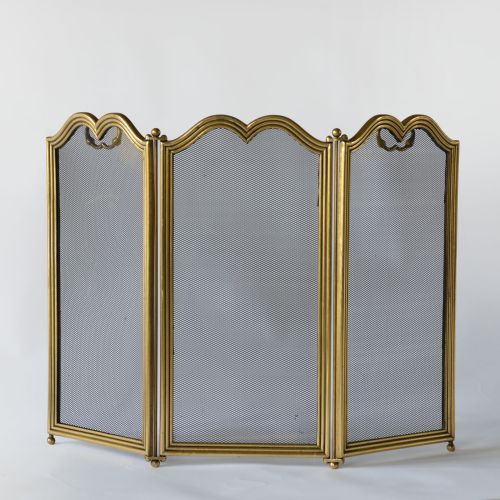
Makers utilised resilient metals to build these hearth surrounds, resulting in heavy functional objects designed for daily hearthside use. The typical formats include bowfront profiles, straight kerbs, and tripartite folding arrangements.
How they were made
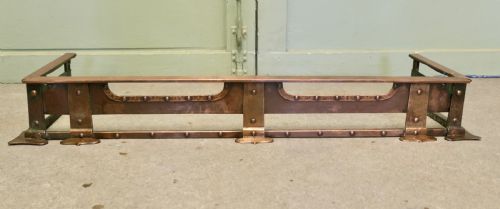
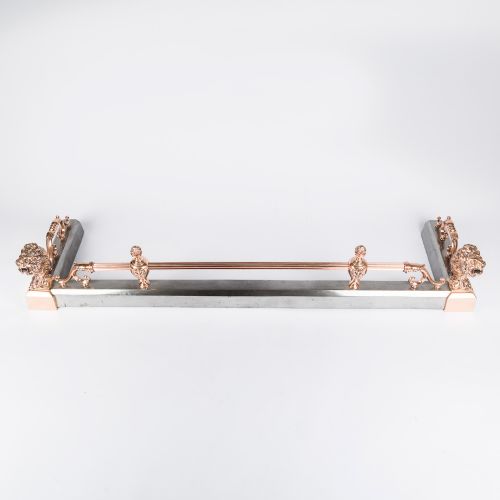
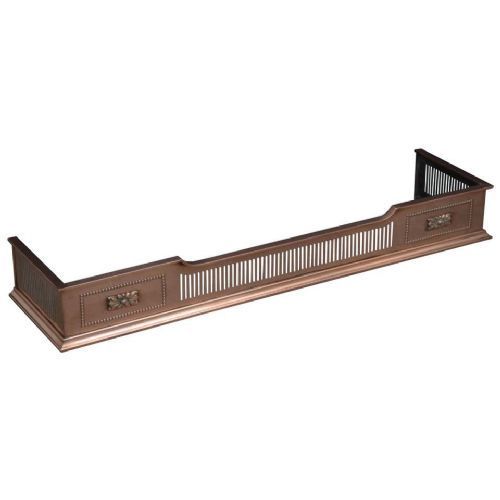
Artisans constructed these pieces using brass, polished steel, iron, and copper, often combining materials within a single frame. Pierced sheet metal, beaten panels, and riveted joints demonstrate the primary metalworking techniques employed across the workshops.
Leather upholstery appears on specialised club versions, secured to padded top rails above steel or iron frames. Decorative details such as flower patera, engraved motifs, and cast brass ornaments were applied to enhance the visible metal surfaces.
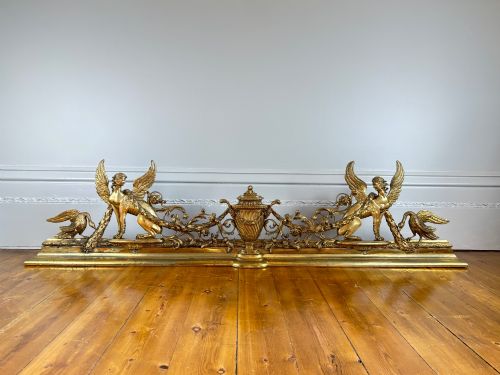
Materials span polished steel, wrought iron, and gilt bronze, often incorporating decorative motifs like lions and floral patera.
What varies in quality
Subtlety of detail and thickness of metal distinguish finer examples from standard production pieces. A heavier gauge of brass or steel provides greater structural integrity and longevity to the hearth surround.
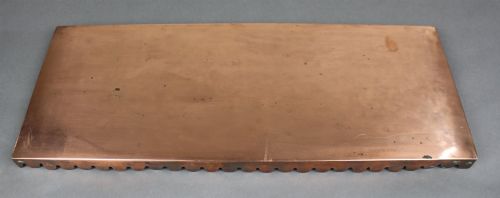
The refinement of decorative work, such as crisply pierced patterns and hand-beaten copper panels, marks the division between basic utilitarian items and exceptional workshop output.
E F Caldwell New York
The Metal Hearth Fender Glossary
- Club fender
- A low fireside surround featuring upholstered leather seats on the top rail. These comfortable ledges allowed people to sit close to the hearth.
- Pierced brass
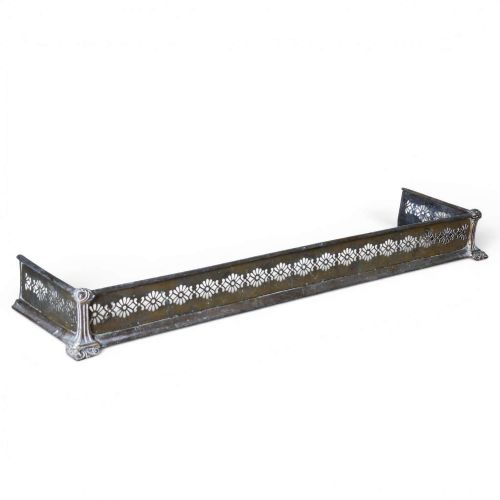
- Sheet brass perforated with decorative punched or cut designs. This technique lightened the visual weight of the metal kerb.
- Serpentine front
- An undulating curved shape following a convex centre flanked by concave sweeps. This flowing outline frequently appears on Georgian steel fenders.
- Patera
- A circular ornamental motif resembling a flat disc or rosette. Craftspeople applied these pressed or cast details to brass and copper frames.
Metal Hearth Fender: Frequently Asked Questions
What is a club fender?
A club fender is a hearth surround fitted with padded leather seats along the top rails. This design allowed individuals to sit directly beside the fire.
Such pieces combine metal frames made of steel, brass, or iron with traditional upholstery. They served as social seating areas in country houses and large reception rooms.
How do I date a metal fender?
Dating relies upon observing the prevailing style, construction methods, and materials used in the piece. Georgian examples often feature polished steel with serpentine fronts, whilst Victorian versions frequently utilise heavy pierced brass.
Arts and Crafts pieces display hand-beaten copper surfaces and riveted construction typical of the late nineteenth and early twentieth centuries. Comparing the decorative motifs helps confirm the period of manufacture.
What metals were used?
Craftspeople built these hearth surrounds using brass, steel, iron, and copper, sometimes incorporating gilt bronze or wirework. Polished steel and heavy brass were particularly common during the Victorian era.
Combinations of brass and steel frequently appeared together on Neoclassical and Regency designs. Copper gained widespread popularity during the Arts and Crafts movement.
Were these used for safety?
These items served a practical purpose by containing falling embers and protecting the surrounding floor coverings from heat. Wirework fire guards and nursery fenders provided an additional barrier for children.
Heavier kerbs acted as physical boundaries to keep furniture and people at a safe distance from open flames. Their sturdy construction ensured they could withstand constant proximity to heat.