
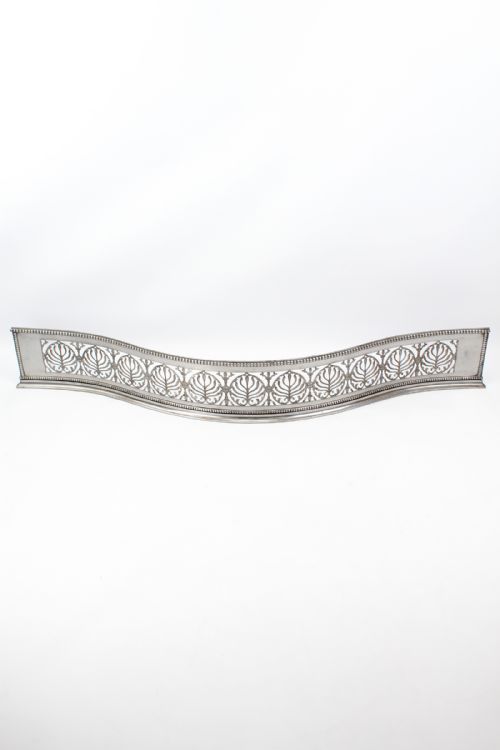


Steel Hearth Fender
A steel hearth fender anchors the fireplace with crisp metallic structure, protecting the room and framing the hearth.
Steel Hearth Fender
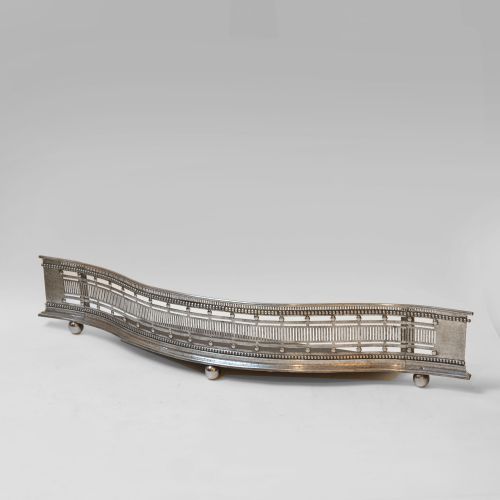
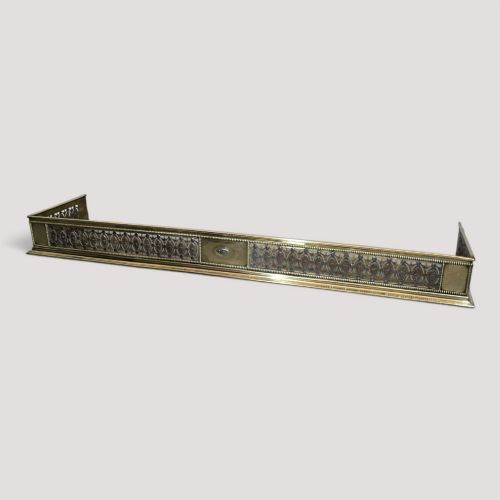
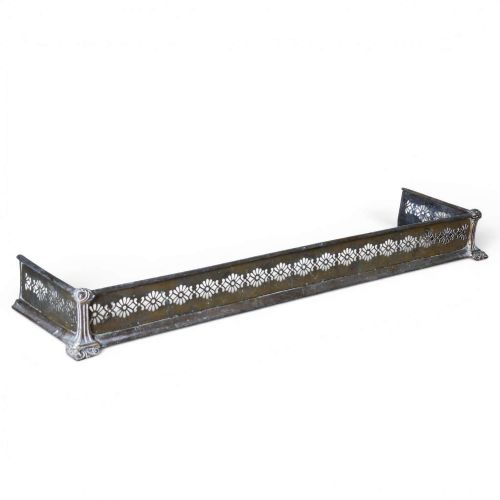
A steel hearth fender defines the fireplace surround, sitting directly on the floor to contain embers and frame the hearth. When you search for a steel hearth fender, you encounter forms ranging from simple linear rails to elaborate serpentine shapes designed for period fireplaces.
The pieces appearing on this page span the Georgian, Victorian, and Edwardian eras, alongside later twentieth-century interpretations. You will find standard hearth curbs as well as club fenders equipped with leather upholstered seats.
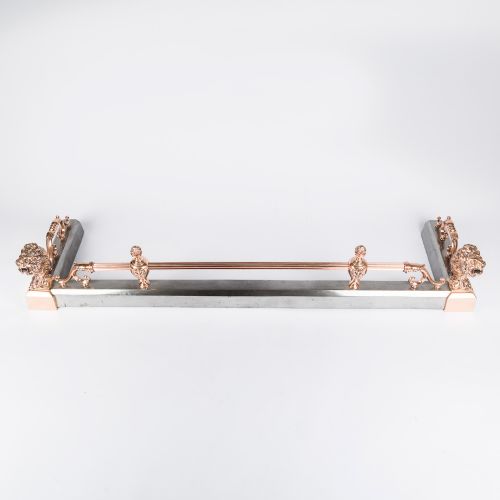
Designs incorporate bowfront and serpentine profiles, often pairing steel with brass, copper, or cast iron details. These accessories originate from traditional English settings, country houses, and formal town residences.
Materials and construction
Makers utilised steel as the primary structural body, frequently combining it with brass galleries, pierced panels, or polished steel surfaces. Secondary materials such as iron, copper, and bronze appear in mounts and decorative detailing.
Upholstered club fenders incorporate leather seating pads supported by metal frameworks, sometimes utilising oak for internal wooden elements. Pierced decoration, engraving, and cut steel applications required precise hand metalworking skills.
Some nineteenth-century club fenders were originally installed in gentlemen's clubs so members could warm their shins while seated.
Factors of quality
The distinction between standard utility items and finer examples lies in the crispness of the metalwork and the complexity of the silhouette. Serpentine and bowfront profiles demand advanced forging and shaping abilities compared to straight rails.
Surface patination and the integration of mixed metals dictate visual appeal. Examples featuring hand-engraved details, pierced decorative friezes, and well-preserved brass or bronze mounts represent superior craftsmanship.
George Bullock
The Steel Hearth Fender Glossary
- Serpentine fender
- A hearth guard featuring a gentle curving front line that undulates outward in the centre. This shape was popular in Georgian drawing rooms.
- Club fender
- A low metal frame featuring cushioned leather seats on top, designed so people can sit close to the fire. They often appear in 19th-century styles.
- Cut steel
- Small faceted steel studs riveted individually to a backing plate to catch the firelight. This technique demands meticulous hand assembly.
- Pierced decorative work
- Metal sheets perforated with geometric or floral patterns to allow light and heat to pass through. It adds lightness to heavy steel structures.
- Bowfront fender
- A hearth barrier curving outward in a single convex arc towards the room. This profile softens the rigid lines of the fireplace opening.
Steel Hearth Fender: Frequently Asked Questions
How do I choose the right size fender?
Measure the width and projection of your fireplace opening and hearth stone before browsing. You need sufficient clearance between the fire basket and the inner edge of the metal curb.
Allow a small margin on each side so the fender sits comfortably centred on the stone floor without crowding the hearth surround.
What is a club fender used for?
A club fender provides integrated seating around the hearth while retaining the protective barrier function of a standard guard. The upholstered top allows people to sit directly beside the fire.
Originating in country houses and gentlemen's clubs, these sturdy frames combine metal bases with leather pads for comfortable fireside seating.
How do I tell Georgian from Victorian fenders?
Georgian examples often display restrained neoclassical lines, fine serpentine curves, and delicate pierced steel or brass embellishments. They rely on elegant proportions and hand engraving.
Victorian pieces tend to be heavier, sometimes incorporating cast iron, darker finishes, and bolder decorative motifs like lions or mixed metal accents.
How do I clean a polished steel fender?
Dust the metal regularly with a dry microfibre cloth to prevent the accumulation of grit and moisture. Avoid harsh chemical cleaners that can strip historic surfaces.
For polished steel, use a specialist metal conditioner sparingly on a soft cloth, testing a hidden area first to ensure the finish remains undisturbed.