
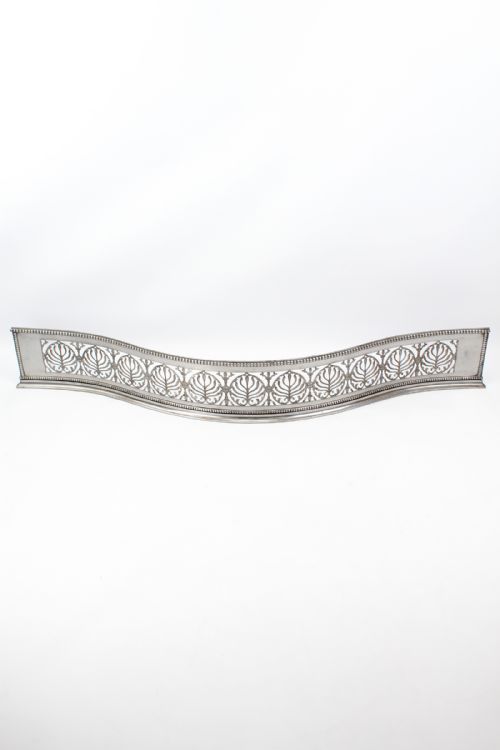


Georgian Steel Curb
A Georgian steel curb protects the hearth with enduring metalwork from an era when fire furniture commanded the finest craftsmanship.
Georgian Steel Curb
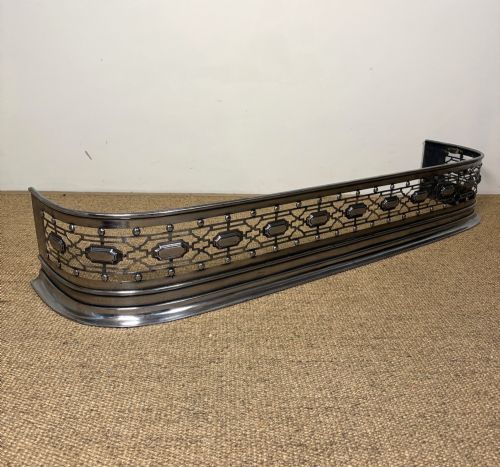
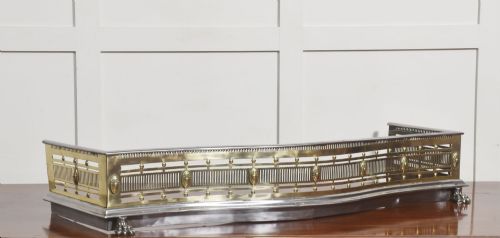
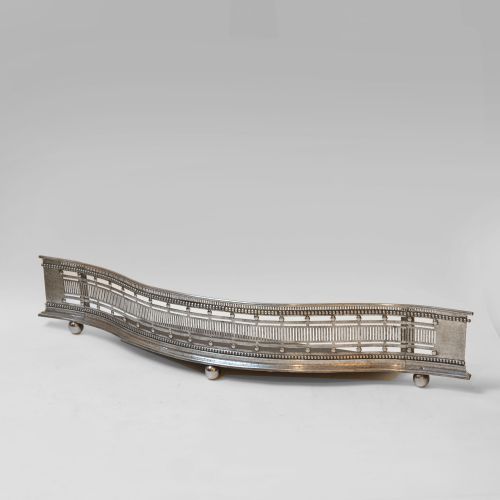
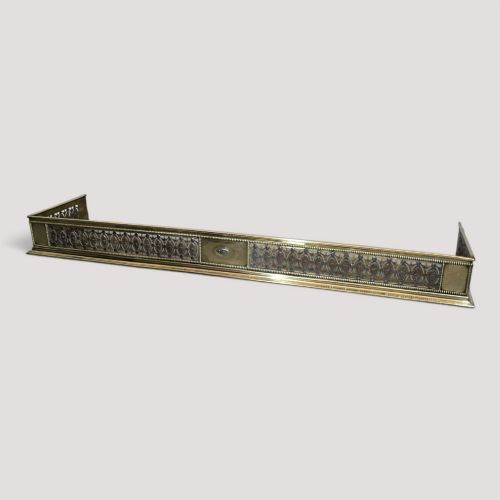
A Georgian steel curb is a heavy fireplace fender designed to contain ash and embers while anchoring the hearth. These pieces appear in forms such as fire hearth fenders, curved bowfront designs, and serpentine fronts.
Buyers meet examples spanning the Georgian period alongside items dated to 1750, 1800, 1850, and the wider nineteenth century. Regency styling and George III aesthetics emerge frequently across the available selections.
Originating as essential domestic hardware, these items range from simple low barriers to large decorative hearth curbs measuring over four feet in width.
Materials and construction
Makers shaped these curbs primarily from steel, polished steel, and cut steel, often combining them with contrasting brass elements to highlight the metalwork. Skilled smiths pierced the metal sheets to create intricate decorative patterns along the fender front.
Surfaces received careful engraving, particularly on serpentine and bowfront profiles, demonstrating advanced metalworking techniques of the period.
Every steel curb hides years of hearthside warmth beneath its polished exterior.
Judging the work
Quality rests upon the crispness of the pierced decoration and the precision of the engraved lines across the steel. Serpentine and bowfront shapes demand greater skill from the smith than straight rails do.
The integration of brass details and cut steel highlights elevates an ordinary hearth guard into a refined architectural accessory.
The Georgian Steel Curb Glossary
- Curb
- A low metal barrier placed around the edge of a hearth to keep burning fuel and ash contained. It serves both a protective and an aesthetic function in the room.
- Serpentine
- A shape characterised by a gently undulating curve that sweeps outward in the centre and inward at the ends. This contour requires precise metal shaping.
- Cut steel
- Small faceted steel studs riveted to a backing plate to catch and reflect firelight. It was a popular decorative technique for high-status fireplace accessories.
- Bowfront
- A convex curved profile projecting outward toward the room. This form softens the heavy lines of a stone or brick hearth.
Georgian Steel Curb: Frequently Asked Questions
What is a steel curb used for?
A steel curb sits directly on the hearth to contain rolling logs, hot embers, and ash falling from the open fire. It forms a physical barrier that protects surrounding carpets and flooring from stray sparks.
Beyond safety, these curbs frame the fireplace opening, adding structure and metallic contrast to the chimney breast.
How do I date a steel fender?
Dating relies on stylistic clues such as serpentine proportions, the presence of cut steel embellishments, and the character of the hand engraving. George III examples often display lighter pierced fretwork compared to later nineteenth-century pieces.
Materials also offer context, as the transition from plain iron to polished steel and mixed brass elements aligns with shifting Regency tastes.
What is the difference between a fender and a curb?
In historical terminology, the words fender and curb describe the same hearth barrier interchangeably. Both terms refer to the low metal frame enclosing the front of the fireplace.
Regional preferences and individual maker descriptions usually dictate which word appears on a specific piece.
How do I fit a hearth fender?
Measure the width and depth of your fireplace opening and hearth stone to ensure the curb leaves adequate clearance. Most pieces simply rest in position under their own weight due to the heavy gauge of the metal.
Ensure the floor surface is level so the metal frame sits flush against the stone without rocking.