




Metal Hearth Curb
A metal hearth curb frames an open fire, holding back embers and setting the boundary of the hearth.
Metal Hearth Curb
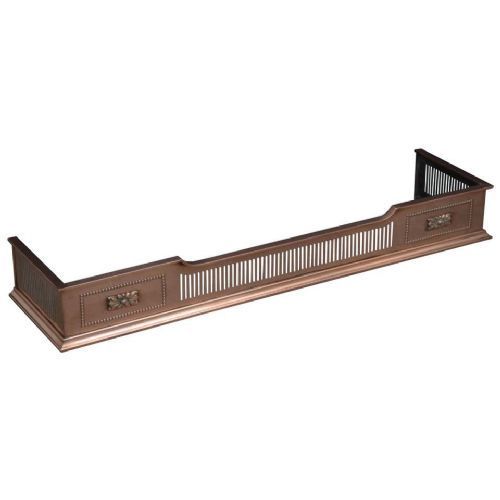
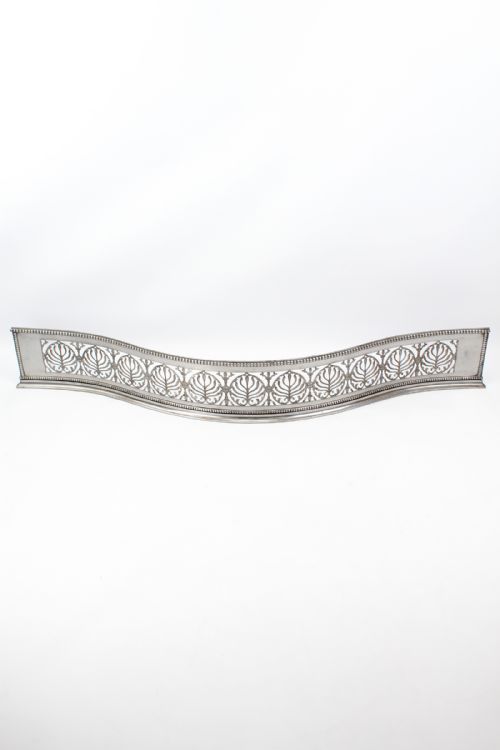
A metal hearth curb is encountered here in forms spanning the Georgian, Victorian, and Edwardian periods. These functional boundaries for the hearth appear as fireplace fenders, fire fenders, and hearth fenders fashioned from durable metals.
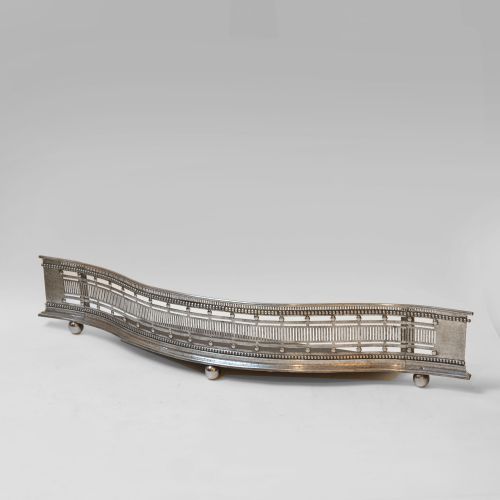
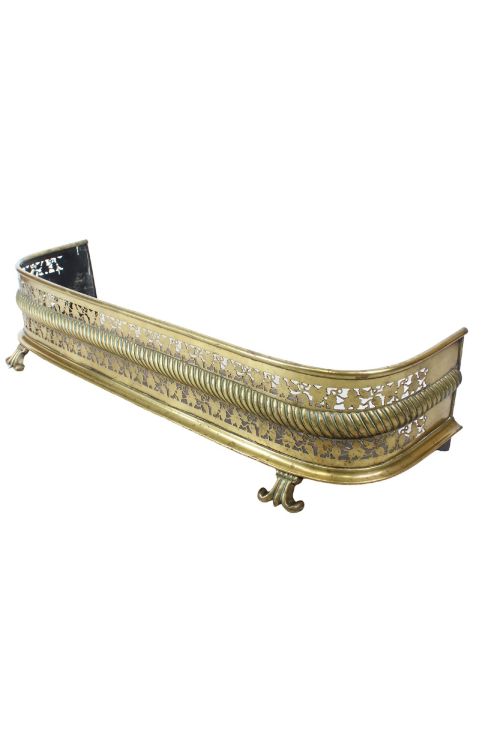
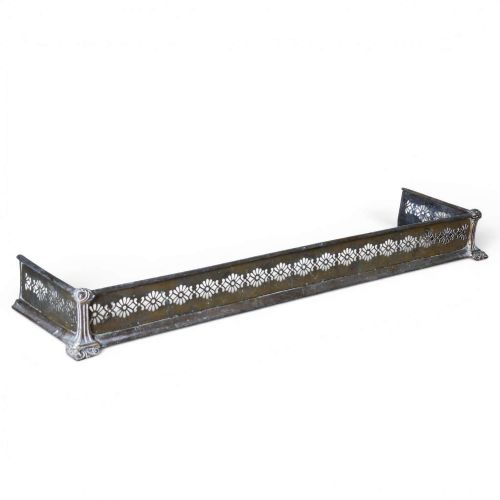
Georgian examples lean towards refined steel and serpentine fronts, often engraved or pierced with geometric patterns. Victorian and Edwardian pieces bring pierced brass, beaten copper, and combinations of iron and polished steel into domestic spaces.
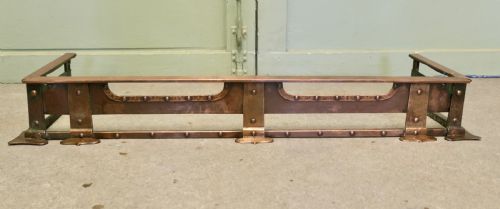
Makers utilised distinct styles across these eras, moving from neoclassical symmetry to the organic whiplash lines of Art Nouveau and the hammered textures of the Arts and Crafts movement.
Materials and Construction
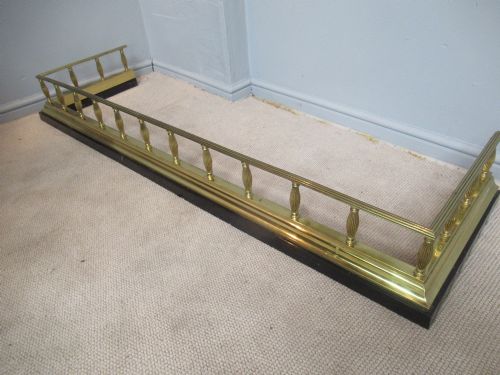
The construction of a metal hearth curb relies on brass, steel, copper, and iron, frequently paired within a single piece to contrast bright metalwork against dark frames. Workshops shaped sheet steel and cast iron, applying piercing, engraving, and riveting by hand.
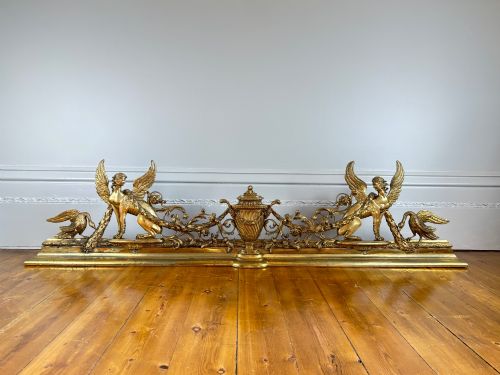
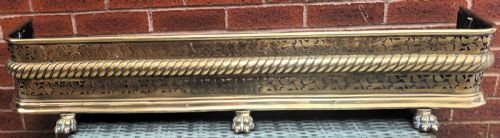
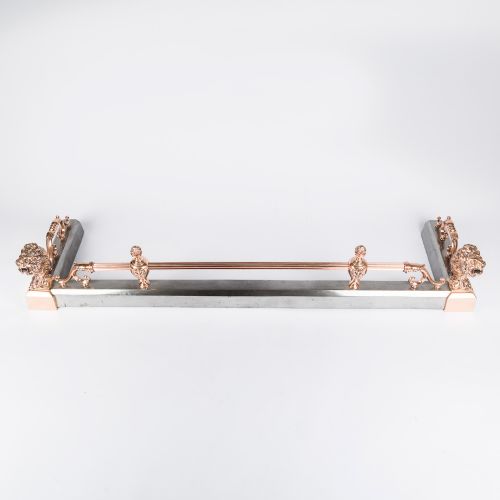
Decoration involves applied elements such as flower patera, beaded borders, lions, and bronze chenets. Copper surfaces show beaten or riveted textures, while brass components are often pierced in intricate patterns or polished to a high finish.
Listings feature materials spanning plain iron and steel alongside warm polished brass and beaten copper.
Defining Quality
Quality in a metal hearth curb rests upon the crispness of the piercing, the weight of the metal, and the integrity of the joins. Heavier gauge steel and thick cast brass demonstrate superior material substance compared to lighter utilitarian pieces.
The refinement of decorative details, from hand-engraved serpentine fronts to securely fastened applied ornamentation, separates standard production items from masterwork examples of period metalwork.
E F Caldwell New York
The Metal Hearth Curb Glossary
- Fender
- A low metal guard placed around the hearth to contain stray embers and ash from an open fire. These objects define the perimeter of the fireplace.
- Serpentine
- A curved shape featuring a convex centre flanked by concave ends, frequently seen on Georgian steel hearth curbs. This profile adds visual movement to the metal front.
- Pierced
- Metalwork perforated with decorative cut-out patterns, commonly found on Victorian brass curbs. This technique lightens the visual weight of the heavy metal.
- Patera
- A circular ornamental bas-relief resembling a classical libation dish, often incorporated into Victorian copper and brass fender designs as a floral motif.
- Chenet
- The French term for an andiron, used to support logs within the hearth fire grate. These matched metal supports often accompany French bronze curb assemblies.
Metal Hearth Curb: Frequently Asked Questions
What is a metal hearth curb used for?
A metal hearth curb serves to keep falling embers and hot ash safely contained within the fireplace footprint. It also provides a physical barrier protecting the room from stray sparks.
Beyond utility, these curbs frame the hearth visually, anchoring the fireplace within the decoration of the room.
How do I clean a brass fender?
Cleaning solid brass requires gentle dusting and appropriate metal cleaners formulated to preserve the underlying alloy. Avoid harsh abrasives that remove historical surface character and patina.
Polishing should be done sparingly to maintain the warm metallic lustre developed over decades of use.
How do I tell Georgian from Victorian curbs?
Georgian curbs typically feature fine steel construction with serpentine profiles and precise engraved decoration. They reflect classical restraint and linear symmetry.
Victorian pieces introduce heavier cast brass, pierced sheet metal, and industrial combinations of iron and copper, often showing more ornate or eclectic styling.
Will an antique fender fit my fireplace?
Antique curbs come in various lengths and depths, including extending models designed to adjust across different hearth dimensions. Measuring both the width and projection of your hearth space is essential before selection.
Many period pieces were handmade for specific openings, making exact dimensional matching necessary.