
Metal Candlestick Light
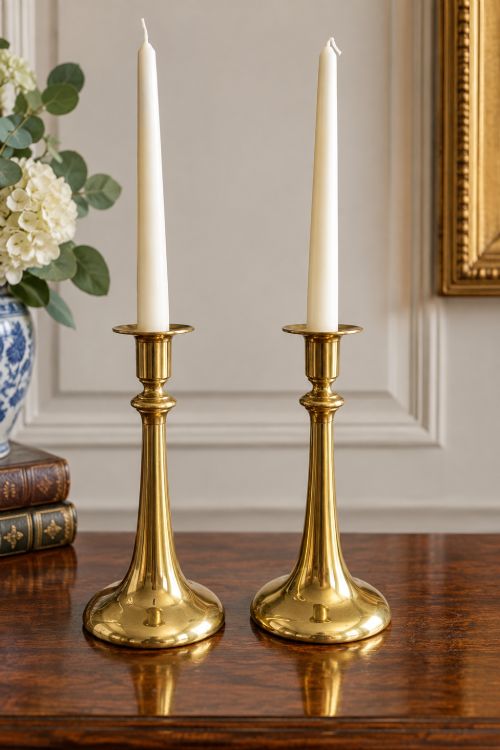
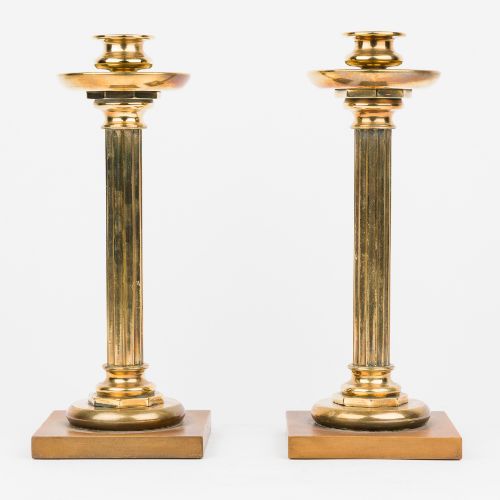
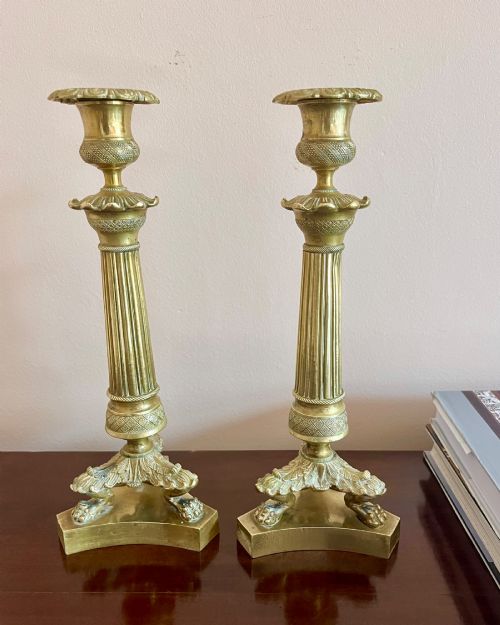
These metal candlestick light designs bring sculptural weight and warm illumination to a room, offering functional historical craft.
Metal Candlestick Light
A metal candlestick light search brings together centuries of domestic lighting, ranging from single tapers to multi-branch candelabra and converted table lamps. Buyers encounter functional objects that transitioned from essential illumination to decorative mantel and table accents.
The versions most commonly met on this page span the Georgian, Victorian, and Edwardian periods, alongside early twentieth-century examples in various revival styles. Brass and pewter examples dominate the earlier centuries, while bronze, ormolu, and silver plate emerge strongly in the nineteenth century.
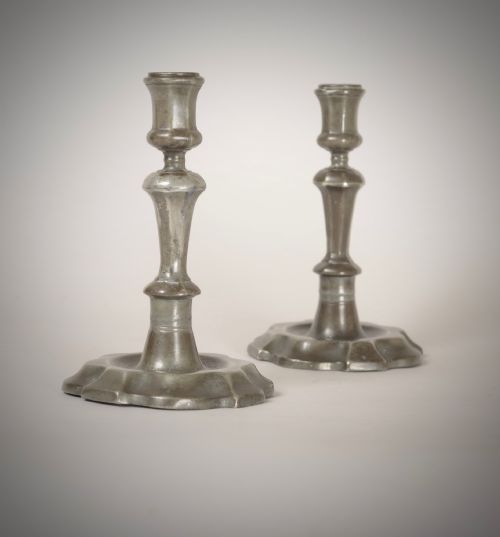
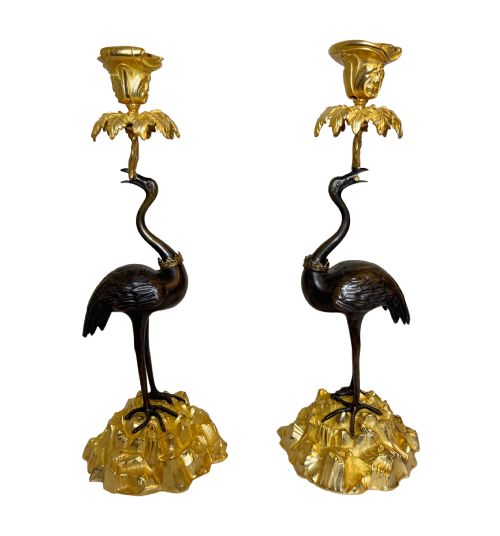
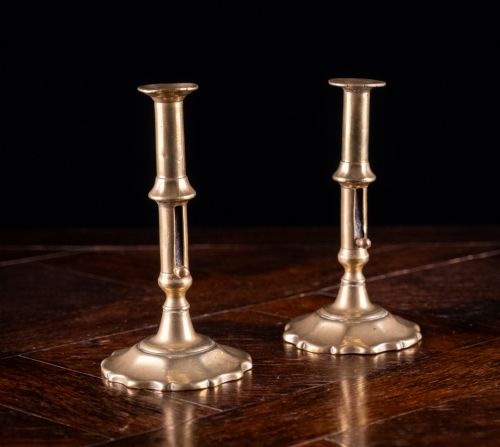
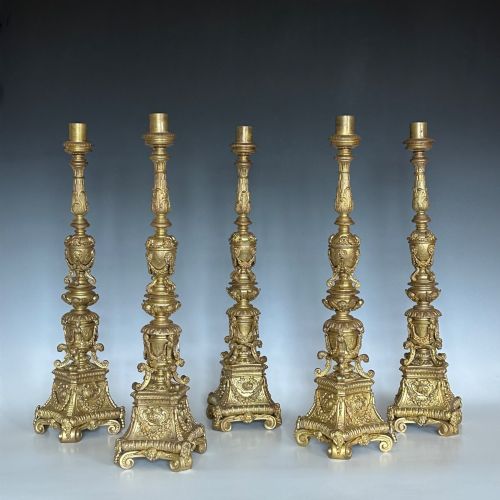
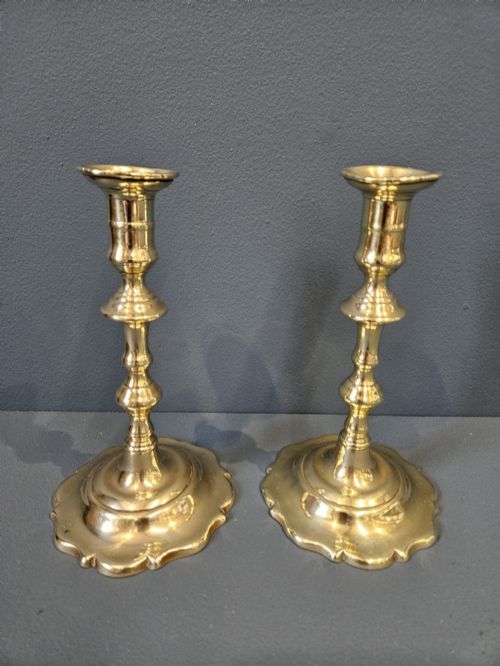
Forms vary from simple petal-base brass sticks and seamed ejector models to sculptural figural pairs cast in spelter or bronze. Floor candelabra and architectural wrought iron pieces also appear, providing substantial statement lighting for larger interiors.
How they were made
Early brass and pewter pieces often rely on casting methods, including seamed construction where components were joined together during manufacture. Sheet iron and gun metal are also shaped into utilitarian forms like hogscraper or spiral designs.
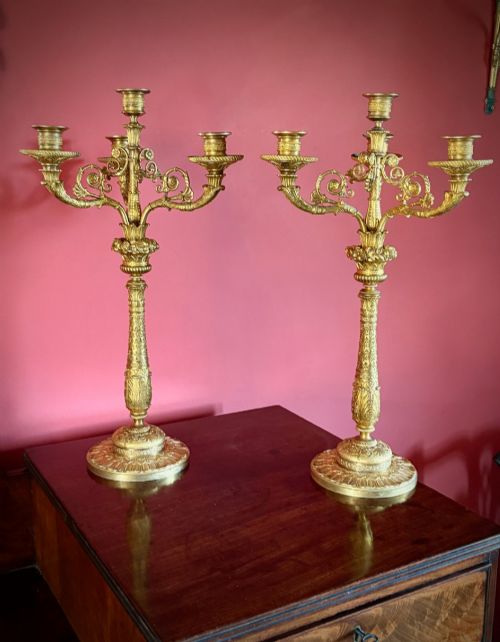
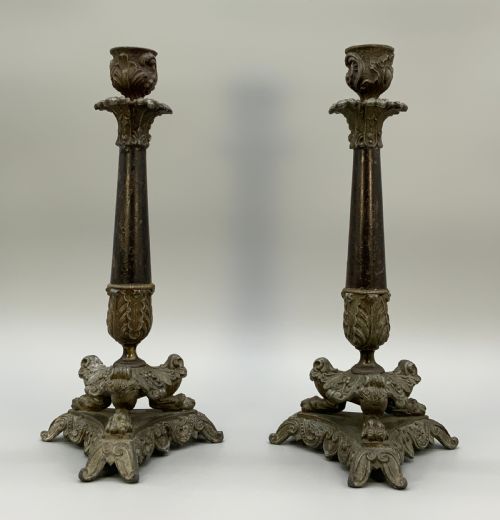
Nineteenth and early twentieth-century examples utilise more elaborate techniques such as gilt bronze, ormolu, and cold-painted spelter. Decorative details incorporate applied motifs, marble bases, and parcel gilt finishes applied to silver-plated surfaces.
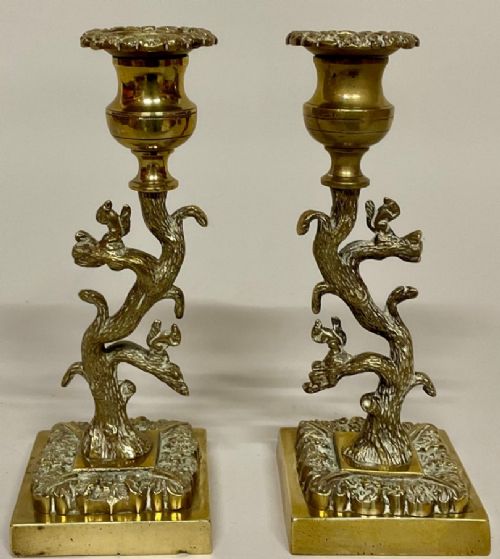
Squirrels clamber up cast bronze tree branches on Regency candlesticks, bringing woodland life directly onto the dining table.
What varies in quality
Quality rests on the crispness of the casting and the integrity of the metalwork assembly, distinguishing mass-produced items from finely chased studio or workshop output. Finer pieces retain sharp surface detail in decorative motifs, foliage, and figural elements.
The choice of materials and the preservation of original patination dictate the character of each piece. Heavy gauges of brass, well-defined joinery, and intact surface gilding or plating elevate the standing of an item within its period.
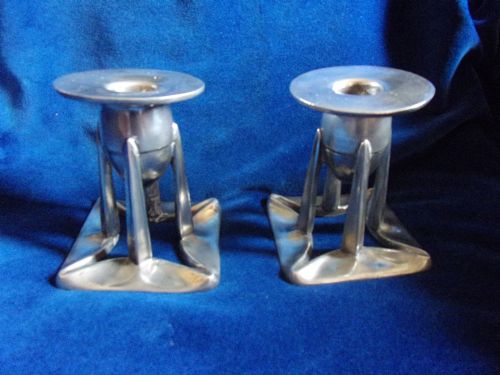
Archibald Knox·Mappin and Webb
The Metal Candlestick Light Glossary
- Ejector candlestick
- A type of brass candlestick fitted with an internal mechanism to push out the remaining stub of a wax candle. This clever device made cleaning and reloading the socket much simpler.
- Hogscraper
- A simple sheet iron chamberstick featuring an adjustable internal push-up mechanism. Its name derives from its supposed visual similarity to a tool used in pig slaughtering.
- Ormolu
- Finely ground high-carat gold applied to a bronze base using a mercury amalgamation process. This technique gives objects a brilliant, lasting metallic lustre.
- Pricket
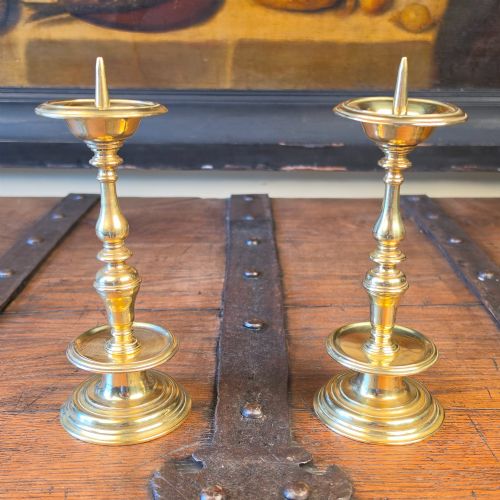
- A sharp metal spike set in the centre of a drip pan to hold large candles securely in place. This form is frequently found on older ecclesiastical and ritual lighting.
- Spelter
- An alloy primarily composed of zinc and copper, often cast into decorative figural shapes and painted to imitate bronze. It provides a more affordable alternative to heavier bronze casting.
Metal Candlestick Light: Frequently Asked Questions
How do I clean antique brass candlesticks?
Dust gently with a soft, dry cloth to preserve the natural aged patina accumulated over the centuries.
Avoid harsh chemical polishes that strip away historical character and dull the warm metallic surface.
Were these candlesticks converted to lamps?
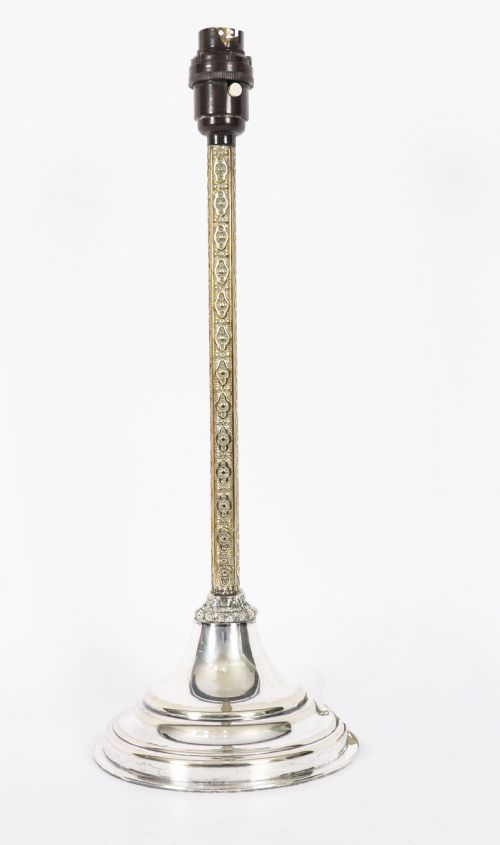
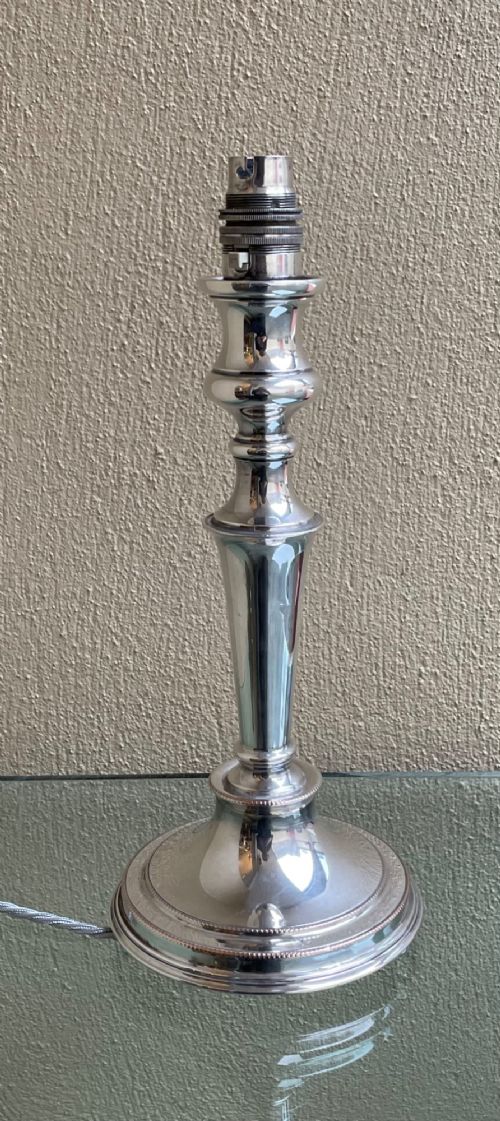
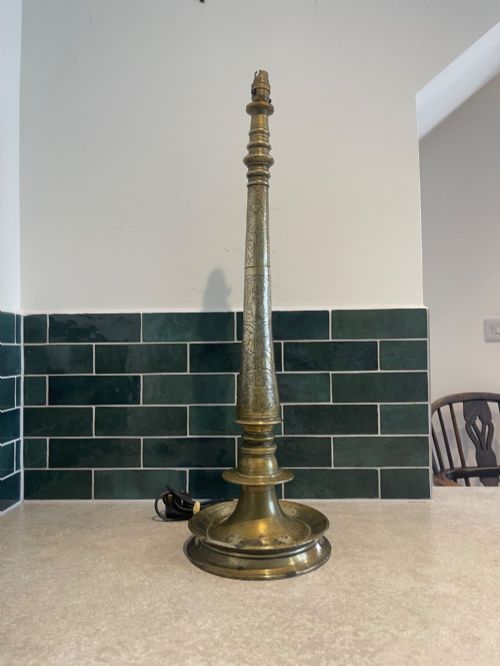
Some listings feature table lamps that started life as traditional candle holders before receiving electrical fittings later.
Conversion methods vary, so checking whether the original structure remains intact is helpful for collectors.
How can I date an old candlestick?
Manufacturing techniques like seamed construction, base shapes, and distinct alloy compositions provide key clues to the era.
Stylistic markers such as Georgian petal bases or Art Deco geometry also point toward specific decades.
Where should I place floor candelabra?
Architectural floor candelabra suit large living spaces, hallways, or empty corners needing height and dramatic presence.
Ensure they stand on stable, level flooring away from heavy foot traffic to prevent accidental tipping.