
Mens Silver Watch
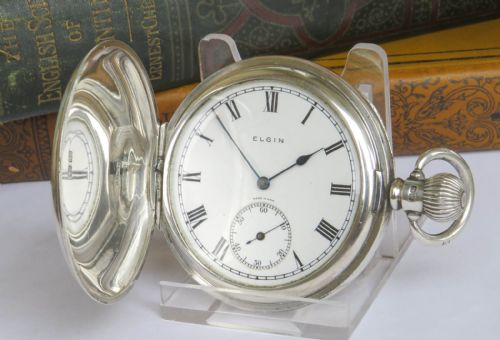
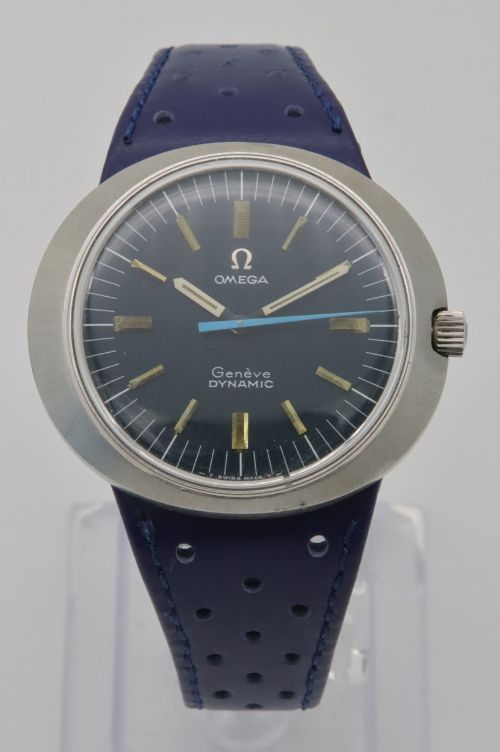
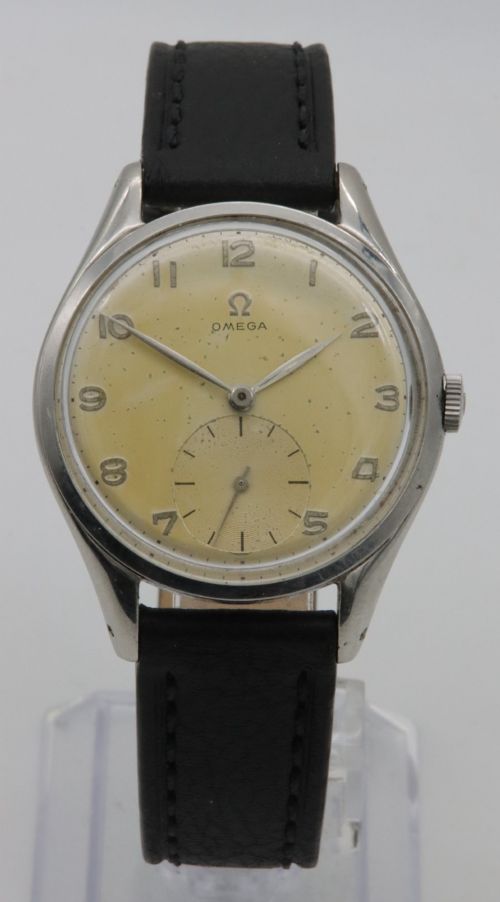
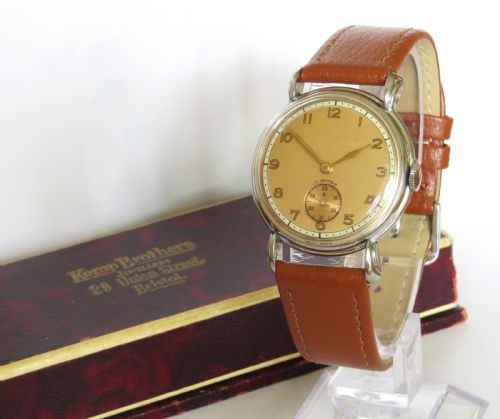
These pieces for a mens antique silver watch span the late nineteenth century through to the mid-twentieth century, offering mechanical reliability and traditional craftsmanship.
Mens Silver Watch
When searching for a mens antique silver watch, buyers encounter diverse forms ranging from early pocket watches to later wristwatches and accompanying chains.
The selections span Victorian, Edwardian, and Art Deco styles, alongside mid-century designs produced in silver, sterling silver, and stainless steel.
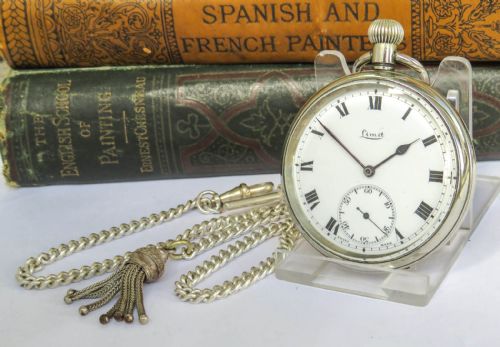
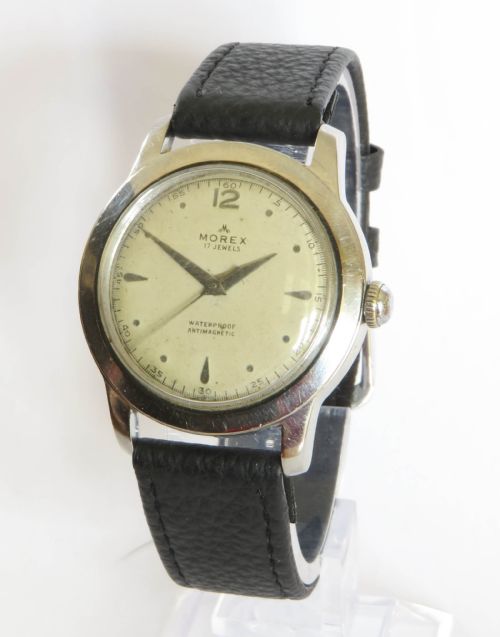
Pocket watches dominate the earlier eras, while wristwatches and albert chains appear more frequently as the twentieth century progresses.
How they were made
Makers utilised solid silver and sterling silver for watch cases, chains, and fobs, often combining these with glass crystals and enamel dials.
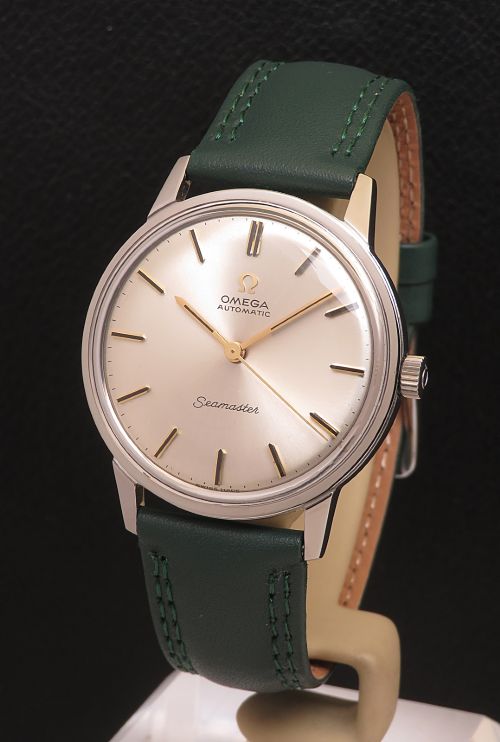
Movements were assembled with brass components, while later wristwatches incorporated stainless steel and leather straps.
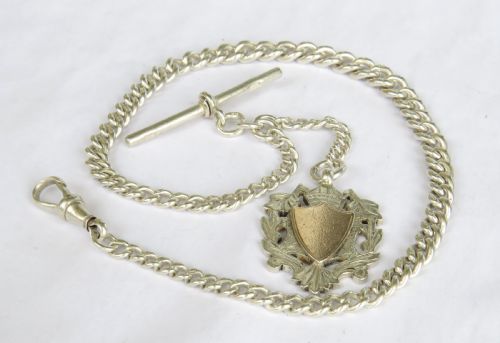
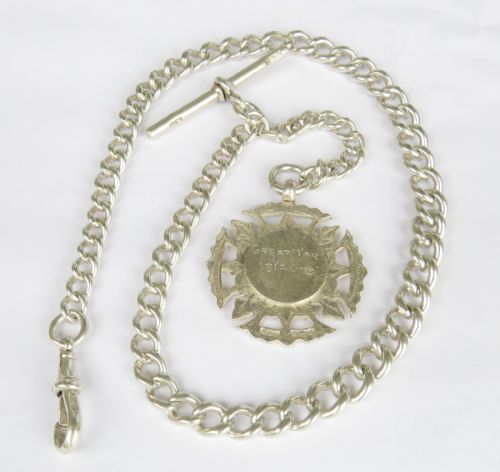
Craftsmen shaped curb links, trombone links, and figaro patterns for watch chains, attaching functional elements like dog clips and T-bars.
Listings include materials such as enamel, silver, glass, sterling silver, stainless steel, leather, acrylic, and brass.
What varies in quality
The standard of execution in a mens antique silver watch depends upon the precision of the movement and the integrity of the silver case.
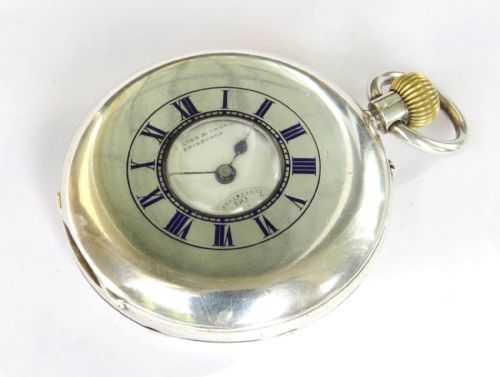
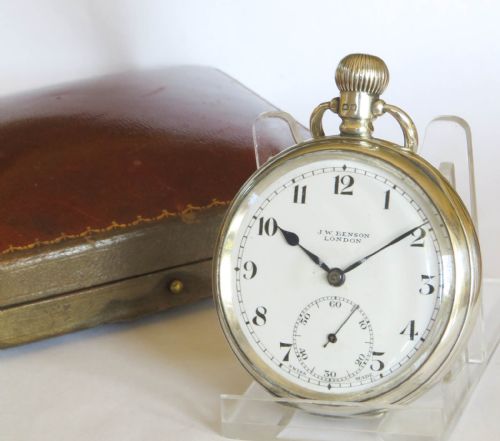
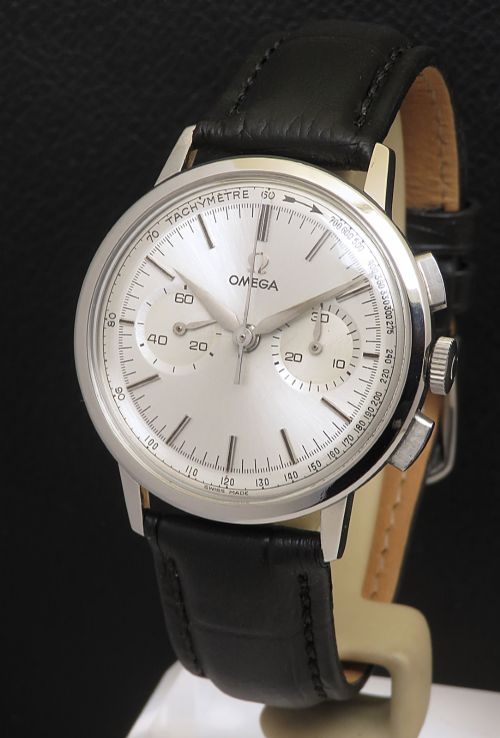
Makers such as Hamilton & Inches, J W Benson, and Omega established varying tiers of refinement in their pocket watches and chronographs.
Heavier silver weight in albert chains and better preservation of enamel dials separate exceptional examples from standard specimens.
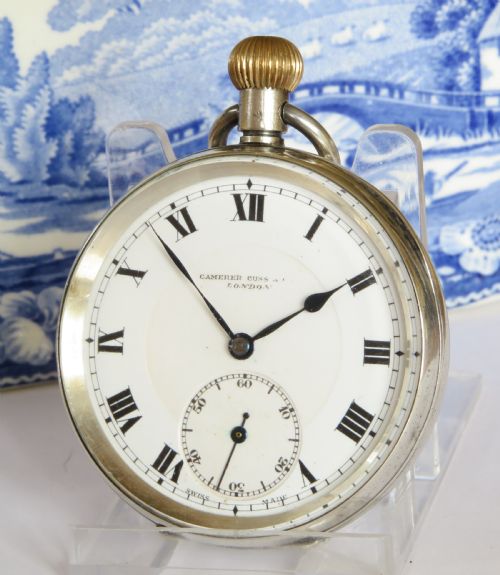
Hamilton and Inches·Hinds London·J W Benson·Camerer Cuss·Elgin·Montilier·Omega·Bulova·Cyma·Eterna·Gruen·Longines·Tavannes
The Mens Silver Watch Glossary
- Hunter pocket watch
- A pocket watch fitted with a spring-loaded metal cover that protects the glass dial from damage. This design required the user to press a crown button to release the lid.
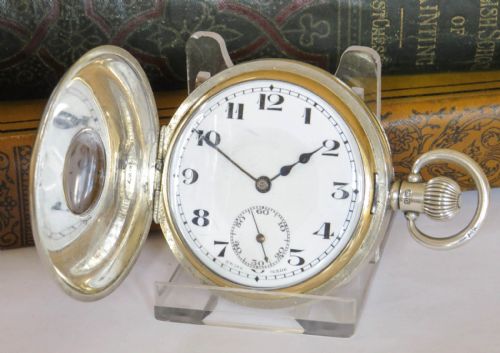
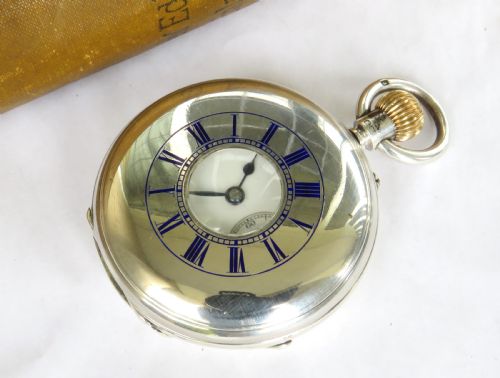
- Half hunter pocket watch
- A pocket watch featuring a metal case lid with a small glass aperture in the centre. This allows the wearer to read the hands without opening the cover.
- Fusee
- A conical pulley mechanism used in older mechanical timepieces to equalise the torque of the mainspring as it unwound. It represents a traditional method of improving timekeeping accuracy.
- Albert chain
- A decorative chain attached to a pocket watch and secured through a buttonhole or waistcoat pocket. They frequently include T-bars, fobs, and dog clips.
- T-bar
- A transverse metal bar attached to the centre of an albert chain used to anchor the chain securely through a waistcoat buttonhole.
Mens Silver Watch: Frequently Asked Questions
How do I wind a pocket watch?
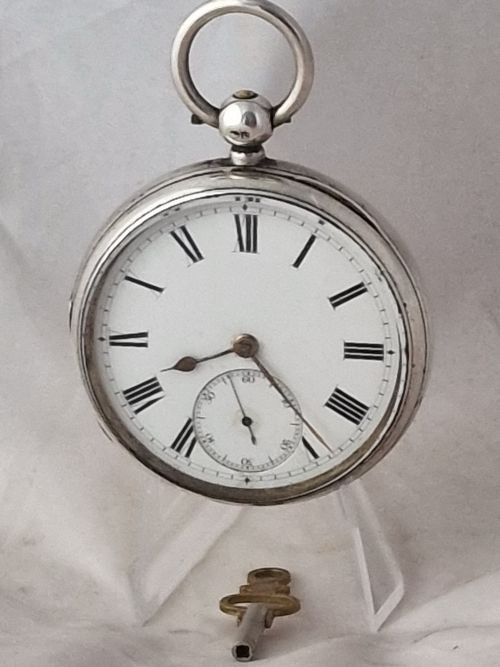
Pocket watches generally wind via the crown at the top of the case or through a key-wound mechanism on older models. Turning the crown clockwise until resistance is felt tensions the mainspring.
Care should be taken not to overwind mechanical movements, as this can damage the internal spring components.
What is the difference between silver and sterling silver?
Silver refers to the precious metal element, while sterling silver specifically denotes an alloy containing ninety-two point five percent silver and seven point five percent other metals, usually copper.
Sterling silver provides greater durability for items like watch cases and albert chains while maintaining a bright metallic lustre.
How do I wear an albert chain?
An albert chain is secured by passing the T-bar through a buttonhole on a waistcoat or jacket. The watch itself then rests in the corresponding pocket.
Fobs or medals hang from the pendant drop in the centre of the chain for decorative effect.
Can these watches be worn daily?
Many antique watches remain reliable timekeepers when serviced correctly by a professional horologist. However, older movements lack modern shock resistance and water sealing.
Daily wear requires careful handling, avoiding moisture and magnetic fields to preserve the vintage mechanism.