
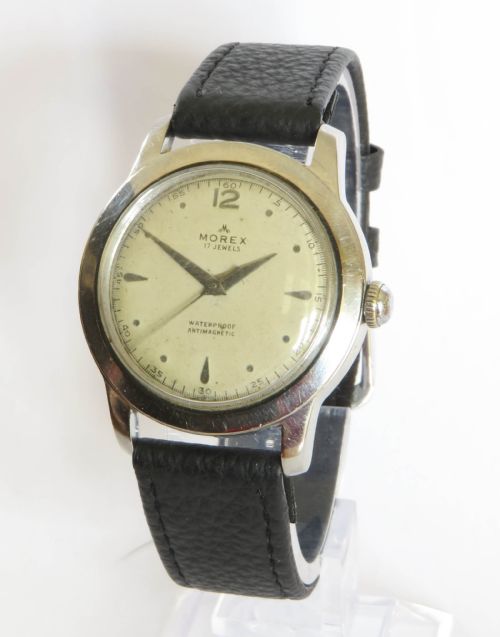
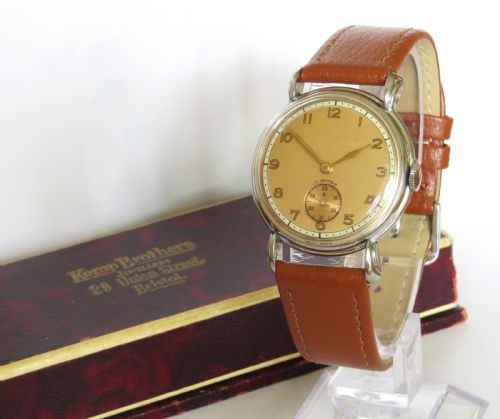
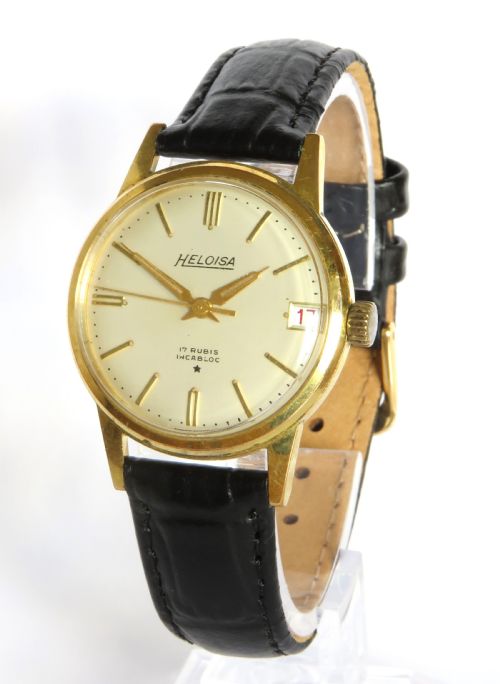
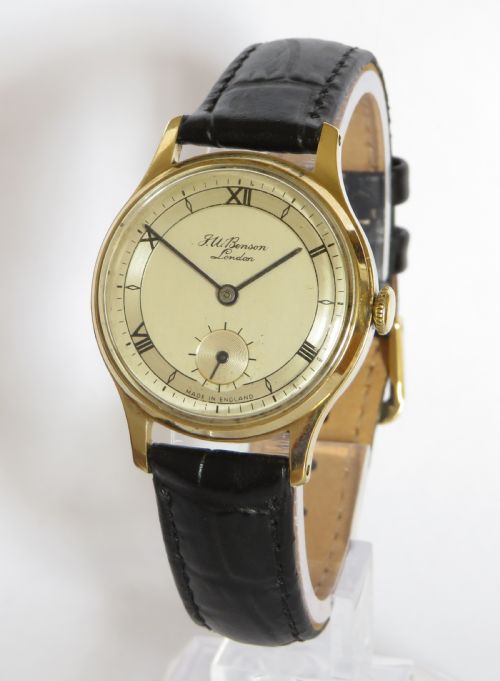
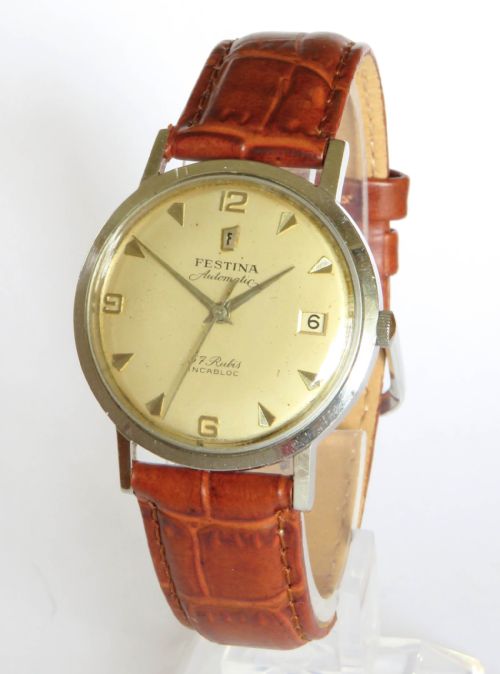
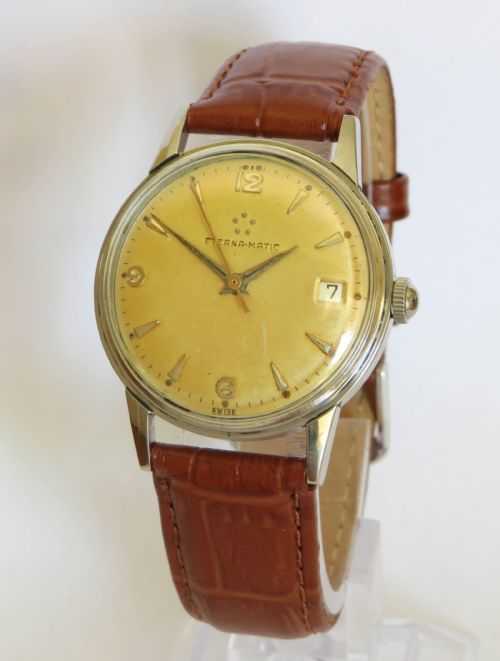
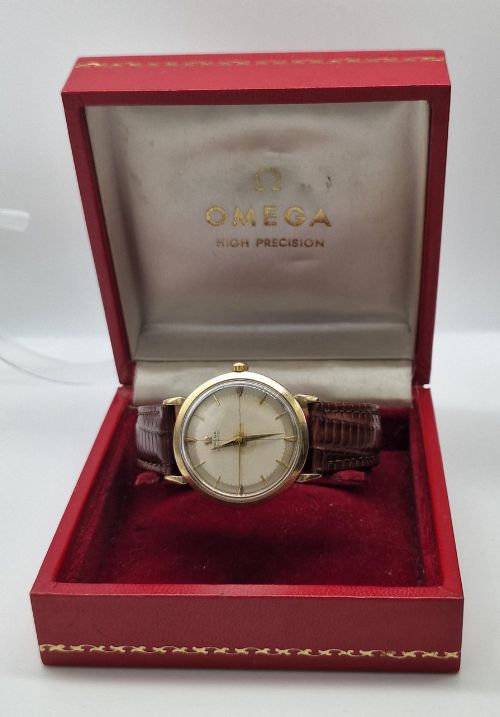
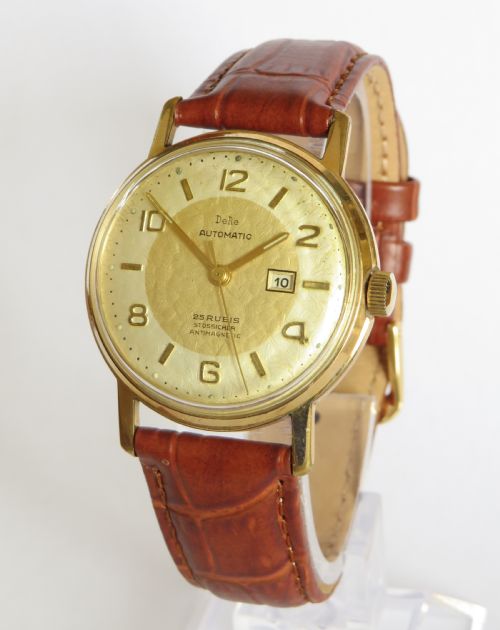
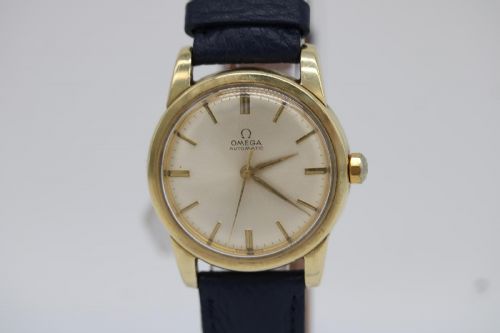
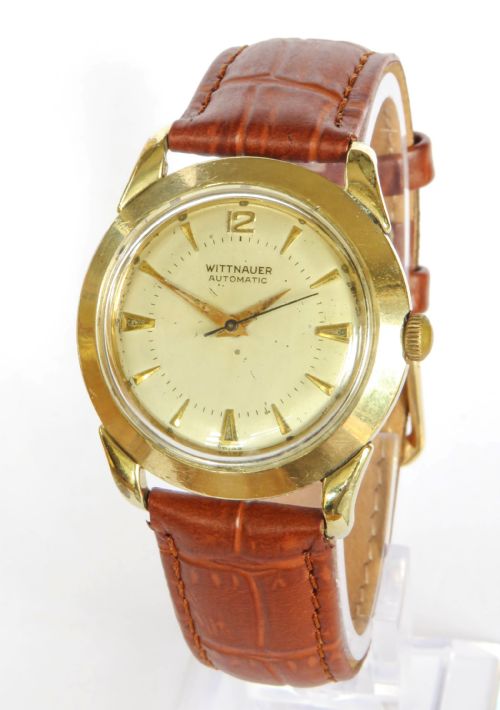
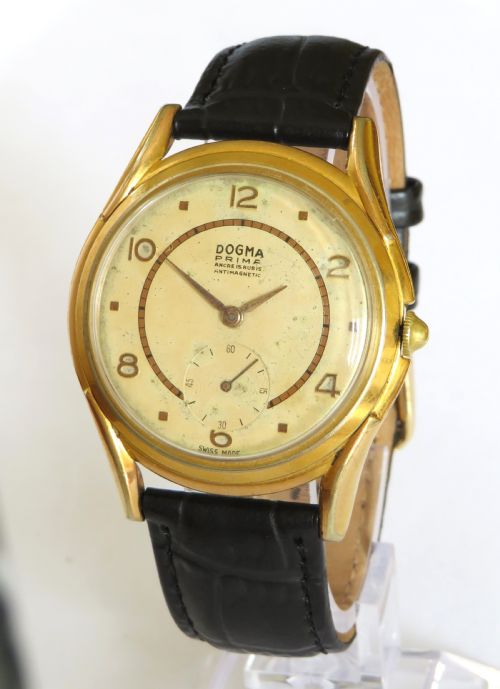
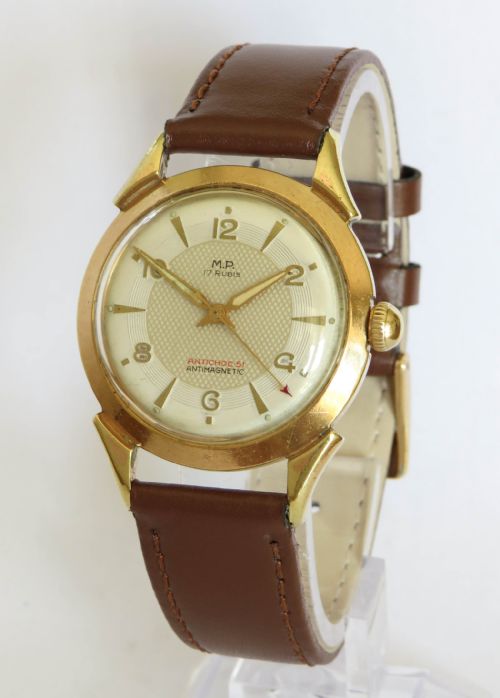
Mens 1950s Dress Watch
A mens 1950s dress watch brings mid-century elegance to the wrist, offering dependable mechanical movement and clean design.
Mens 1950s Dress Watch
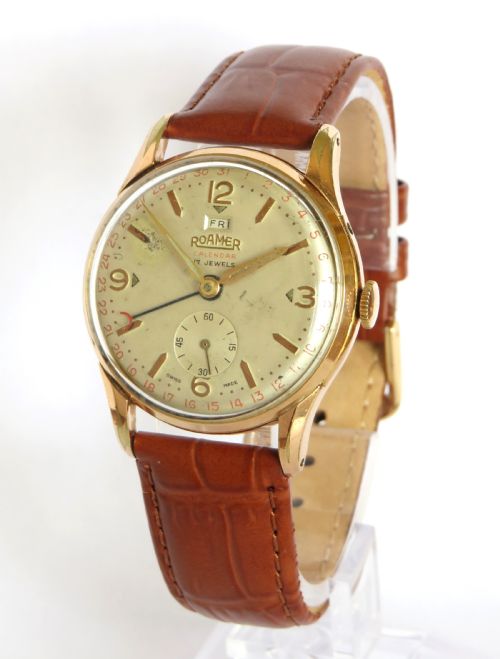
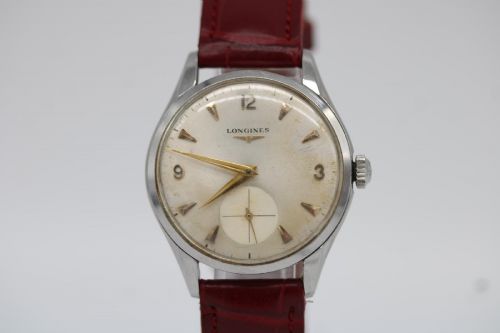
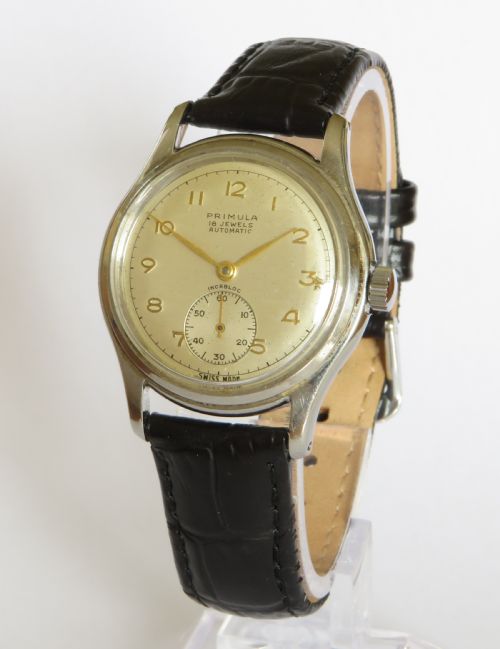
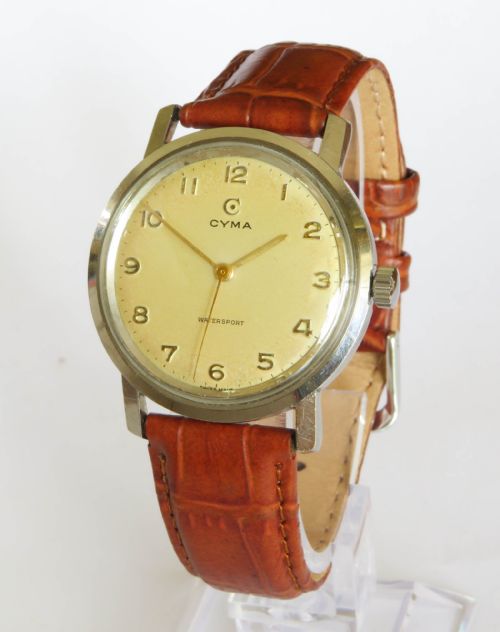
A mens 1950s dress watch represents a period of refined horology, predominantly taking the form of gents wristwatches produced during the mid-century era. Most examples seen here date from the 1950s, with occasional pieces from the late 1940s and early 1960s.
The prevailing style aligns with mid-century modern and art deco influences, featuring clean lines and uncluttered dials. These pieces were designed for formal or daily wear, prioritising slim profiles that slipped easily beneath a shirt cuff.
How they were made
Cases were fashioned from stainless steel, chrome, gold plate, and solid 9ct or 18ct gold, housing mechanical movements wound by hand or driven by automatic rotors. Dials were protected by acrylic, glass, or acrylic glass crystals, offering a clear view of the face.
Listings feature periods spanning the 1940s, 1950s, and 1960s, constructed in gold plate, solid gold, stainless steel, and chrome.
What varies in quality
The standard of materials dictates much of the distinction between pieces, moving from chrome and gold plate up to solid 9ct and 18ct gold cases. Movement sophistication also sets examples apart, ranging from standard manual wind calibres to advanced automatic and calendar mechanisms.
The pedigree of the maker influences desirability, with Swiss and British houses employing distinct finishing techniques on dials and movements. The retention of original components, such as signed crowns and dials, separates standard production pieces from higher-tier collector examples.
Montilier·J W Benson·Omega·Roamer·Longines·Cyma·Wittnauer·Dogma Prima·Rotary·Baume Bimatic·Lanco Sport·Smiths·Marvin·Certina·Ebana·Baume Mercier·Jaeger LeCoultre·Tudor
The Mens 1950s Dress Watch Glossary
- Automatic
- A self-winding mechanical movement that uses a weighted rotor to wind the mainspring through the natural motion of the wearer's wrist.
- Manual wind
- A movement that requires the wearer to manually turn the crown to tension the mainspring and power the watch.
- Acrylic glass
- A lightweight, shatter-resistant plastic material used for watch crystals during the mid-century period.
- Bumper automatic
- An early type of self-winding movement where the rotor swings back and forth against springs rather than rotating fully 360 degrees.
- Calibre
- The specific designation given by a manufacturer to a particular watch movement design.
Mens 1950s Dress Watch: Frequently Asked Questions
How do I wind a manual watch?
Gently rotate the crown clockwise between your thumb and forefinger until you feel firm resistance. Stop immediately to avoid damaging the mainspring.
Most vintage dress watches require winding once a day to maintain accurate timekeeping throughout your routine.
Are these watches waterproof?
Mid-century dress watches were generally not designed to withstand immersion in water. They lack modern screw-down crowns and robust rubber gaskets.
It is best to keep these pieces well away from rain, swimming pools, and hand washing to protect the vintage movement.
How do automatic movements work?
An internal weighted rotor pivots as your arm moves during the day, transferring energy to wind the mainspring. This removes the need for daily manual winding.
If left off the wrist for a day or two, the watch will simply run down and stop until worn again.
How do I read a vintage dial?
Dials from this era often feature raised metallic markers, Arabic numerals, or subtle chapter rings. Subsidiary seconds dials or calendar apertures may also be present.
Take time to observe the font styles and signature placements, which help identify the specific period and model of the watch.