
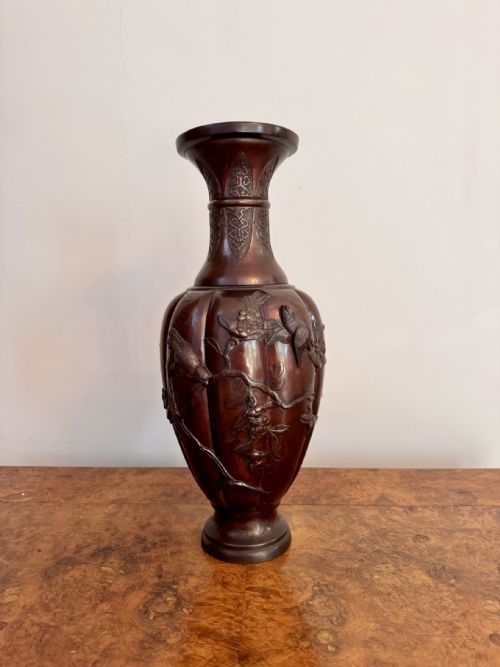


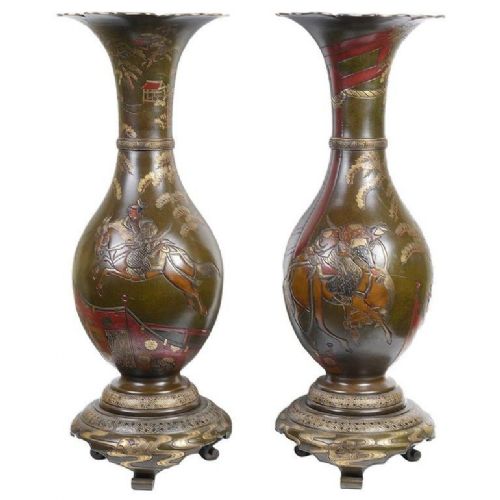


Meiji Relief Cast Vase
A meiji relief cast vase brings heavy Japanese bronze work from the nineteenth century directly into your room.
Meiji Relief Cast Vase
When you search for a meiji relief cast vase, you encounter heavy bronze vessels originating from Japan during the nineteenth century and the early twentieth century. These pieces span standard vase forms, urns, jardinières, and occasional table lamp conversions.
The majority of these objects emerge from the Meiji period, with dates clustering around eighteen eighty to nineteen ten. You will find both single display vessels and substantial matched pairs bearing distinct Japanese Meiji styling.
How they were made
These metal objects rely principally on bronze, worked through casting techniques to achieve raised decorative surfaces. Artisans incorporated mixed metal highlights, pigment, and gold leaf to articulate intricate surface details.
Secondary elements occasionally utilise wood and fabric, particularly in fitted bases or converted lighting mounts. The primary construction remains heavy cast bronze designed for stability and durability.
Period attributions span the Victorian era, the Edo period, and the nineteenth century through to nineteen ten.
What varies in quality
The distinction between standard vessels and exceptional items lies in the crispness of the cast relief and the handling of the bronze surface. Superior examples demonstrate precise detailing in complex motifs such as dragons and floral arrangements.
Scale and proportion also define the upper tier, particularly among large pairs and substantial jardinières. The integration of mixed metal elements and supplementary finishes indicates the level of craftsmanship invested by the maker.
The Meiji Relief Cast Vase Glossary
- Bronze
- A copper and tin alloy prized for strength and rich patination. It forms the structural body of nearly every vessel in this category.
- Jardiniere
- An ornamental pot or stand designed to hold plants or floral arrangements. These large metal receptacles often match the design language of standard vases.
- Meiji Period
- The era of Japanese history lasting from eighteen sixty-eight to nineteen twelve. Pieces from this time display distinct decorative metalwork techniques.
- Mixed Metal
- The combination of different metallic alloys or patinations on a single surface. This technique adds tonal depth to cast relief decorations.
- Relief Cast
- A casting method where figures or patterns project from the surrounding background plane. This technique creates tactile depth across the body of the vessel.
Meiji Relief Cast Vase: Frequently Asked Questions
Are these vases always found in pairs?
While matched pairs appear frequently in nineteenth-century Japanese bronze work, single decorative vases and standalone jardinières are also common.
Buyers often encounter both formats depending on how the original owners displayed them.
How do I date a Meiji bronze vase?
Dating relies on stylistic markers associated with the Meiji period alongside specific nineteenth-century production methods. Many pieces carry broader era attributions spanning from eighteen eighty to nineteen ten.
Examination of the bronze patination and casting quality provides further contextual clues for specific decades.
Can these vases hold water?
Most antique bronze vessels function primarily as decorative art objects rather than practical floristry containers. Using them with internal liners protects the historic metal and original interior surfaces.
Many examples were designed strictly for display or as architectural jardinières.
How should I clean a bronze vase?
Maintenance requires only gentle dusting with a soft, dry cloth to preserve the historic surface and patination. Modern chemical polishes or abrasive cleaners strip away valuable aged finishes.
Keeping the metal away from direct moisture protects the integrity of the bronze and any applied pigment.