


Meiji Period Jardiniere
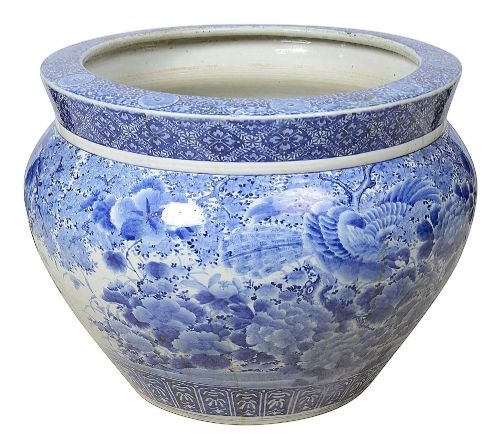
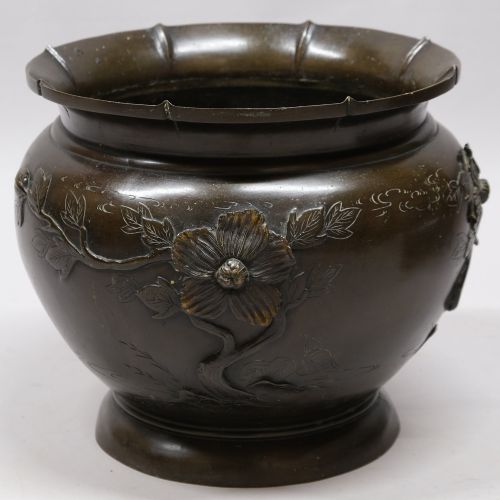
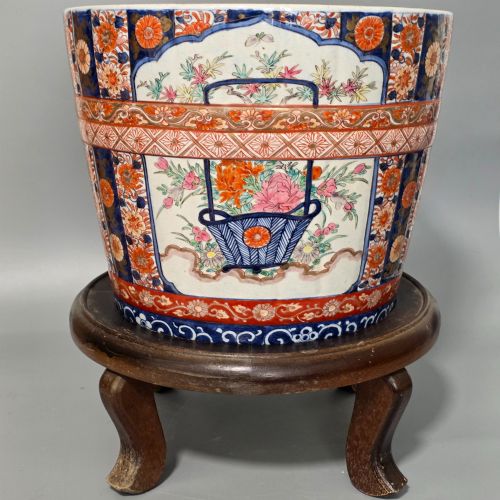
These bronze and porcelain pieces are a meiji period jardiniere, selected for interior displays of large plants and floral arrangements.
Meiji Period Jardiniere
A meiji period jardiniere brings together heavy bronze, stoneware, and blue and white porcelain forms designed to house indoor plants. Many examples date from the nineteenth century, reflecting Japanese styles that reached Britain during the Victorian era and the Aesthetic Movement. Buyers encounter these vessels alongside matching hardwood and ebonised display stands, marble top tables, and portico planter pedestals.
The selection ranges from large bronze bowls and champleve enamel planters to Imari and satsuma ceramic vessels. Workshops produced hexagonal shapes, large fish-bowls, and heavy cast planters weighing several kilograms. These items served as focal points in period interiors, often elevated on dedicated plant stands or low display tables.
How they were made
Metal vessels rely on cast bronze, patinated bronze, and brass, sometimes enhanced with champleve enamel work. Artisans poured and chased the metal to create substantial bowls and decorative planters.
Ceramic pieces utilise porcelain, stoneware, and earthenware bodies painted with blue and white glazes or satsuma enamel palettes. Hardwood and ebonised timber form the structural bases of accompanying display stands, frequently fitted with inset marble tops.
Listings feature nineteen century and early twentieth century pieces in bronze, porcelain, stoneware, and hardwood.
What varies in quality
Quality rests in the weight of the metal casting and the crispness of the chasing on bronze examples. Heavier bronze bowls demonstrate superior substance, whereas lighter versions lack the same physical presence in a room.
Ceramic pieces differ through the precision of the underglaze blue and white painting or the fineness of the Imari and satsuma enamel details. The retention of original hardwood stands and marble tops also influences the integrity of the piece.
Makuzu Kozan II
The Meiji Period Jardiniere Glossary
- Jardiniere
- A decorative pot or container used for holding plants or flowers indoors. These vessels sit directly on furniture or upon dedicated plant stands.
- Imari
- A style of Japanese porcelain featuring a distinct palette of underglaze blue, iron red, and gilt highlights. Makers produced these wares for export during the nineteenth century.
- Champleve
- An enamelling technique where troughs are carved into a bronze or metal surface and filled with vitreous enamel paste before firing. This creates colourful decorative patterns across the body.
- Satsuma
- A type of Japanese earthenware characterised by a pale, ivory-coloured cracked glaze decorated with intricate enamel patterns and gilt. These wares became popular in Britain during the Victorian period.
- Ebonised
- Timber treated with a dark finish to imitate ebony wood. Makers used this technique on Victorian plant stands and display tables.
Meiji Period Jardiniere: Frequently Asked Questions
What is a meiji period jardiniere?
A meiji period jardiniere is a decorative plant container produced in Japan during the late nineteenth and early twentieth centuries. These pieces were made from cast bronze, porcelain, and stoneware for domestic display.
Export demand brought these vessels to Britain, where they became popular in Victorian and Aesthetic Movement interiors.
How were these planters used?
Owners placed large potted plants, ferns, or cut floral arrangements inside the vessels to bring greenery into principal rooms. They frequently rested on matching hardwood stands or marble top portico tables.
Some large ceramic examples also functioned as indoor fish-bowls.
How do I clean bronze planters?
Bronze vessels benefit from gentle dusting with a soft dry cloth to protect the patinated surface. Avoid harsh chemical cleaners and abrasive polishes that strip the historic finish.
Interior moisture should be managed by placing a secondary liner inside the bowl to protect the metal and base from standing water.
How do I distinguish bronze from brass?
Bronze typically exhibits a deeper, richer brown or patinated tone with higher copper content and greater weight. Brass contains zinc and often appears brighter with a more golden hue.
Meiji period examples lean heavily towards patinated and art bronze construction.