
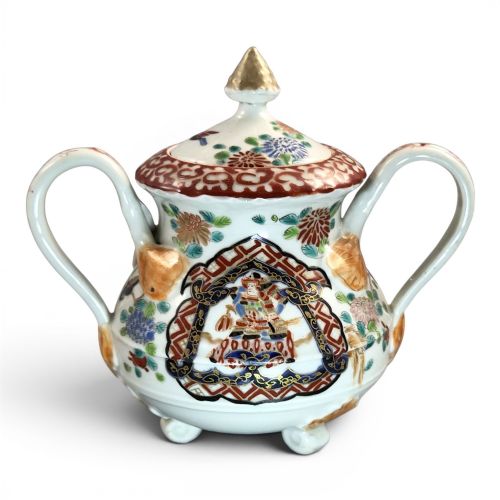


Meiji Period Imari Vessel
These Japanese imari pieces bring vibrant colour and intricate hand-painted detail to any room, offering classic craftsmanship from the Meiji period.
Meiji Period Imari Vessel
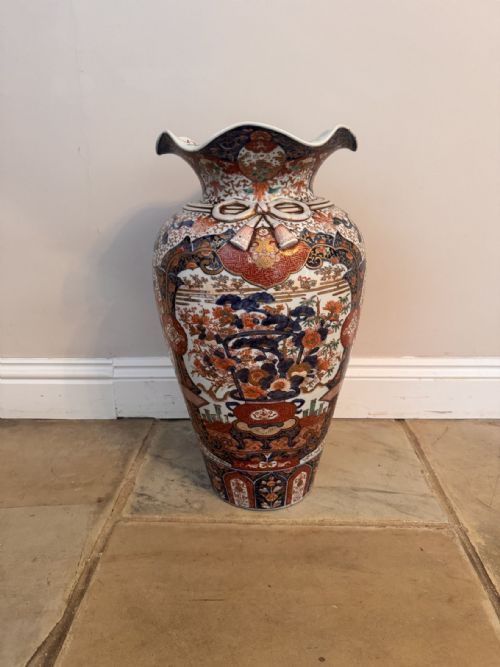
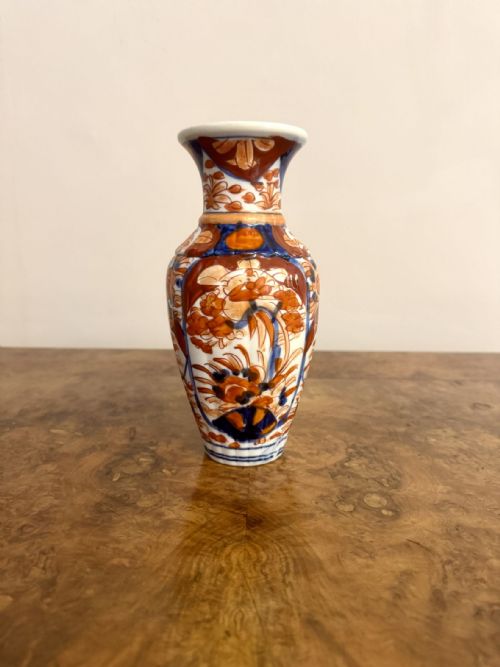
A meiji period imari vessel delivers the bold decorative presence collectors seek, drawing on traditional Japanese ceramic artistry. When you search for a meiji period imari vessel, you encounter items shaped during the late nineteenth and early twentieth centuries, spanning floor-standing vases, lidded jars, and smaller decorative dishes.
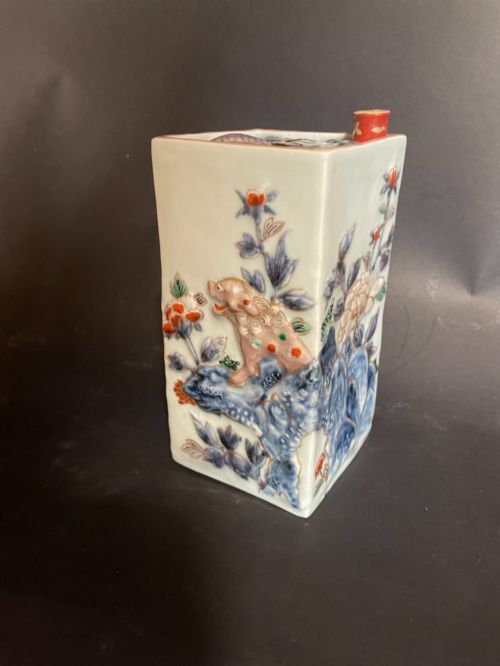
The selections on this page highlight forms produced across the Meiji era and adjacent decades, ranging from large floor-standing vases and ritual incense burners to delicate sake flasks and sugar bowls. Many pieces exhibit distinct stylistic roots in Japanese Imari and Edo traditions, reflecting the diverse output exported to Western markets during this period.
Most examples you meet here date from the late nineteenth century, particularly around eighteen-ninety and nineteen-hundred, alongside select items attributed to the seventeenth century and the Edwardian era. You will find both single decorative items and matched pairs, often featuring moulded or ribbed bodies shaped as hexagons, boats, or scallop-edged bowls.
Materials and production techniques
These vessels rely fundamentally on white porcelain clay bodies, shaped either by throwing on the wheel or by moulding into ribbed and hexagonal configurations. Artisans then applied underglaze and overglaze colours before firing the ceramics to vitrification.
The distinctive visual palette depends on coloured enamel paints, enriched with gold leaf and gilding to accentuate the painted motifs. Master painters rendered intricate scenes, occasionally incorporating specific workshop marks into the porcelain base.
Lidded jars, koro incense burners, and covered ginger jars often feature separate fitted covers, requiring precise pottery shrinkage control during the kiln firing process. The application of metallic gold highlights completed the decoration, creating the signature contrasting aesthetic.
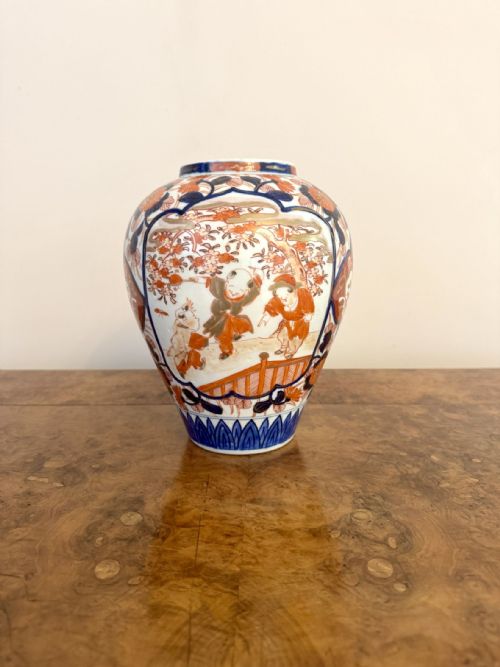
Some lidded jars survived centuries of domestic shifting completely unscathed, preserving their tiny painted samurai and floral secrets.
Assessing quality in Japanese ceramics
The distinction between standard commercial export wares and superior artistic achievements lies in the execution of the hand-painted enamel and the precision of the porcelain moulding. Finely weighted forms with crisp, well-defined ribs or hexagonal angles demonstrate greater ceramic control than heavier, coarser shapes.
Mastery of the enamel palette and the sparing, effective use of gold leaf and gilding differentiate exceptional items from routine productions. The clarity of the underglaze cobalt blue and the alignment of complex botanical or figurative motifs indicate the skill of the original workshop.
The presence of identified factory marks, such as a Fukagawa signature, adds documented provenance that elevates certain pieces above unmarked commercial equivalents. Intact original covers on koro burners and lidded jars also influence the integrity of the surviving object.
Fukagawa Mark
The Meiji Period Imari Vessel Glossary
- Imari
- A traditional style of Japanese porcelain featuring a characteristic palette of underglaze blue, iron red, and supplementary gold. This decorative scheme originated in the town of Arita and was exported extensively through the port of Imari.
- Koro
- A traditional Japanese incense burner typically featuring a pierced cover to allow scented smoke to escape. These vessels often stand on three legs and include matching removable lids.
- Tokuri
- A traditional Japanese ceramic flask most commonly used for serving sake. These items generally feature a narrow neck expanding into a rounded or bottle-shaped body.
- Meiji Period
- The era in Japanese history spanning from eighteen-sixty-eight to nineteen-twelve, characterised by rapid modernisation and a surge in decorative art exports. Ceramics from this time often combine traditional techniques with grand scale.
- Fukagawa
- A notable Japanese ceramic manufacturing house and mark associated with high-grade porcelain production during the Meiji era. Pieces bearing this mark often display superior painting and porcelain refinement.
Meiji Period Imari Vessel: Frequently Asked Questions
What is a meiji period imari vessel used for?
These pieces served primarily as decorative ornaments in nineteenth-century interiors, displayed on mantels, tables, or floor stands. Specific forms like koro burners held aromatic incenses for ritual or domestic fragrance.
Other variants functioned as tableware and storage containers, including sugar bowls, sake flasks, and covered ginger jars. Their bold coloration made them central focal points in both Japanese homes and Western Victorian drawing rooms.
How do I distinguish Meiji period imari from earlier Edo pieces?
Meiji pieces typically reflect the prolific export boom of the late nineteenth century, often displaying denser enamel work, brighter gilding, and varied moulded shapes. Seventeenth-century or Edo precursors generally show different potting characteristics, heavier iron-rich bodies, and distinct hand-ground mineral pigments.
Examining the foot ring, the weight of the porcelain, and any recorded workshop marks helps clarify the manufacturing era. Export pieces made for Western markets during the Meiji era also frequently incorporate larger, more ambitious decorative scales.
What does the term koro mean on a listing?
A koro is a traditional Japanese incense burner designed with a removable pierced lid that allows scented smoke to disperse. These vessels frequently feature decorative handles and tripod bases for stable placement on tables or altars.
In antique Imari examples, the koro is often richly decorated with panels of enamels and gilding. Finding one with its original matching cover intact is particularly pleasing for collectors.
Are all imari vessels made of porcelain?
Yes, Imari refers specifically to porcelain fired from local stone and clay materials in the Hizen province, centred around Arita. The paste is vitrified at high temperatures to create a dense, white ceramic base capable of holding intricate underglaze blue pigments.
Overglaze enamels and gold leaf are then fused in a subsequent, lower-temperature kiln firing. This dual-firing process creates the hard, glossy surface characteristic of all authentic Imari wares.