


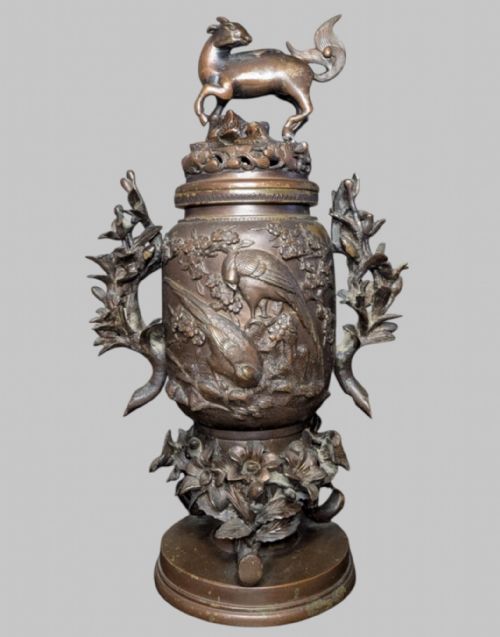


Japanese Koro Incense Burner
A japanese koro incense burner brings centuries of craftsmanship into a room, combining sculpted metal, delicate porcelain and intricate enamel work.
Japanese Koro Incense Burner
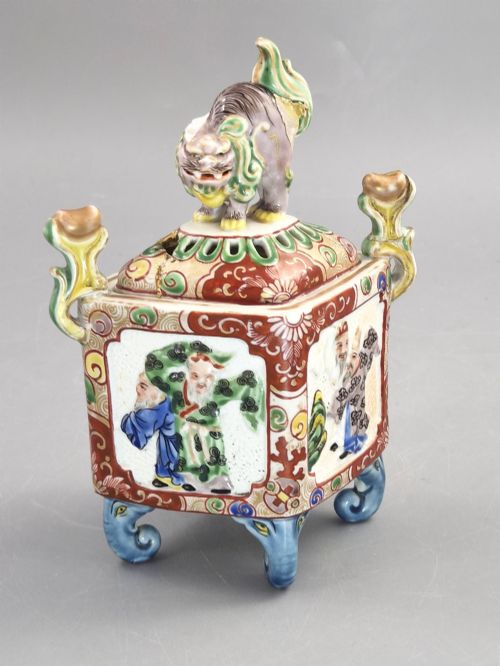
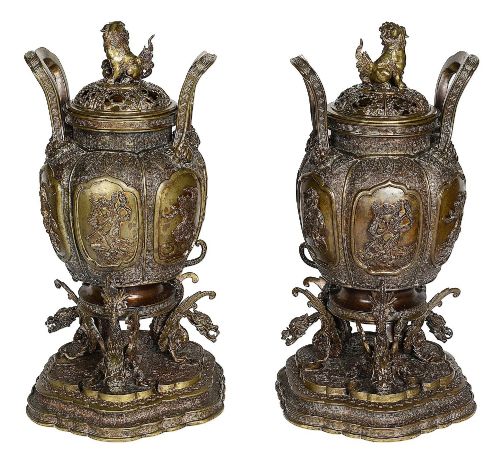
A japanese koro incense burner is a traditional vessel designed for burning aromatic incense, typically featuring a perforated lid to release scented smoke. The pieces found here span the Edo, Meiji, Taisho and Edwardian periods, reflecting diverse aesthetic shifts in Japanese decorative arts. Buyers encounter forms ranging from miniature earthenware bowls to large bronze animal figures and intricate hanging boats.
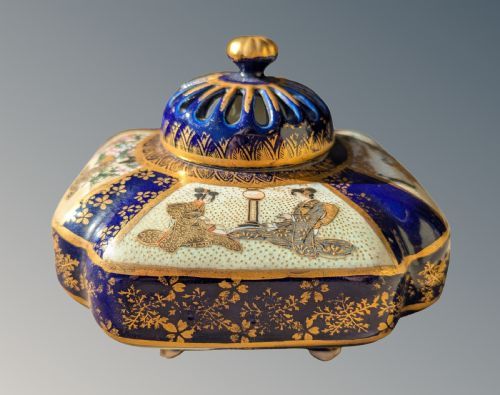
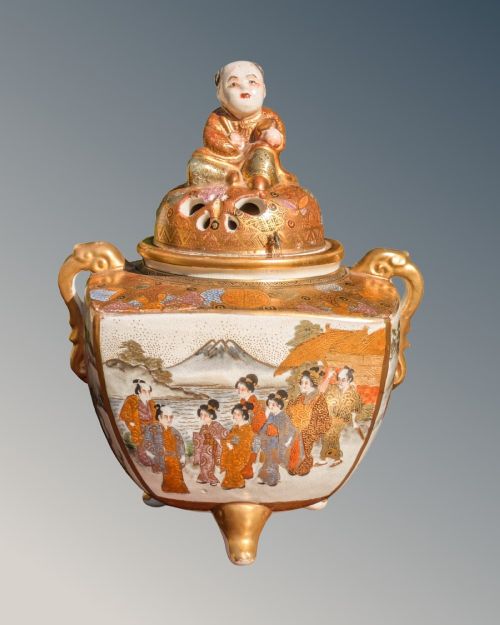
Most examples originate from the 19th century and the Meiji period, capturing a time of immense technical skill among Japanese artisans. Common ceramic variants include Satsuma earthenware, Kutani porcelain and Imari wares, often detailed with hand-painted motifs and gilt accents. Metal versions utilise bronze, silver, shibuichi and cloisonne enamel, frequently incorporating sculptural elements like mythical beasts and birds.
Materials and Techniques
Makers shaped bronze, silver and mixed metals through casting and hammering, often adding parcel-gilt, silver wire inlay or cloisonne enamel to build rich surface textures. Workshops employed specialised techniques for patination, achieving deep brown, grey and black tones on bronze vessels. Silver pieces display fine hand-chasing, particularly when formed into animal shapes such as hawks or quails.
Ceramic koro utilised earthenwares and porcelains decorated with underglaze cobalt, overglaze enamels and gold leaf. Satsuma ware relied on a fine crackle-glaze earthenware body painted with polychrome enamel scenes and heavy gilding. Hirado and Kutani porcelains offered crisper white bodies, sometimes featuring reticulated openwork or sculpted animal elements like dragons and lions.
Listings feature works spanning the Edo, Meiji, Taisho and Edwardian periods, constructed from bronze, silver, porcelain, earthenware and cloisonne enamel.
Assessing Quality and Execution
Signatures from notable makers or potteries, such as Kinkozan, Kizan, Shizan or Koshida, indicate higher workshop standards and elevate the standing of a piece. The integration of functional parts, such as a well-fitted pierced lid and stable feet, demonstrates the maker's attention to structural balance. Mixed metal work reveals quality through the seamless fusion of disparate alloys like silver, gold and bronze.
Kinkozan·Kizan·Shizan·Kotobuki do·Koshida·Tsumura Kamejo·Kazumi
The Japanese Koro Incense Burner Glossary
- Koro
- A traditional Japanese incense burner, typically consisting of a body, a pierced cover and feet.
- Shi-Shi
- A mythical guardian lion or dog, frequently utilised as a sculptural finial on burner lids.
- Cloisonne
- A decorative metalwork technique where enamel paste is applied within compartments created by soldered wire.
- Satsuma
- A type of Japanese earthenware featuring a distinctive ivory-coloured crackle glaze and detailed polychrome painting.
- Reticulated
- Describes ceramic work featuring an openwork pattern or pierced lattice design.
- Shibuichi
- A traditional Japanese alloy of copper and silver, prized for its subtle grey patina.
Japanese Koro Incense Burner: Frequently Asked Questions
How do I use a koro incense burner?
These vessels were originally designed to hold burning aromatic wood or incense cones within a bed of ash inside the bowl. The pierced lid allows the scented smoke to diffuse gently into the surrounding space while keeping the burning material safely contained.
Modern owners generally continue to burn traditional Japanese incense sticks or cones inside them. Placing a small layer of clean ash in the base protects the ceramic or metal body from direct heat.
What is the difference between bronze and ceramic koro?
Bronze and metal variants offer greater durability and often feature intricate sculptural forms, such as animals or hanging boats. They rely on patination, mixed metal inlay and enamel work for their visual impact.
Ceramic examples, including Satsuma and Kutani wares, showcase painted storytelling scenes, crackle glazes and gold leaf decoration. They provide a softer, more colourful palette compared to the dark metallic tones of bronze.
How do I identify a Meiji period koro?
Meiji period pieces, dating from 1868 to 1912, typically exhibit a high level of technical ambition and detailed execution. This era saw a surge in export-quality bronzes, detailed cloisonne enamels and heavily decorated Satsuma ceramics.
Many pieces from this timeframe bear maker signatures or studio marks on the base. The subjects often include traditional Japanese motifs alongside elaborate naturalistic animal forms.
Where should I display a koro in my home?
A koro works well as a focal point on a mantelpiece, side table or cabinet where its sculptural details can be appreciated from multiple angles. Because many examples feature detailed lids and delicate feet, placement on a stable, flat surface is essential.
Keeping them away from direct, harsh sunlight helps protect the delicate overglaze enamels and gold leaf found on Satsuma and Imari pieces. Placing them at eye level allows you to view the fine chasing on metals or the brushwork on ceramics.