


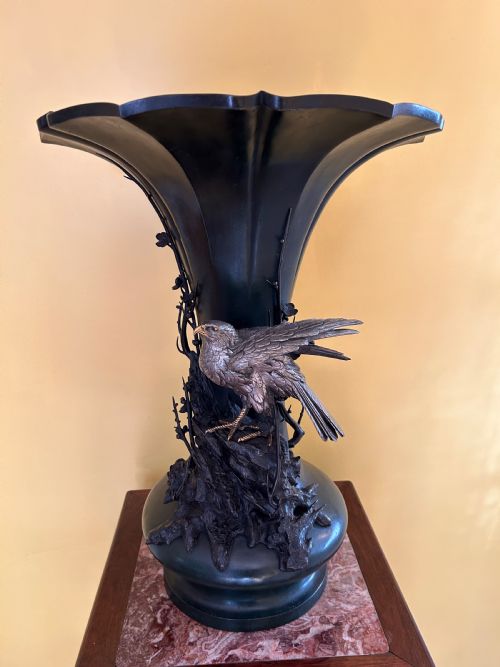
Meiji Period Bronze Art
These pieces of meiji period bronze art bring master craftsmanship and rich patination straight into your room.
Meiji Period Bronze Art
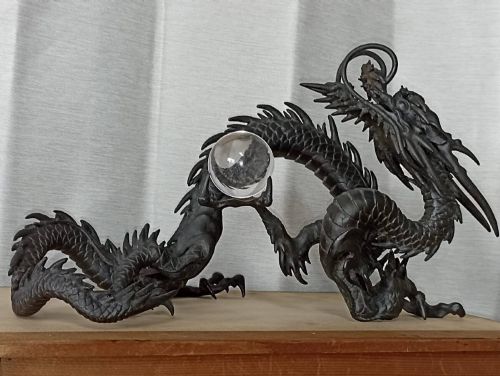
When you look for meiji period bronze art, you encounter a varied selection of nineteenth and early twentieth century Japanese metalwork. The forms range from small animal okimono and sword guards to large garden sculptures, jardiniieres, and imposing vases.
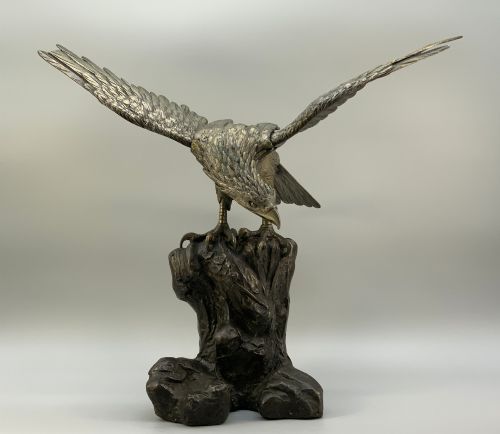
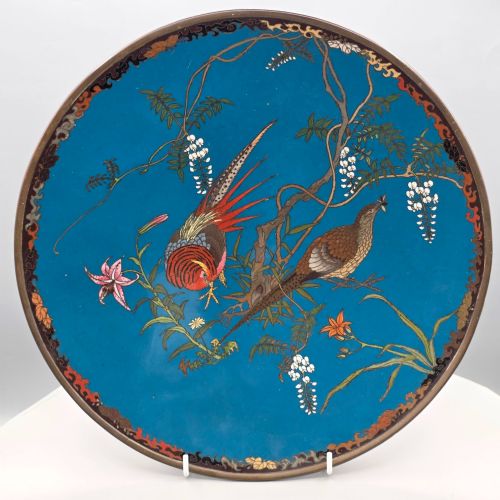
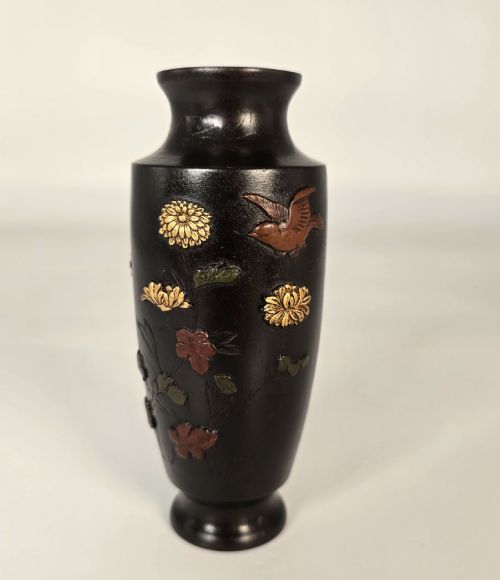
Vases and decorative plates dominate the current selection, often incorporating intricate enamel work or mixed metal elements. Animal sculptures depicting eagles, wolves, and elephants also appear frequently across the periods spanning the nineteenth century up to nineteen-ten.
The objects originate from the Meiji era, capturing a period of intense artistic output and technical mastery in metalcasting. These works served both domestic display purposes and international exhibition markets during their initial creation.
Materials and technique
The makers utilised bronze, brass, and copper as foundational metals, frequently enriching surfaces with gold inlay and mixed metal applications. Patinated metal finishes create deep tonal variations on the bodies of vases and figurative sculptures alike.
Enamel and cloisonne techniques add vibrant colour to chargers and plates, contrasting sharply against the dark metallic grounds. Wood often provides a stable base or mounting for smaller sculptural items and decorative objects.
Articulated metalwork demonstrates advanced casting skill, allowing figures like crabs and crickets to move realistically at their joints. Molten bronze poured into detailed moulds captured minute textures before being hand-finished with chisels and patination solutions.
Standards of execution
Execution separates standard decorative items from superior works, particularly in the crispness of the casting and the precision of the chasing. Superior examples display immaculate surface detailing on fur, feathers, and geometric motifs without smoothing or softening from wear.
Mixed metal inlays and gold applications require absolute technical control to sit flush and secure within the bronze or copper ground. Inferior pieces rely on surface painting or shallow incisions rather than genuine metal-to-metal insertion.
Articulated subjects depend entirely on the mechanical ingenuity of their joints for smooth movement while maintaining realistic proportions. Large garden bronzes and censers demand structural integrity and balanced weight distribution across complex architectural or animal forms.
Haruyama Shunzan
The Meiji Period Bronze Art Glossary
- Okimono
- A Japanese ornamental statue or object for display, typically placed in a tokonoma alcove or on a shelf. These freestanding carvings and castings depict animals, figures, and natural subjects.
- Cloisonne
- An ancient technique for decorating metal object surfaces, using wire compartments filled with enamel paste and fired. The resulting cells create intricate patterns of birds, dragons, and auspicious symbols.
- Patinated metal
- Metal surfaces treated with chemicals and heat to produce a specific colouration and aged appearance. This controlled oxidation protects the base metal while enhancing visual depth.
- Tsuba
- A traditional guard at the end of the grip of a Japanese sword blade. These small metal plates often double as miniature works of art decorated with metal inlay.
- Mixed metal
- A decorative method combining various metallic alloys such as shakudo, shibuichi, brass, and copper on a single object. This technique produces contrasting colour palettes across the design.
Meiji Period Bronze Art: Frequently Asked Questions
What is an okimono?
An okimono is a Japanese decorative sculpture designed for interior display rather than religious use. These pieces often represent animals, insects, or figures captured in lifelike poses.
Artisans cast them in bronze, brass, or mixed metals during the Meiji period to showcase their mastery of naturalistic detail.
How are cloisonne plates made?
Makers solder thin metal ribbons onto a metal plate base to outline specific designs like birds or dragons. They fill the resulting compartments with coloured enamel paste before firing the piece in a kiln.
After firing, workers grind and polish the surface until the metal wires and glass enamel sit in a smooth plane.
Where should I place a bronze vase?
A bronze vase suits placement on a sturdy wooden table, mantelpiece, or display cabinet where adequate light highlights its patination. Avoid damp environments that might interfere with the metallic surface over time.
Large jardiniieres and garden bronzes work well as focal points in entranceways or conservatory spaces.