


Meiji Era Satsuma Ceramic
Meiji era satsuma ceramic pieces bring intricate Japanese craftsmanship into your home through finely painted earthenware and delicate gold leaf detailing.
Meiji Era Satsuma Ceramic
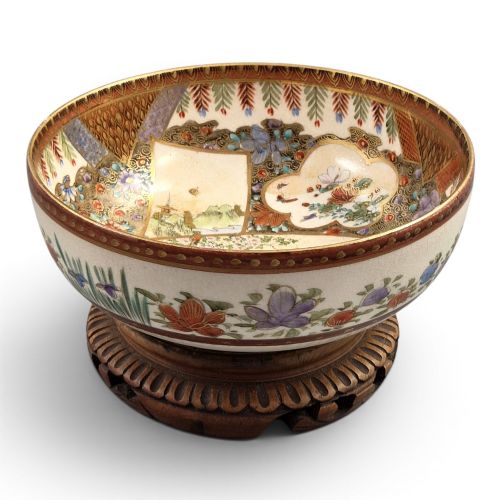
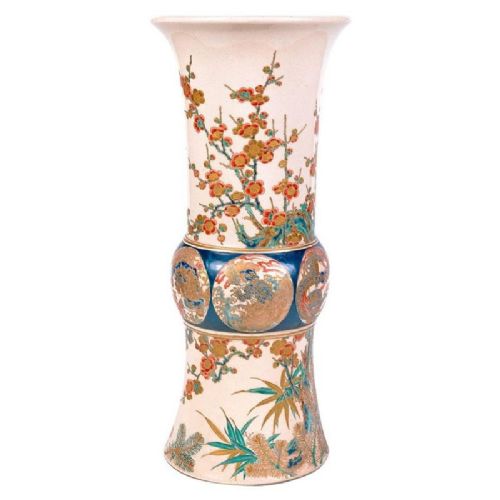
When you search for meiji era satsuma ceramic, you encounter finely detailed earthenware and porcelain vessels originating from Japan during the late nineteenth and early twentieth centuries. These pieces encompass a variety of forms including vases, decorative bowls, figurines, decorative dishes, incense burners, and plates.
The objects frequently depict traditional scenes featuring samurai or figures beneath camellia trees, reflecting the aesthetic sensibilities of the period. You are most likely to meet vases and decorative bowls bearing intricate enamel work and signature marks on this page.
The historical span represented in these items bridges the nineteenth century, the Victorian era, and the early nineteen-hundreds. Each object offers a tangible connection to the workshops of Kyoto and the master artisans who shaped Japanese ceramic arts during this era.
Materials and Construction
Makers utilised earthenware and porcelain as the primary substrates for these vessels, shaping them into garlic head vases, bamboo-handle forms, and footed dishes. These ceramic bodies provided a textured and absorbent surface suitable for holding detailed glaze work.
Enamel and gold leaf were applied over the base layers to create rich, multi-coloured scenes and decorative borders. Wood elements occasionally appear alongside the ceramic bodies, particularly in associated stands or structural components.
Kiln firing set the underlying glazes before artists added the intricate overglaze enamels and gilding. This multi-stage process required precise temperature control to achieve the characteristic finish associated with Satsuma ware.
Listings span the nineteenth century, the Victorian era, and the early nineteen-hundreds, utilising earthenware, porcelain, enamel, and gold leaf.
Assessing Quality and Execution
The refinement of the hand-painted enamelwork distinguishes finer examples from simpler production pieces. Skilled artists achieved remarkable precision in facial expressions, garment patterns, and botanical details.
The presence of clear maker signatures or workshop marks, such as those associated with recognised Kyoto makers, adds historical weight to a piece. The crispness of the gilt detailing and the balanced composition of the painted scenes further elevate the standing of an object.
Kinkōzan·Makuzu Kozan II·Chosei·Shuzan·Yasuda
The Meiji Era Satsuma Ceramic Glossary
- Satsuma
- A type of Japanese earthenware traditionally featuring a crackle glaze and elaborate overglaze enamel and gold decoration. It originated in Satsuma Province before production spread to major urban centres like Kyoto.
- Okimono
- A Japanese ornamental figurine designed for display on a tokonoma or shelf. These carved or modelled pieces often depict animals, figures, or natural subjects.
- Gilt
- A thin layer of gold applied to the surface of the ceramic to highlight specific decorative motifs. This technique adds luminous contrast to the painted enamel scenes.
- Enamel
- A glassy substance fused to the ceramic surface through firing, providing vibrant colour and permanent pattern work. It forms the primary medium for the figurative designs found on these pieces.
Meiji Era Satsuma Ceramic: Frequently Asked Questions
What is Meiji era Satsuma ceramic?
Meiji era Satsuma ceramic refers to Japanese earthenware and porcelain produced between eighteen sixty-eight and nineteen twelve, characterised by intricate enamel painting and gold leaf decoration.
These pieces range from small miniature vases and incense burners to large decorative bowls and plates, often depicting traditional figures and landscapes.
How do I identify a Satsuma vase?
Satsuma vases are typically identified by their ivory-coloured earthenware body, fine crackle glaze, and densely detailed polychrome enamel and gilt artwork.
Many pieces also feature artist signatures, studio stamps, or specific marks on the base denoting the maker or Kyoto origin.
How were Satsuma incense burners used?
Satsuma incense burners, known as koro, were used to burn aromatic woods or resins within traditional Japanese interiors, releasing scented smoke through pierced ceramic lids.
Beyond their functional use, they served as decorative display items in reception rooms and scholar spaces.
How should I display these ceramics?
Display these ceramics in stable locations away from direct sunlight and heavy foot traffic to protect the delicate enamel and gold leaf surfaces.
Pairing different forms, such as placing a garlic head vase alongside a decorative dish, highlights the varied shapes produced by Kyoto workshops.