

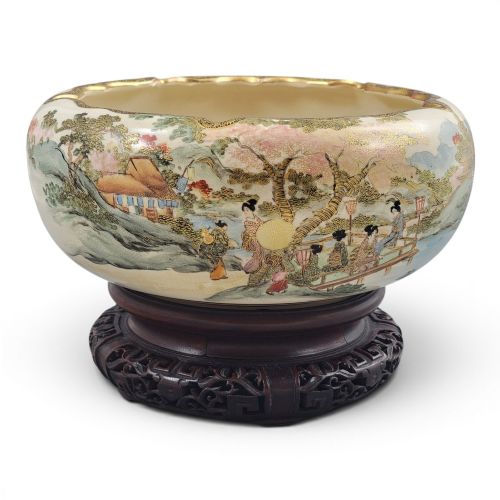


Cream Ceramic Decorative Bowl
These cream ceramic decorative bowl examples range from Scottish dairy ware to intricate Japanese Satsuma vessels, offering versatile display centrepieces for any interior.
Cream Ceramic Decorative Bowl
A cream ceramic decorative bowl serves primarily as a visual centrepiece rather than utilitarian tableware, drawing the eye with detailed painting, form, and glaze. When exploring a cream ceramic decorative bowl selection, one encounters pieces spanning the nineteenth century through to the mid-twentieth century, including works from British potteries and continental European factories.
Origins stretch from Scottish regional potteries and English manufacturers like Royal Worcester and Bursley Ware to Meiji period Japanese workshops and early Islamic kilns. Buyers find both monumental display dishes and smaller commemorative or floral vessels suited to varied interior settings.
Materials and construction methods
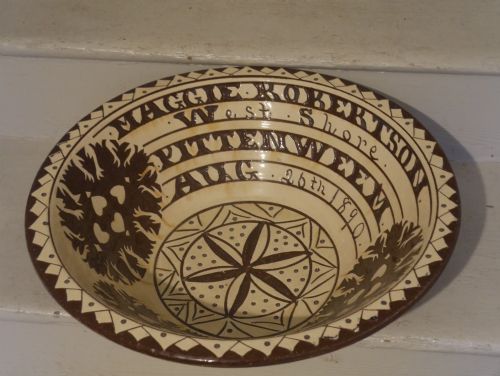
Potters employed earthenware, porcelain, and slip-glazed bodies as the foundational structure for these vessels, applying glazes to seal and decorate the clay. Earthenware pieces often utilise slip glaze or spongeware techniques to build robust, patterned surfaces suited to daily utility or rustic display.
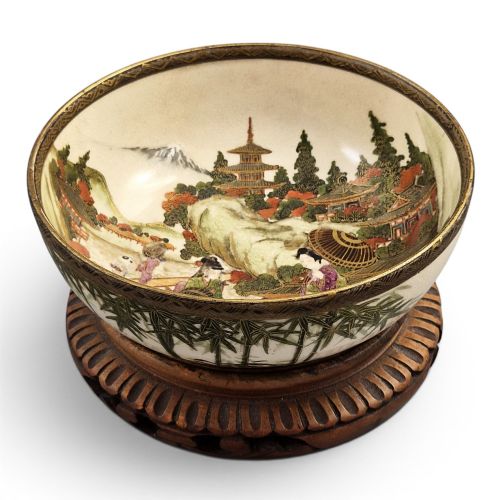
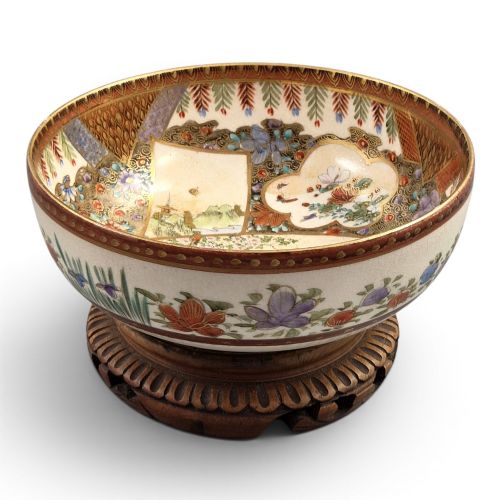
Japanese Satsuma pieces rely on a distinctive cream-coloured earthenware body covered in a transparent crackle glaze, which then receives hand-painted enamels and gold leaf highlights. European makers incorporate similar enamel work alongside gilding and transfer-printed or hand-painted motifs on fine porcelain and earthenware.
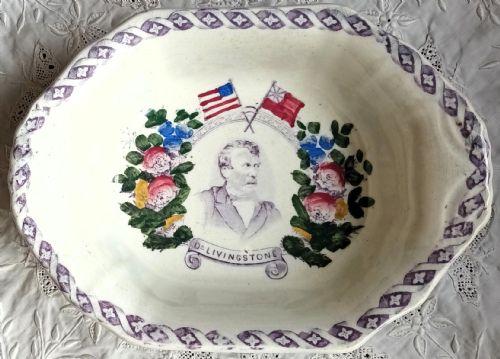
Dr. Livingstone makes an unexpected appearance on a Scottish Victorian commemorative dish.
Distinctions in quality
Quality rests upon the fineness of the potting, the precision of the hand-painting, and the reputation of the workshop or artist signing the piece. Master signatures, such as those by renowned Satsuma makers or established European potteries, indicate a higher grade of artistic execution.
The complexity of the decorative scheme, from intricate figural and floral compositions to the refined application of gold leaf and enamel, separates standard production from exceptional examples. Balance in form and the preservation of original glaze surfaces further elevate a vessel's standing.
The Cream Ceramic Decorative Bowl Glossary
- Earthenware
- Porous pottery fired at lower temperatures, requiring a glaze to become impermeable. It forms the robust body of many regional dairy bowls and decorative dishes.
- Satsuma
- Japanese earthenware pottery traditionally featuring a cream-coloured, crackled glaze decorated with polychrome enamels and gilding. These pieces were widely produced during the Meiji period.
- Spongeware
- Pottery decorated by applying pigment with a sponge, creating a mottled or stippled pattern across the surface. This technique appears frequently on nineteenth-century utility and display bowls.
- Slip glaze
- A liquefied suspension of clay applied to pottery before firing to smooth the surface and provide colour. It gives early and regional pieces their characteristic tactile finish.
- Bonbonniere
- A small decorative container or dish intended for holding sweets or confections. These lidded or open vessels often display fine porcelain craftsmanship from European factories.
Cream Ceramic Decorative Bowl: Frequently Asked Questions
Where were Satsuma bowls made?
Satsuma ware originated in Satsuma Province on the island of Kyushu in southern Japan, though production later spread to major urban centres like Kyoto and Tokyo.
Craftsmen tailored these cream-glazed earthen vessels specifically for export to Western markets during the late nineteenth century, incorporating elaborate pictorial scenes.
How do I display a large centrepiece?
Large centrepieces function best on dining tables, heavy sideboards, or dedicated display stands where their scale and decorative motifs can be appreciated from multiple angles.
Ensure the surface is stable and avoid placing delicate porcelain or earthenware in direct, harsh sunlight to protect painted enamel details.
What is spongeware?
Spongeware refers to pottery decorated by dabbing colour onto the unfired or biscuit body with a natural sponge, resulting in characteristic textured patterns.
This robust technique was favoured by nineteenth-century potteries for producing durable bowls with distinctive, rustic aesthetic appeal.
How are signed pieces identified?
Makers and master artists often applied handwritten signatures, seals, or factory stamps directly to the underside of the ceramic body.
Japanese Satsuma pieces frequently bear artisan names alongside clan crests, while European factories utilise printed or impressed ceramic marks.