


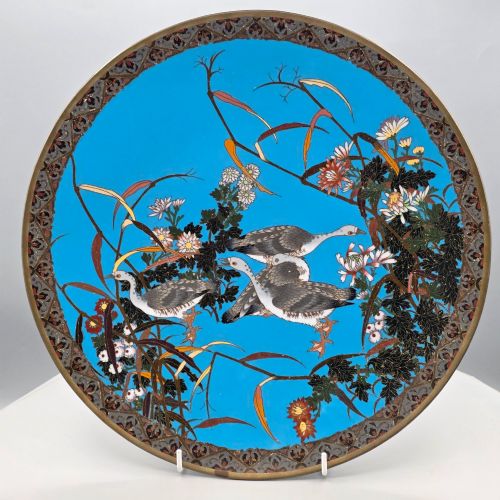




Meiji Cloisonne Plate
When you search for a meiji cloisonne plate, you are looking at intricate Japanese metalwork created during the late nineteenth century.
Meiji Cloisonne Plate
A meiji cloisonne plate is a decorative vessel made in Japan during the Meiji period, spanning the late nineteenth century. These objects include large chargers, medium plates, square trays, and round dishes designed for display.
The versions most common on this page are generous chargers and plates decorated with natural motifs such as birds, koi, dragons, and floral scenes. Makers produced these pieces utilising copper, brass, and porcelain bodies decorated with detailed enamel work.
What Varies in Quality
Quality in a meiji cloisonne plate rests upon the intricacy of the wirework and the control of the enamel. Finer pieces demonstrate exceptionally narrow, uniform wire cells that form complex pictorial scenes without distortion.
The ambition of the subject matter and the subtlety of colour shading also separate standard items from superior works. Signed pieces and those incorporating unusual shapes like octagonal or square trays often indicate higher workshop standards.
Meiji Cloisonne Plate Retail Price Guide 2026
Typical asking prices for meiji cloisonne plate among the pieces listed under this phrase on Sellingantiques today, from the lower quarter to the upper quarter. They describe what is for sale here now, not the wider market.
Listings feature items from the Meiji period spanning the late nineteenth century, executed in copper, brass, and porcelain.
Kinkozan
The Meiji Cloisonne Plate Glossary
- Cloisonne
- A decorative metalwork technique where fine wire is soldered to a metal base to create compartments for enamel paste. This method allows artisans to render detailed pictorial designs.
- Charger
- A large ornamental plate intended for display rather than dining use. These pieces form the substantial centrepieces of many historical collections.
- Totai Shippo
- A variation of Japanese enamelling where the metallic base is omitted or applied to porcelain, allowing light to pass through portions of the design. This technique produced translucent effects.
- Ho-o Bird
- A mythical Chinese phoenix frequently depicted on Japanese decorative arts as a symbol of virtue and grace. It appears with flowing tail feathers and elaborate crests.
- Mon
- A Japanese heraldic badge or crest used to identify families or clans. These circular motifs appear frequently within the decorative borders of metalwork.
Meiji Cloisonne Plate: Frequently Asked Questions
How do I distinguish Meiji period pieces from later items?
Meiji period metalwork typically exhibits specific weight, material characteristics, and hand-formed wire techniques that shifted during the twentieth century. The palette of the late nineteenth century often relies on rich, deep enamels fired on copper or brass bases.
Examining the underside and the polish of the surface reveals the manufacturing methods of the era. Older works display the subtle irregularities typical of hand-applied wirework rather than mass-produced uniformity.
What are totai shippo plates?
Totai shippo refers to wares where enamel is applied to a porcelain body rather than a traditional metal foundation. Artisans often worked wire into textured surfaces like simulated tree bark before enamelling.
These unusual pieces combine ceramic bodies with traditional cloisonne techniques. They offer a distinct tactile quality compared to standard copper-base chargers.
How do I care for antique enamel plates?
Protect these pieces by keeping them away from direct sunlight and dramatic shifts in temperature. Dust them gently with a soft, dry cloth without applying liquid cleaners or chemical polishes.
Display them securely on stable plate stands or wall mounts designed for heavy ceramic and metal objects. Proper placement prevents accidental knocks and preserves the delicate enamel surface.