


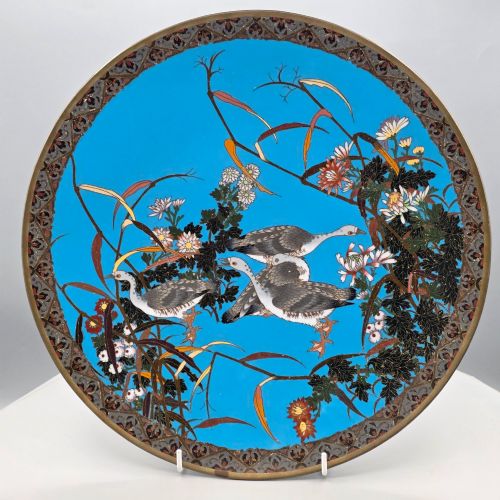
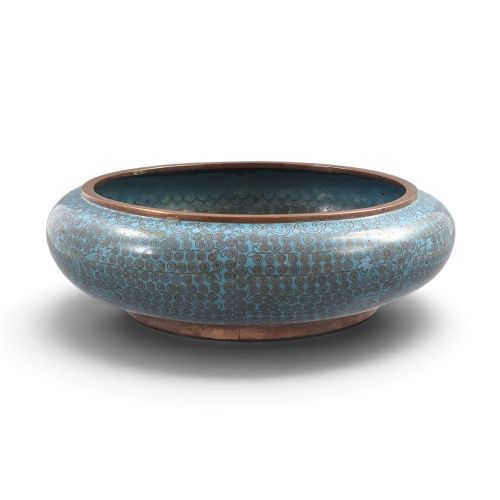



Bronze Cloisonne Enamel Dish
A bronze cloisonne enamel dish is a decorative vessel of metal and glass wire, bringing intricate pattern and colour from nineteenth-century workshops.
Bronze Cloisonne Enamel Dish
A bronze cloisonne enamel dish brings together metalwork and glass to form decorative chargers, plates, bowls and tazza. When you search for this phrase, you meet items originating from Japanese Meiji and Edo periods, alongside Chinese Qing Dynasty pieces.
The objects take the form of large chargers, wall plates and smaller dishes depicting birds, geese, dragons, koi, and botanical motifs such as chrysanthemums and flowers. Most examples date from the nineteenth century, specifically spanning the decades between eighteen sixty and nineteen hundred.
How they were made
The foundation relies upon bronze, copper, brass and copper alloy shaped into plates, dishes and bowls. Artisans apply fine wire, often brass wire, to the metal surface to create raised compartments known as cloisons.
Coloured enamel paste fills these tiny wire cells before the vessel undergoes firing and polishing. Certain pieces incorporate porcelain bases, demonstrating the variety of techniques utilised in nineteenth-century workshops.
Bronze Cloisonne Enamel Dish Retail Price Guide 2026
Typical asking prices for bronze cloisonne enamel dish among the pieces listed under this phrase on Sellingantiques today, from the lower quarter to the upper quarter. They describe what is for sale here now, not the wider market.
Materials recorded across the inventory include bronze, copper, brass, enamel, wire and porcelain.
What varies in quality
Quality rests upon the precision of the wirework and the depth of the enamel filling. Finer examples display meticulous detail in subjects like dragons, birds and auspicious symbols, executed with clean lines across the metal surface.
The presence of signatures from makers adds distinction to particular chargers and dishes. Greater scale and complex pictorial compositions, such as leaping koi or detailed floral scenes, set superior pieces apart.
Kinkozan
The Bronze Cloisonne Enamel Dish Glossary
- Cloisonne Enamel
- A decorative technique where metal wires are soldered to a base to form cells that hold coloured glass paste. The vessel is then fired and polished smooth.
- Charger
- A large ornamental plate or dish intended for display rather than service. These pieces frequently feature elaborate pictorial designs.
- Meiji Period
- A Japanese era spanning from eighteen sixty-eight to nineteen twelve, noted for exceptional skill in metalwork and enamelling. Pieces from this time often display naturalistic motifs.
- Edo Period
- An earlier Japanese era lasting until eighteen sixty-eight, represented here by lidded pedestal bowls and large chargers. Items from this period show traditional forms.
- Tazza
- A shallow bowl raised on a pedestal foot, used for display. Chinese examples in this inventory date to the nineteenth century.
Bronze Cloisonne Enamel Dish: Frequently Asked Questions
What is a bronze cloisonne enamel dish?
It is a decorative vessel made from metal such as bronze, copper or brass, decorated with wire compartments filled with coloured enamel.
These pieces include chargers, plates, bowls and tazza originating primarily from nineteenth-century Japan and China.
How do I display a charger?
Large chargers and wall plates are typically shown on sturdy plate stands or mounted securely for wall display.
Their intricate designs featuring dragons, birds and flowers are best appreciated in good light away from direct moisture.
How do I tell Meiji period pieces apart?
Meiji period items often feature highly naturalistic depictions of flora and fauna, including geese, chrysanthemums and koi fish.
They sit alongside Edo period pieces, which include earlier forms like lidded pedestal bowls and distinct dragon chargers.
What materials are used in these dishes?
The primary structure uses bronze, copper, brass and copper alloy, combined with wire for the internal pattern work.
Enamel provides the colour within the cells, and select pieces incorporate porcelain elements alongside the metal.