


Mediterranean Landscape Painting
These mediterranean landscape painting works capture southern light and coastal warmth, bringing a sense of historic shores into your home.
Mediterranean Landscape Painting
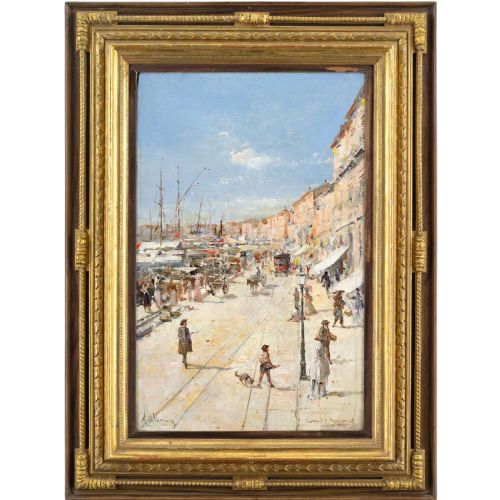
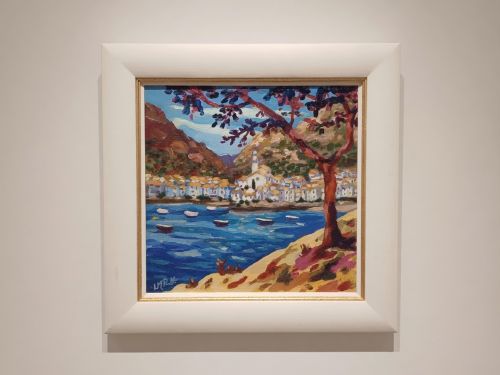
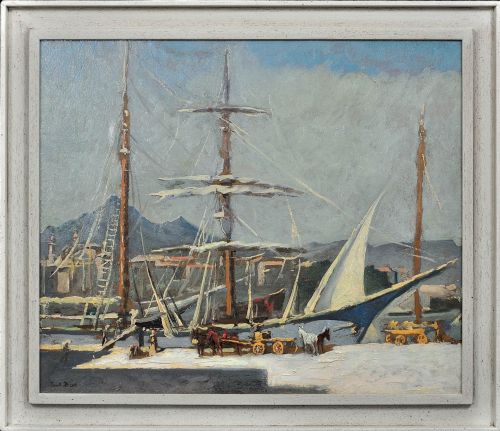
A mediterranean landscape painting captures coastal scenes, harbour views, and sun-drenched street views from southern European regions like the South of France, Italy, and Spain. You will frequently encounter works originating from the early twentieth century, spanning movements from post-impressionism to mid-century modernism.
The subjects range from olive groves in Provence and fishing ports on the French Riviera to bustling harbours in Sicily and quiet coastal inlets in Corfu. These pieces utilise various formats, primarily appearing as oils on canvas or board, alongside gouache and watercolour paintings on paper.
Materials and methods
Artists primarily applied oil paint to stretched canvas, wooden panels, or reinforced paper to achieve rich textures and luminous southern light effects. Watercolour and gouache were also utilised on paper supports, particularly for lighter coastal watercolours depicting scenes in locations like Corfu.
Framing often involves gilded wood or period wooden surrounds that complement the vibrant palettes of post-impressionism, fauvism, and mid-century impressionism. Textured applications and print embellishments occasionally appear alongside traditional brushwork across the available selection.
The selection includes regional coastal views ranging from the Alpilles and Corsica to Sorrento, Messina, and Cannes.
Distinctions in quality
The handling of light and atmospheric warmth separates standard decorative coastal views from accomplished examples of mediterranean landscape painting. Superior works demonstrate confident brushwork and a coherent colourist palette that successfully evokes the specific geography of Provence, the Côte d'Azur, or Italian harbours.
Augusto Alberici·Paul Bret·Erich Mercker·Gustave Vidal·Jean-Baptiste Olive·Norman Lloyd·Cecil Rochfort D'Oyly-John·Charles Malfroy·Hendrik Willebrord Jansen·Edith E Caswall·Francesco Guardi·Augustus William Enness·J.D. Walker·John William Gilroy
The Mediterranean Landscape Painting Glossary
- Fauvism
- A style characterised by strong colours and painterly qualities rather than realistic or natural values. Artists working in this manner utilised bold, non-naturalistic hues to express emotional intensity.
- Post-Impressionism
- An art movement that extended impressionism while rejecting its limitations. Painters relied on vivid colours, distinct brush strokes, and real-life subject matter.
- Gouache
- An opaque water-based paint that dries to a matte finish. It provides heavier coverage than traditional watercolour, allowing for vibrant colour blocks on paper.
- Capriccio
- An architectural fantasy placing together buildings, archaeological ruins and other architectural elements in a fictional architectural collage. These compositions often feature imaginary classical ruins alongside coastal settings.
- Colourist
- An artist whose work is characterised by an assertive use of colour. Such painters prioritise chromatic relationships to describe light and mood.
Mediterranean Landscape Painting: Frequently Asked Questions
Where were these paintings usually created?
Most of these works depict locations across southern Europe, focusing heavily on the South of France, Provence, the French Riviera, coastal Italy, and Spanish harbours.
Artists frequently travelled to these sunny regions to capture the distinct light, local vegetation, and coastal maritime activity.
How do I hang a framed oil painting?
Ensure your wall fixings match the weight of the wooden frame and canvas support, using sturdy picture hooks or screws into wall studs where necessary.
Keep the artwork away from direct sunlight and strong heat sources to protect the oil paint and any gilded wood framing.
What is the difference between oil and watercolour?
Oils use pigment suspended in drying oils, offering thick application, rich texture, and depth on canvas or wood boards.
Watercolours use water-soluble pigments applied to paper, resulting in a transparent, lighter aesthetic that typically requires glass protection.
How can I tell the period of a painting?
Stylistic clues such as post-impressionist brushwork, fauvist palettes, or mid-century abstract tendencies often point towards specific decades like the 1920s or 1950s.
Examining the canvas backing, framing materials, and any artist signatures or dates inscribed on the reverse provides further historical context.