


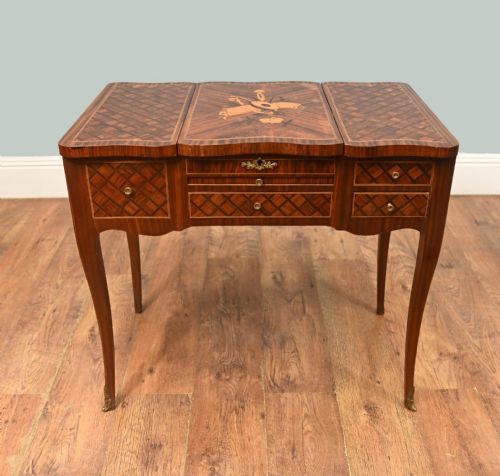


Mechanical Writing Desk
A mechanical writing desk offers ingenious hidden compartments and folding surfaces, combining fine cabinetmaking with practical daily utility.
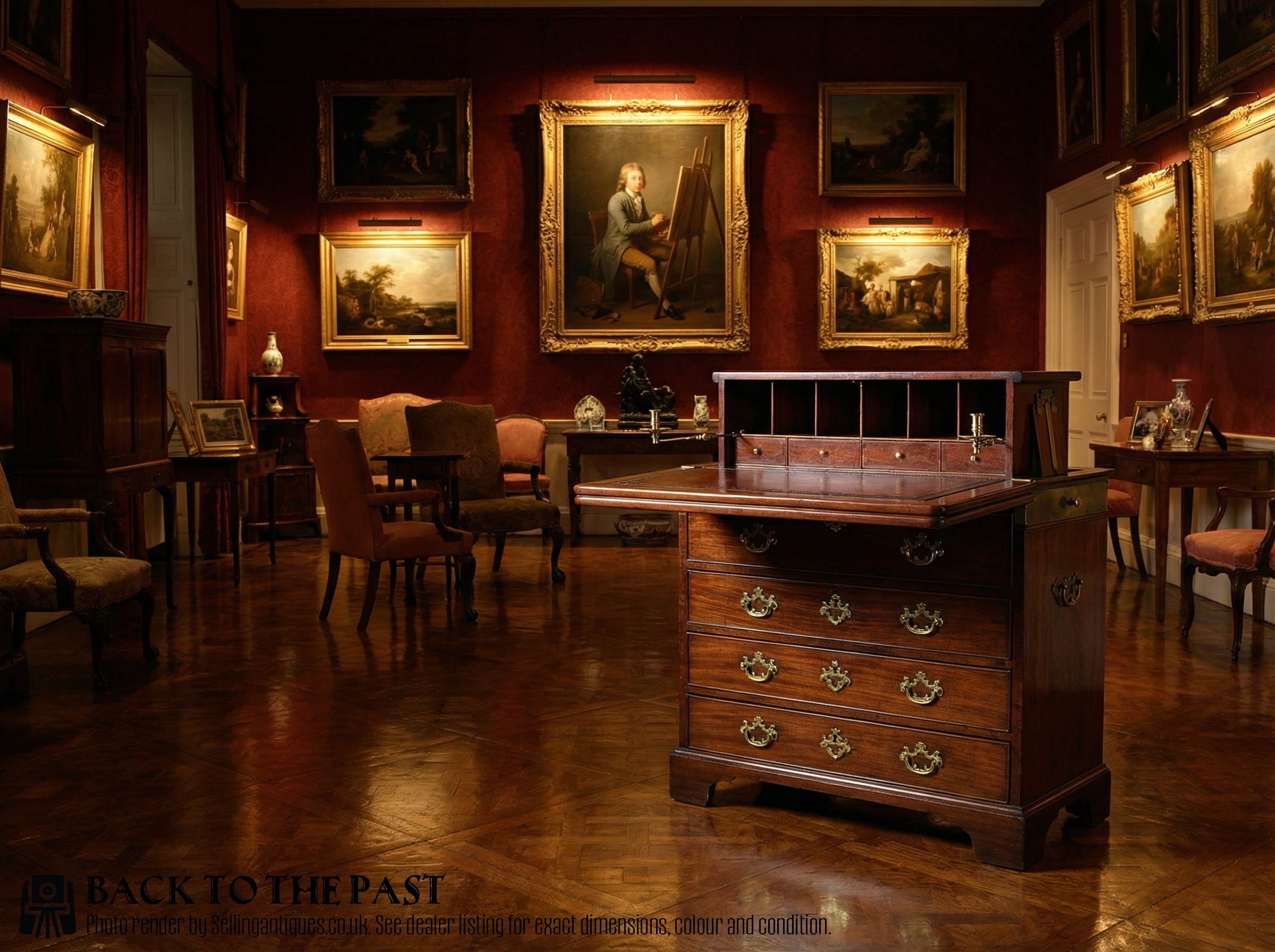
Mechanical Writing Desk
A mechanical writing desk combines fine cabinetmaking with ingenious hidden compartments, rising mechanisms and folding surfaces. When buyers search for a mechanical writing desk, they encounter sophisticated furniture designed to transform for multiple uses.
The pieces on this page span the 18th century, Georgian and Regency periods, alongside Victorian and Edwardian examples. Materials include mahogany, satinwood and walnut, often enhanced with brass hardware and leather inserts.
Formats range from architect's tables and screen writing desks to metamorphic library tables and worktables with secret rising compartments. English and French workshops produced these clever items for clients who valued both discretion and utility.
Materials and construction
Cabinetmakers utilised dense timbers such as mahogany, walnut and satinwood to build these complex chassis. These woods provided the necessary structural stability for housing internal weights, pulleys and sliding components.
Makers integrated brass and glass components alongside fitted leather writing surfaces to ensure smooth mechanical operation and a polished finish. Each moving part required precise carpentry so that drawers and rising tops functioned without catching.
Listings feature items from the 18th century, Georgian, Regency, Victorian and Edwardian periods, constructed in mahogany, satinwood, walnut, brass and leather.
Evaluating craftsmanship and mechanics
The smoothness of the internal mechanism dictates the standard of execution in these pieces. Superior examples operate quietly and accurately, aligning folding surfaces and rising compartments without sticking or requiring manual adjustment.
Timber selection and secondary wood usage reveal the underlying standard of the workshop. Finer pieces display carefully matched veneers, such as satinwood and figured mahogany, alongside robust internal framing that withstands repeated transformation.
Sampson Mordan·Edward Todd and Co·J.C Vickery of London
The Mechanical Writing Desk Glossary
- Metamorphic
- Furniture designed to transform from one form or height into another through clever mechanical hinges and rising compartments. This term applies directly to desks that shift between table and cabinet formats.
- Architect's table
- A specialised desk featuring a rising top supported by a ratcheted ratchet mechanism for drafting or reading. These pieces often include pull-out candle slides and side drawers.
- Bonheur du jour
- A small ladies writing desk featuring a tiered superstructure with drawers, pigeonholes and sometimes a mirror. Originating in France, these pieces gained popularity during the Louis XVI period.
- Marquetry
- The art of applying decorative veneer pieces of different timbers to a structure to form intricate patterns. Dutch and English makers utilised this technique on tabletops and drawer fronts.
Mechanical Writing Desk: Frequently Asked Questions
How do mechanical desks work?
These desks utilise hidden weights, pulleys, ratchets and sliding tracks concealed within the wooden frame. Internal mechanisms allow tabletops to rise, screens to lift and compartments to appear with minimal manual effort.
Cabinetmakers engineered these systems to shift the furniture from a compact cabinet or table into a fully functional workspace. Each design varies according to the specific period and workshop that produced it.
What periods do these desks date from?
The listings span the 18th century and the Georgian, Regency, Victorian and Edwardian eras. Earlier examples often feature architectural designs in mahogany, while later pieces include French and English variations.
Twentieth-century items also appear, demonstrating the enduring appeal of space-saving furniture. Dating relies on timber choice, hardware style and the complexity of the internal mechanism.
Where were these desks made?
Workshop origins recorded in the listings include English and French makers. Regional styles range from London cabinetmakers to provincial workshops producing Irish and Dutch interpretations.
Construction methods and decorative veneers often reflect the prevailing tastes of these specific regions. French pieces frequently incorporate marquetry and kingwood, whereas English items lean towards figured mahogany and satinwood.
How should I care for a mechanical desk?
Protect the moving internal mechanisms by avoiding excessive force when operating rising surfaces or drawers. Regular dusting and occasional waxing preserve the polished exterior of mahogany, walnut and satinwood.
Keep the furniture away from direct heat sources and fluctuating humidity to prevent the timber from warping. Maintaining stable environmental conditions ensures the internal wooden tracks and metal components continue to function smoothly.