


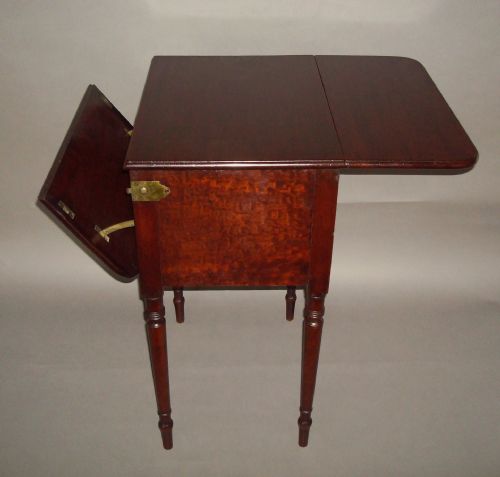
Mahogany Metamorphic Desk
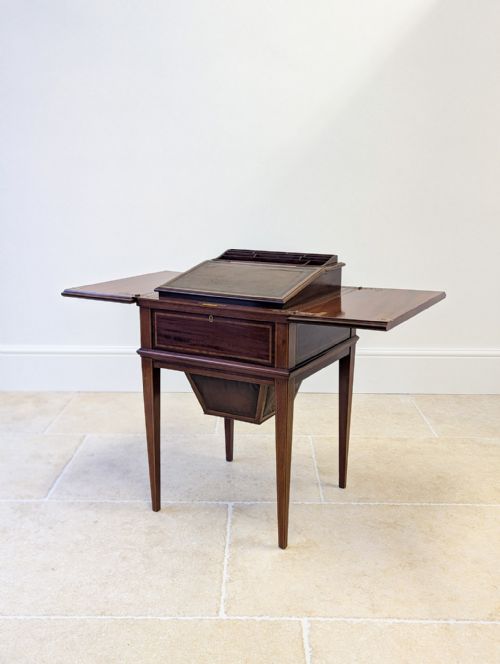
A mahogany metamorphic desk is a clever multi-use piece of furniture that transforms from one form into another, offering practical function alongside traditional cabinet-making.
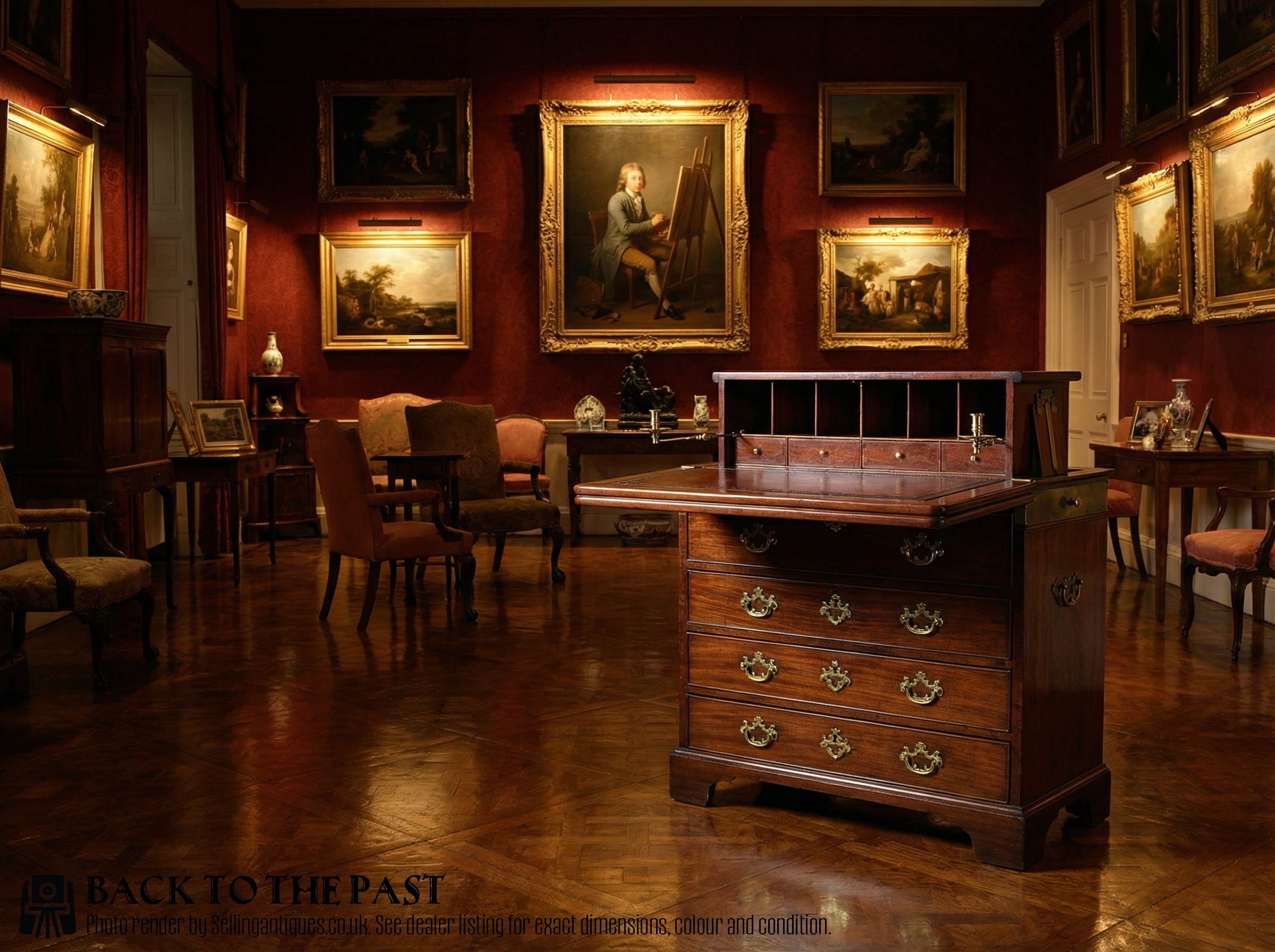
Mahogany Metamorphic Desk
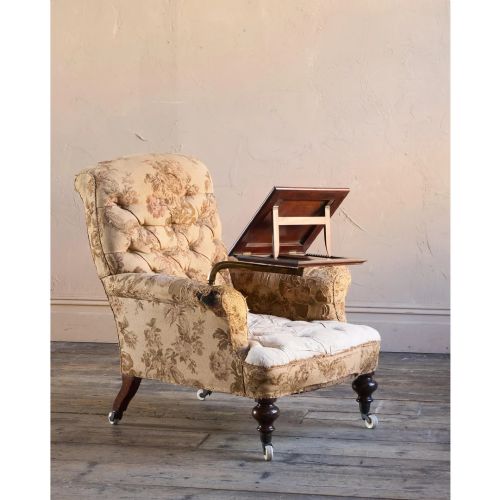
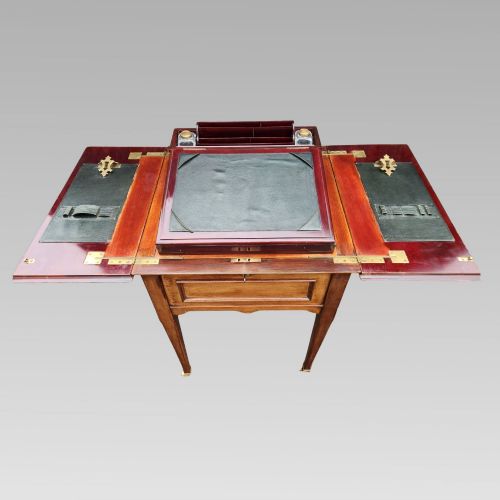
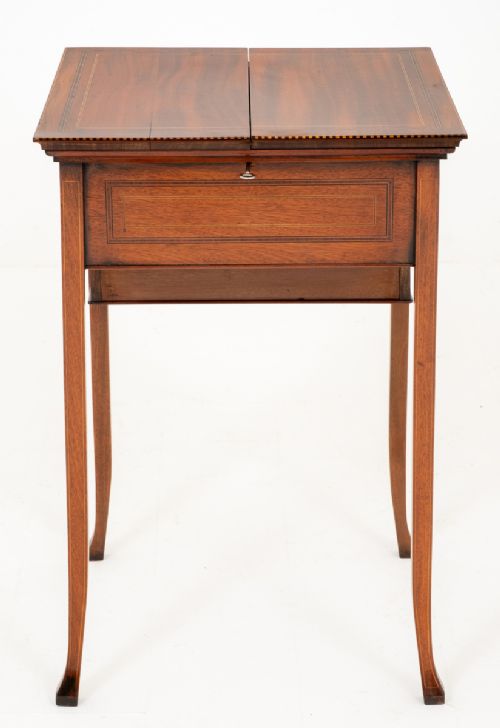
A mahogany metamorphic desk is a transformative piece of furniture designed to shift functions, frequently appearing on this page in Edwardian and 19th-century variations. These clever creations often start as writing tables, occasional tables, or cabinets before revealing hidden compartments, reading stands, or folding actions.
The selection ranges from George III and Regency pieces to Sheraton Revival and Edwardian examples, spanning various forms such as library tables, campaign desks, and ladies writing tables. Buyers seeking this phrase usually want a dual-purpose item that combines compact practicality with period character.
Many items utilise clever mechanical actions, lift mechanisms, or fold-over tops to alter their shape and utility. The origins stretch across the 18th century, the Victorian era, and into the early 20th century.
How they were made
Craftsmen built these transforming tables primarily using solid mahogany and mahogany veneers, often embellished with boxwood inlay, satinwood, and brass hardware. The internal mechanisms relied on sturdy timber framing combined with metal hinges, ratchets, and clever pivots to allow smooth movement without straining the structure.
Writing surfaces were frequently inset with leather or fabric writing pads, providing a durable platform for correspondence. Fine examples incorporated glass elements, specialised compartments, and detailed cabinet-work to conceal the mechanical joints when the piece was closed.
Some Victorian tables secretly double as sewing companions, proving that historical desk owners also needed a spot to mend socks mid-letter.
What varies in quality
The division between standard and superior pieces rests in the ingenuity and precision of the transforming mechanism itself. A top-tier example operates with fluid, balanced motion where leaves, risers, or drawers glide into place without catching or requiring excessive force.
Material selection and decorative enrichment further separate the grades, visible in the depth of the mahogany grain, the crispness of any boxwood inlay, and the quality of the brass mounts. Finer workshops invested greater labour in concealing joints and mechanisms so that the piece appeared entirely standard in its primary closed form.
J.C Vickery of London·Edwards & Sons·Shanon
The Mahogany Metamorphic Desk Glossary
- Metamorphic
- Describing furniture designed to transform into another object, such as a desk turning into a dining table or a table gaining a reading stand. This dual-purpose engineering defines the entire category.
- Sheraton Revival
- A late 19th and early 20th-century style inspired by the lighter, neoclassical designs of Thomas Sheraton. It frequently incorporates satinwood banding and delicate inlay on mahogany carcasses.
- Cellarette
- A fitted cabinet or table designed originally to hold bottles of wine securely. In metamorphic forms, these containers are sometimes adapted to conceal writing equipment or personal items.
- Campaign desk
- Portable furniture built for travel, often featuring brass corners, recessed handles, and folding legs. These utilitarian pieces frequently adopted metamorphic properties to save space on the move.
- Inlay
- A decorative technique where contrasting woods like boxwood or satinwood are embedded into recesses in the mahogany surface. This creates crisp geometric patterns or floral motifs across the top and drawers.
Mahogany Metamorphic Desk: Frequently Asked Questions
How do metamorphic desks work?
These pieces use hidden hinges, folding leaves, ratchets, and sliding platforms to shift from one form to another. Lifting or pulling specific sections reveals secondary surfaces like reading stands or hidden compartments.
Because the mechanics are integrated into the internal framing, the transition happens smoothly while keeping the exterior appearance neat when closed.
What periods are these desks from?
The pieces span from the mid-18th century through the Regency and Victorian eras, up to Edwardian and early 20th-century revivals. Georgian and George III examples represent the earlier end of the tradition.
Later Victorian and Edwardian pieces often adopted lighter Sheraton Revival styling or campaign-style portability alongside their mechanical transformations.
Where were they used?
They served primarily in libraries, drawing rooms, studies, and officers' quarters where saving floor space was a priority. A single table could act as a decorative side table by day and a fully equipped writing desk by night.
Their multi-purpose nature made them particularly popular in smaller domestic settings or for travelling gentlemen and military officers.
Are all metamorphic desks made of mahogany?
Mahogany is the dominant timber across the recorded pieces, valued for its rich grain, stability, and durability. However, makers frequently paired it with contrasting woods.
Boxwood inlay, satinwood banding, brass hardware, and leather or fabric writing surfaces commonly appear alongside the primary mahogany structure.