


Mechanical Musical Box
A mechanical musical box brings centuries-old sound into a room through precise brass pins and steel combs.
Mechanical Musical Box
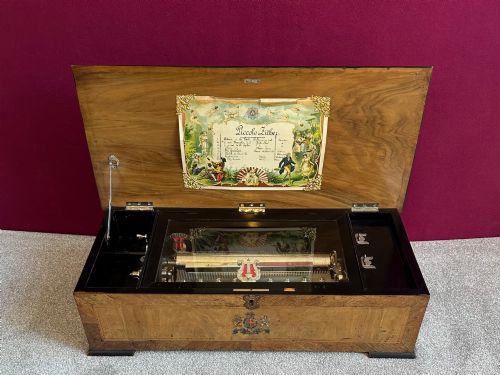
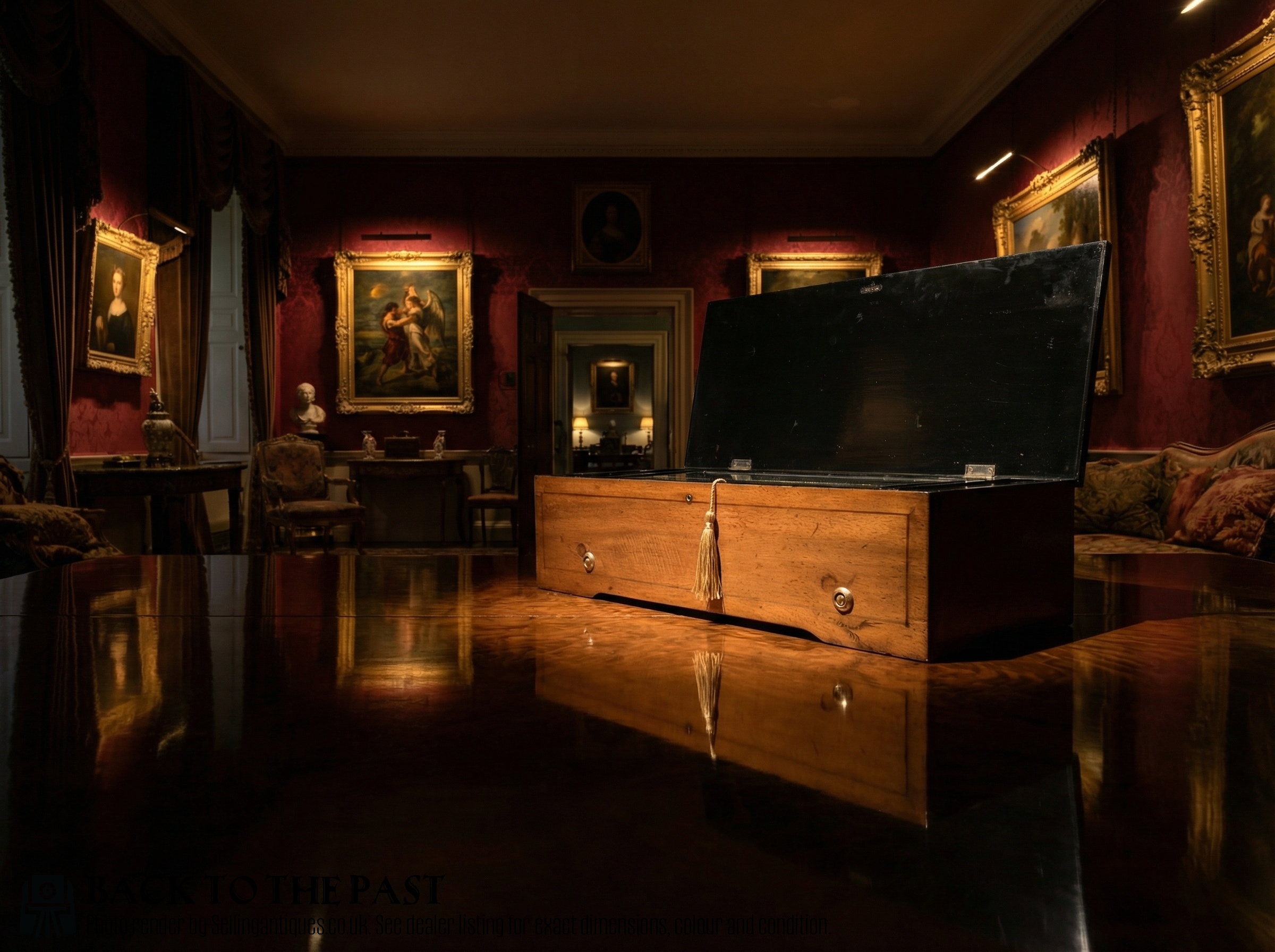
A mechanical musical box is an automated instrument housed in a wooden case, designed to play pre-set tunes through pinned cylinders or metal discs. When people search for a mechanical musical box, they encounter Victorian-era cylinder boxes and disc players originating mainly from Swiss workshops.
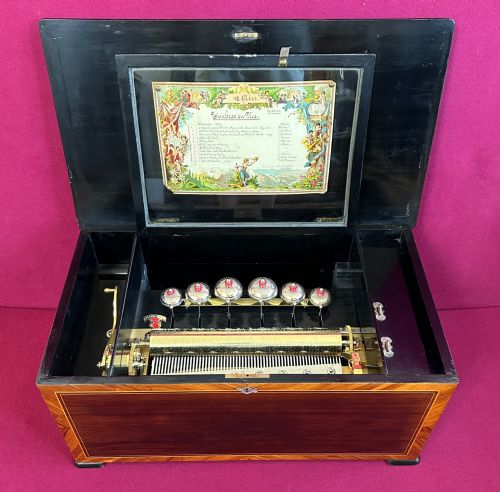
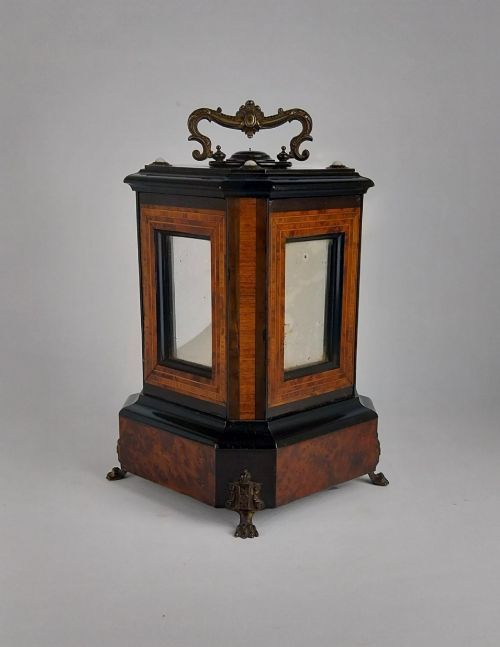
The objects listed range from simple eight-air cylinder boxes to large machines with bells in view, alongside specialised pieces like singing bird boxes and musical chairs. Walnut, rosewood, and ebonised wood cases dominate the selection, often decorated with marquetry inlay.
Most examples date from the nineteenth century, spanning periods from eighteen-hundred and sixty to nineteen-hundred, with occasional Edwardian and eighteenth-century pieces. The form serves as both furniture and functional entertainment, combining woodwork and precision engineering.
How they were made
Maker workshops built the cases using hardwoods such as walnut and rosewood, applying marquetry inlay and glass panels to house the internal movements. Steel and brass formed the mechanical heart, comprising revolving cylinders, tuned combs, and sometimes small bells or rotating discs.
The internal mechanism relies on pins hand-set into brass cylinders or perforations stamped into metal discs, which pluck individual steel teeth on a comb to produce specific notes. Key-wound springs or lever mechanisms provide the kinetic power, regulated by small governors to maintain a steady tempo.
Mechanical Musical Box Retail Price Guide 2026
Typical asking prices for mechanical musical box among the pieces listed under this phrase on Sellingantiques today, from the lower quarter to the upper quarter. They describe what is for sale here now, not the wider market.
Listings feature Victorian cylinder boxes alongside Edwardian walnut cases and Swiss musical chairs.
What varies in quality
Quality rests in the complexity of the arrangement and the precision of the brass pin placement on the cylinder. Instruments featuring multiple airs, visible bells, or interchangeable discs demonstrate higher artisan skill than simpler single-tune boxes.
The acoustic richness of the case timber and the condition of the steel teeth directly influence the tonal output. Finer pieces maintain original components and robust casework, whereas lesser examples show wear in the delicate pins and combs.
Langdorff And Fils·Lochmanns·B A Bremond·Nicole Freres·LeCoultre
The Mechanical Musical Box Glossary
- Air
- A single tune played by the cylinder or disc. Boxes are often categorized by how many airs they hold.
- Cylinder
- The rotating brass barrel set with pins that pluck the steel comb. Each pin corresponds to a specific note in the sequence.
- Comb
- The tuned piece of steel with multiple teeth that vibrates when struck by the cylinder pins. The length and thickness of each tooth determine its pitch.
- Polyphon
- A brand of disc-playing mechanical music box popular in the nineteenth century. These machines use flat metal discs instead of pinned cylinders to store the musical arrangement.
- Marquetry
- The art of applying pieces of veneer to a structure to form decorative patterns. Cases often display floral or geometric marquetry inlay.
Mechanical Musical Box: Frequently Asked Questions
How do cylinder and disc boxes differ?
Cylinder boxes use a pinned brass barrel to play a fixed set of tunes, usually numbering between eight and twelve airs.
Disc boxes, such as Polyphons, utilise interchangeable flat metal sheets that allow the owner to change the repertoire easily by swapping the disc.
What is a singing bird box?
A singing bird box is a small mechanical container that houses an automated, feather-covered bird. When activated, the lid opens and the bird moves while whistling a tune.
These pieces require intricate miniature bellows and levers hidden inside compact sterling silver or enamel cases.
Where were most musical boxes made?
The majority of cylinder and musical movements originated in Switzerland during the Victorian period. Swiss workshops developed specialised techniques for pinning cylinders and tuning steel combs.
German manufacturers also produced significant quantities of disc players towards the end of the nineteenth century.