

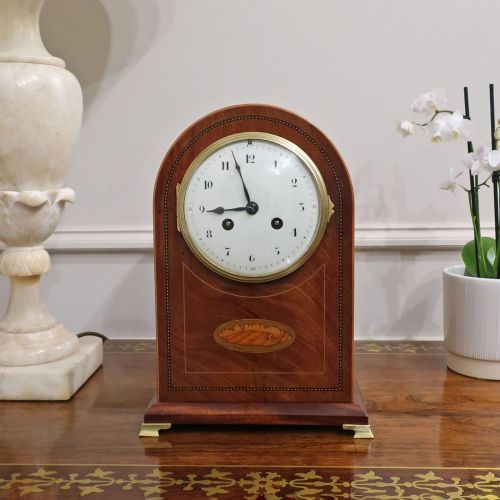


Mechanical Chiming Table Clock
A mechanical chiming table clock brings audible rhythm and precision engineering into a room, offering both musical performance and timekeeping.
Mechanical Chiming Table Clock
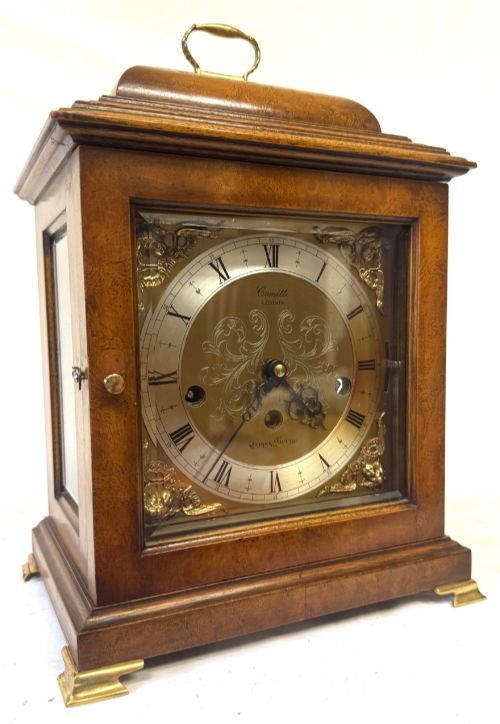
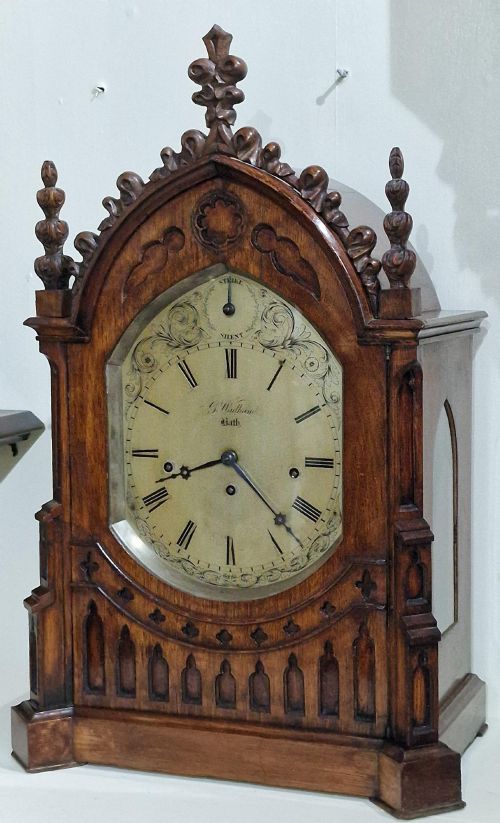
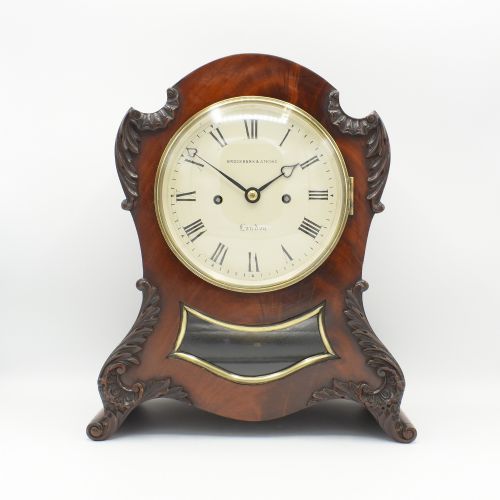
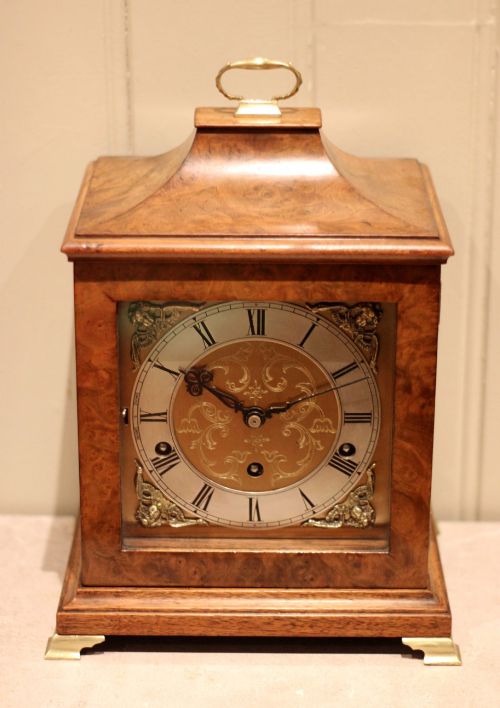
A mechanical chiming table clock is a timepiece designed to sit on a bracket, shelf, or mantelpiece while marking the hours and quarters with bells, gongs, or chimes. When searching for a mechanical chiming table clock, a buyer encounters forms such as bracket clocks, mantel clocks, and carriage clocks originating from the nineteenth and twentieth centuries.
The selection here draws heavily from the Victorian era and the early twentieth century, spanning styles like Art Deco, Gothic Revival, and Edwardian. Common regional traditions appear through English makers, German workshops, and French salons.
Housing designs range from traditional wooden architectural cases to glass-sided designs that reveal the internal movement. These pieces function as both functional timekeepers and decorative centrepieces for domestic interiors.
How they were made
Cases utilise cabinet timbers including mahogany, burr walnut, oak, rosewood, and ebonised wood, often enhanced with brass mounts, ormolu, bronze, and glass panels. Movement plates, gears, and dials incorporate brass and enamel, whilst select twentieth-century examples integrate chrome.
Internal mechanisms rely on spring-driven or weight-driven systems, with fusee movements regulating power delivery to ensure consistent timekeeping. Chiming mechanisms utilise multi-train layouts to strike bells or gongs on the hour and quarter-hour, employing systems such as Westminster and ting-tang strikes.
Several clocks arrive with pad-tops and visible glass panels, offering a glimpse of the ticking brass gears while they chime.
What varies in quality
Quality rests in the precision of the movement and the integrity of the cabinet work, distinguishing workshop production from standard manufacturing. Maker attribution to established firms like Winterhalder & Hofmeier, Lenzkirch, or Mappin & Webb elevates the standing of a piece.
Material selection and decorative execution dictate distinction, from simple timber cases to elaborate marquetry, gilt bronze, and multi-tune movements. The complexity of the chiming train, such as triple fusee or multi-tune configurations, separates standard timepieces from ambitious horological engineering.
Comitti Of London·Mappin & Webb·Winterhalder And Hofmeier·Lenzkirch·Barraud And Lunds
The Mechanical Chiming Table Clock Glossary
- Fusee
- A conical pulley connected to the mainspring by a chain or cord, designed to equalise the torque as the spring unwinds. This mechanism ensures consistent force is delivered to the escapement throughout the power reserve.
- Ting-tang
- A two-hammer striking system that sounds two different notes on the quarters or hours. It typically precedes the full hour strike with a distinctive high-low chime.
- Bracket clock
- A portable timepiece originally designed to sit on a wall bracket to allow sound to disperse more freely. Over time, the term evolved to describe larger table or mantel clocks with architectural wooden cases.
- Gorge case
- A stepped brass housing with a handle above, commonly found on French carriage clocks. The design allows glass panels to be fitted securely within structural brass framing.
- Triple fusee
- A movement utilising three separate fusee cones to power timekeeping, striking, and chiming trains. This setup permits complex melodies like the Westminster chime on multiple gongs or bells.
Mechanical Chiming Table Clock: Frequently Asked Questions
How do I wind a mechanical chiming table clock?
Winding requires inserting a dedicated key into the winding arbors on the dial face and turning gently until resistance is felt. Care must be taken not to overwind the mainsprings, which can damage the internal gearing.
For clocks with multiple trains, each train - timekeeping, striking, and chiming - requires separate winding. Ensuring the clock is placed on a level surface before winding helps maintain the correct beat of the pendulum or platform escapement.
What is the difference between a bracket clock and a mantel clock?
Bracket clocks historically featured sturdy carrying handles and flat bases designed to rest on a dedicated wall bracket, allowing sound to project through the room. Mantel clocks emerged later as heavier, decorative pieces intended to sit directly on a fireplace mantel.
Over time, the terminology merged as clockmakers produced table clocks housed in similar wooden or architectural cases. Both types can incorporate mechanical chiming movements and glass panels to display the internal mechanics.
How do Westminster chimes work?
Westminster chimes utilise a specialised gear train and a pinned cylinder or rack to lift hammers against a set of four or eight gongs or bells. The melody plays the traditional four-note quarter-hour sequence before striking the full hour.
This mechanism requires a dedicated train within the movement, separate from the timekeeping gears. Clocks featuring this capability often include silent levers to pause the musical performance during the night.
How do I care for an antique chiming clock?
Antique chiming clocks require stable environmental conditions away from direct sunlight, moisture, and extreme temperature fluctuations. Regular professional servicing ensures the brass pivots, bushings, and gear trains remain clean and properly lubricated.
Moving the clock demands securing the pendulum or platform escapement to prevent damage to the delicate suspension spring. When transporting the piece, removing the pendulum and winding keys prevents internal scratching of the dial and movement.