
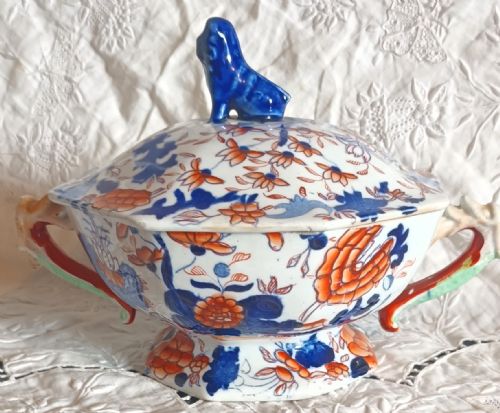


Masons Ironstone Lid
These pieces of masons ironstone lid represent durable British ceramic work from the nineteenth century, sought after by collectors for their robust forms and vibrant hand-painted patterns.
Masons Ironstone Lid
A masons ironstone lid forms part of a larger vessel such as a tureen, potpourri vase, or serving dish, designed to seal the container while adding decorative harmony. These components frequently survive alongside tureens and vases from the Georgian and Regency periods, originating from nineteenth-century British production.
The objects appearing in this category display distinctive patterns including Chinoiserie, Imari, and Mandarin designs, often rendered in bold enamel colours and gold leaf. Buyers encounter these lids paired with vegetable tureens, sauce tureens, and decorative lidded vessels originating across the nineteenth century.
Materials and construction
Potters constructed these pieces using dense ironstone ceramic and earthenware bodies, which provided exceptional durability compared to standard porcelain. This tough ceramic material allowed manufacturers to fashion heavy vessels and lids capable of withstanding daily use.
Artisans applied hand-painted enamel decoration alongside gold leaf detailing over a glossy glaze, often drawing inspiration from Eastern motifs. The application of these rich pigments required careful firing to fix the vibrant colours onto the ironstone surface.
The recorded materials consist of ironstone, earthenware, enamel, gold leaf, and glaze applied to tureens, vases, and serving dishes.
Judging quality in these items
The precision and complexity of the painted pattern dictate the upper tier of quality, particularly where intricate Chinoiserie or Imari motifs demand steady brushwork. Finer examples display crisp application of enamel and generous use of gold leaf without blurring along the edges.
Condition and completeness also govern the hierarchy, as matching lids that retain their original glaze lustre and sharp moulding command greater attention from collectors. The depth of colour and the crispness of the ceramic moulding distinguish superior nineteenth-century examples from standard production.
The Masons Ironstone Lid Glossary
- Ironstone
- A patented ceramic body developed in the nineteenth century to imitate Chinese porcelain while offering superior strength and utility. It combines traditional earthenware ingredients with slag iron.
- Chinoiserie
- A decorative style reflecting European interpretations of Chinese and East Asian artistic traditions. It appears frequently on nineteenth-century vessels through motifs of figures, landscapes, and exotic flora.
- Imari
- A decorative pattern style characterised by a distinct palette of cobalt blue, iron red, and gold leaf. This aesthetic drew heavy influence from imported Japanese porcelain.
- Potpourri
- A vessel designed to hold dried fragrant plant material, featuring a pierced or fitted lid to release scent. These decorative vases appear frequently among nineteenth-century ceramic wares.
- Tureen
- A large deep serving bowl equipped with a matching cover, used historically for soups or vegetables. Surviving examples demonstrate the domestic utility of heavy ceramic wares.
Masons Ironstone Lid: Frequently Asked Questions
What vessels do these lids fit?
These covers belong to a variety of nineteenth-century vessels including vegetable tureens, sauce tureens, and decorative potpourri vases.
Buyers commonly find them paired with serving dishes and lidded urns originating from the Georgian and Regency periods.
How do I identify the pattern?
Makers utilised distinct decorative schemes such as Chinoiserie, Imari, and Mandarin designs during the nineteenth century. These styles feature characteristic motifs and bright enamel colour palettes.
Examining the specific hand-painted details helps differentiate between standard floral arrangements and complex narrative scenes.
Are these pieces made of porcelain?
These items consist of durable ironstone ceramic rather than true porcelain. This heavy earthenware body was formulated to resist chipping while maintaining a refined appearance.
The material allowed manufacturers to produce robust vessels suitable for both display and practical dining use.
How should I clean my ironstone lid?
Gentle washing in warm water with mild soap preserves the delicate enamel pigments and gold leaf detailing. Avoid harsh abrasives that might scratch the glossy glaze.
Careful handling protects the hand-painted surfaces and prevents unnecessary wear on the ceramic edges.