

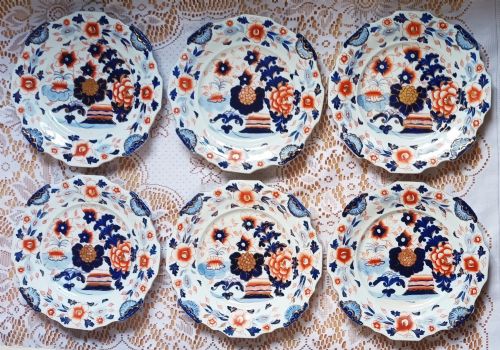


Masons Blue Pottery
Masons blue pottery brings robust ceramic strength and striking Chinoiserie decoration together, offering durable elegance for daily use and display.
Masons Blue Pottery
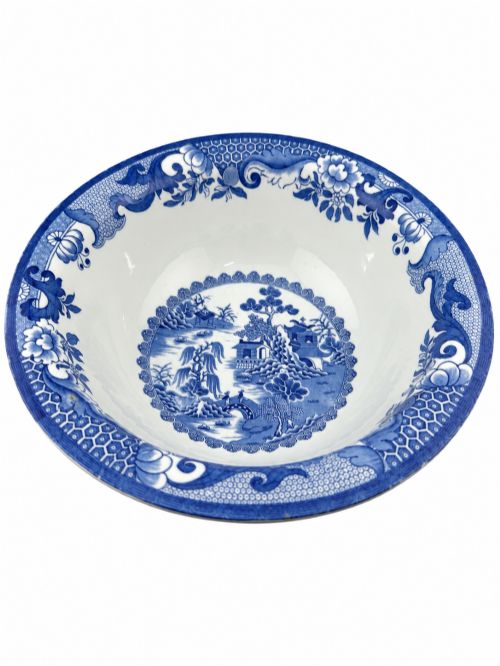
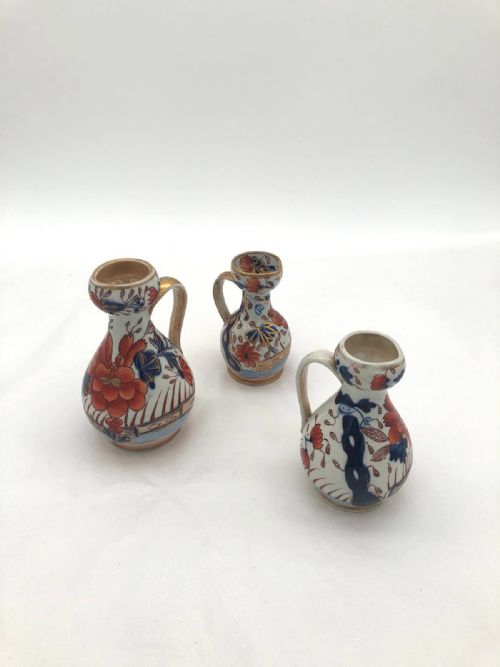
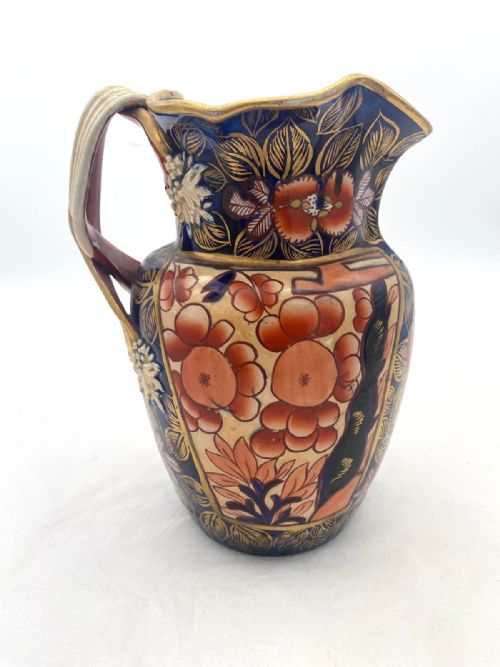
Masons blue pottery encompasses heavy ironstone vessels and tableware produced across the nineteenth century, ranging from large hall vases to serving dishes and soup tureens. Buyers encountering this selection will find robust earthenware items shaped into jugs, mugs, plates, and cheese dishes reflecting Georgian, Regency, and Victorian tastes.
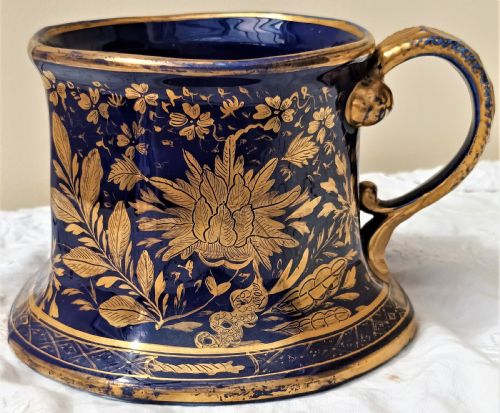
The decorative vocabulary leans heavily towards orientalist motifs, with Regency Chinoiserie, Victorian Chinoiserie, and Japan patterns dominating the aesthetic. Pieces such as the Schoolhouse and Bandana patterns showcase deep blue tones combined with contrasting enamel and gilding.
Forms vary from practical tableware like asparagus dishes and dessert plates to ornamental centrepieces including lidded vases and Hydra jugs. Most examples stem from the broader nineteenth century, capturing the transition from Regency elegance to Victorian ornamentation.
Materials and Technique
Potters utilised patented ironstone china, a dense and durable ceramic body designed to withstand heavy domestic use while accepting intricate transfer printing and hand-painting. This earthenware foundation provided the ideal heavy base for large vessels such as soup tureens and hall vases.
Surface decoration relied on rich underglaze blue combined with vibrant enamel colours and gold leaf highlights. Artisans applied gilding and hand-painted details over the glaze to accentuate oriental patterns like the Pagoda and Japan designs.
Masons Blue Pottery Retail Price Guide 2026
Typical asking prices for masons blue pottery among the pieces listed under this phrase on Sellingantiques today, from the lower quarter to the upper quarter. They describe what is for sale here now, not the wider market.
Listings feature nineteenth-century ironstone pottery spanning Georgian, Regency, and Victorian periods, utilising glaze, enamel, and gold leaf.
Assessing Quality
The crispness of the blue transfer printing and the precision of the overglaze hand-painting distinguish finer items from standard production. Artisans who maintained tight registration between the blue outline and the enamel infill created visually richer pieces.
The preservation of delicate gold leaf gilding and enamel highlights heavily influences the visual impact of each vessel. Items retaining bright, unrubbed gilt work and crisp ceramic relief moulding represent the upper tier of this ware.
Mason
The Masons Blue Pottery Glossary
- Ironstone
- A heavy, durable ceramic body patented in the nineteenth century to imitate Chinese porcelain while offering superior strength. It forms the solid foundation for most nineteenth-century tableware.
- Hydra jug
- A distinctive pottery pitcher featuring a serpent-form handle and an octagonal or flared body. This classical shape frequently appeared in nineteenth-century ironstone production.
- Chinoiserie
- European artistic style reflecting Chinese and East Asian motifs, prominent in Regency and Victorian decoration. It appears extensively on transfer-printed plates and vases.
- Gilding
- The application of gold leaf or gold paint to ceramic surfaces to highlight moulded details and borders. This decorative finish adds warmth and contrast to deep blue underglaze.
Masons Blue Pottery: Frequently Asked Questions
What is ironstone china?
Ironstone is a dense, durable ceramic body patented to bridge the gap between earthenware and true porcelain.
It provided nineteenth-century makers with a sturdy material capable of taking rich blue transfer prints and heavy enamel decoration.
How do I care for ironstone pottery?
These nineteenth-century ceramics require gentle hand washing in warm water to protect their delicate enamel paints and gold leaf highlights.
Avoid abrasive scrubbers and harsh modern detergents to preserve the historic glaze.
What are Chinoiserie patterns?
Chinoiserie designs depict European interpretations of East Asian landscapes, pagodas, and figures in blue transfer print.
These imaginative scenes formed a core part of Regency and Victorian aesthetic taste on tableware.
How are Regency pieces dated?
Regency pieces are identified through specific classical forms, distinct Chinoiserie motifs, and characteristic early nineteenth-century colour palettes.
Stylistic cues like serpent handles and specific registry marks help separate them from later Victorian wares.