
Marquetry Wooden Chest
A marquetry wooden chest brings together precise timber crafting and functional storage across centuries of cabinet making.
Marquetry Wooden Chest
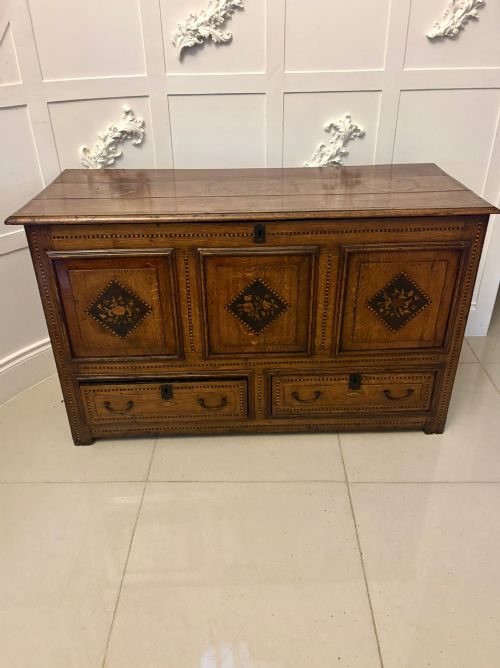
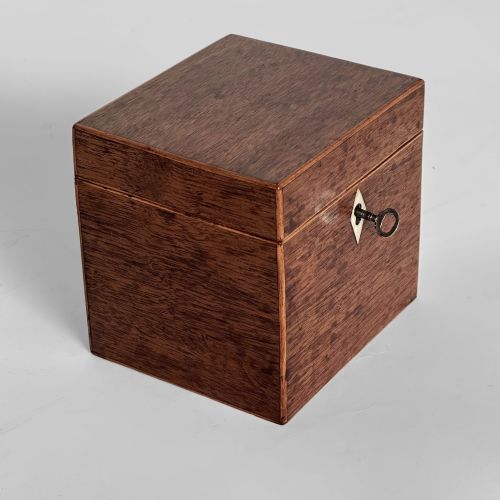
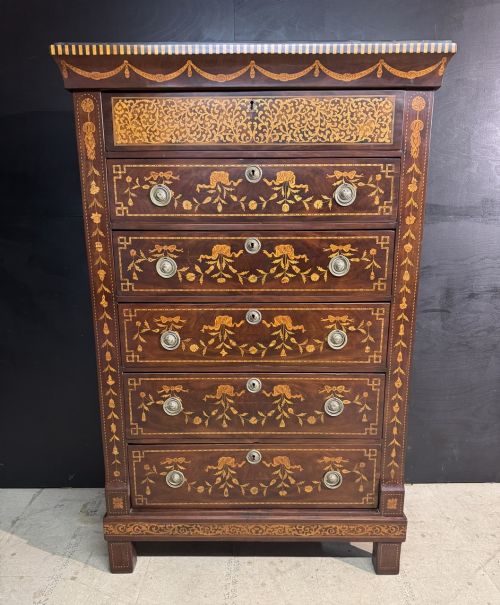
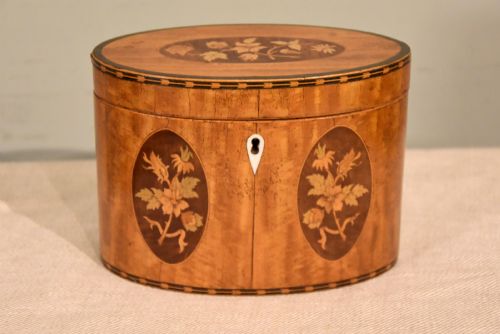
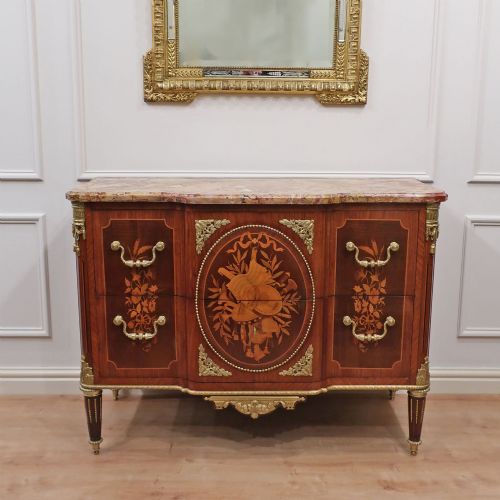
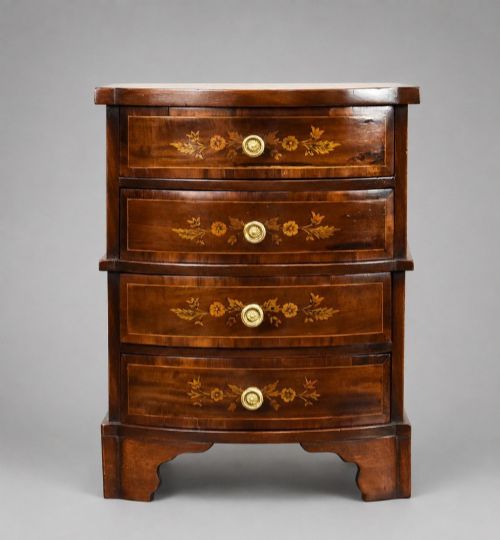
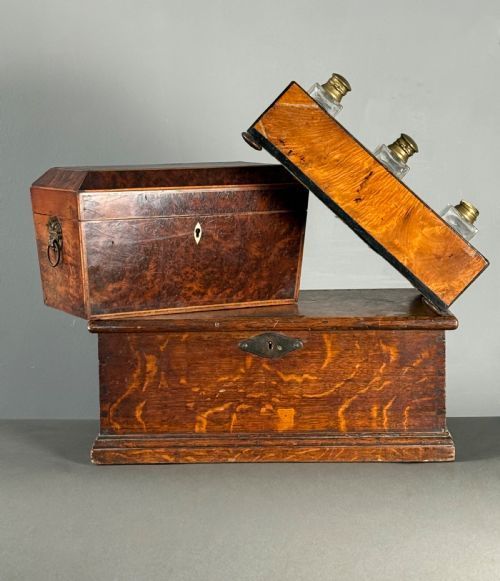
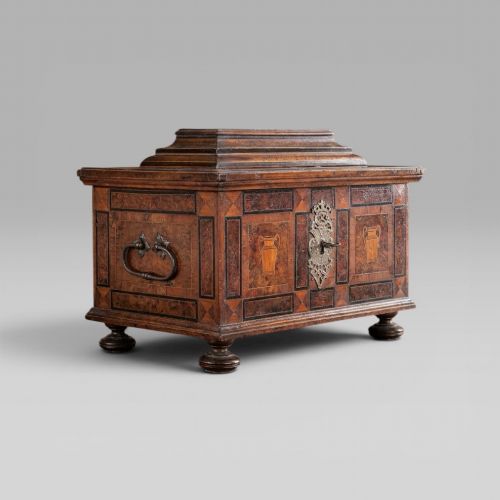
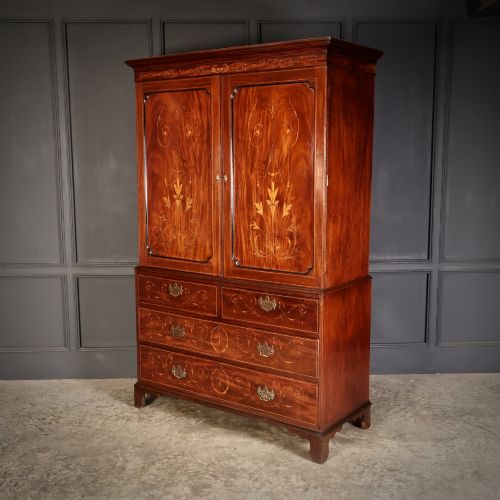
When searching for a marquetry wooden chest, buyers encounter a diverse selection ranging from compact tea caddies and caskets to tall chests of drawers and commodes. These pieces span periods from the seventeenth century through to the twentieth century, reflecting shifting domestic storage needs and decorative tastes.
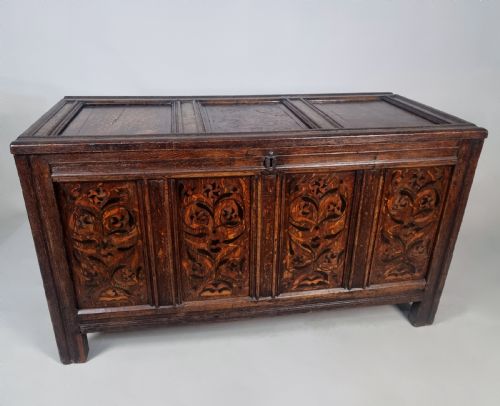
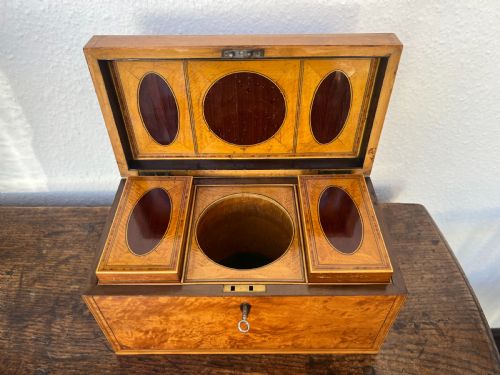
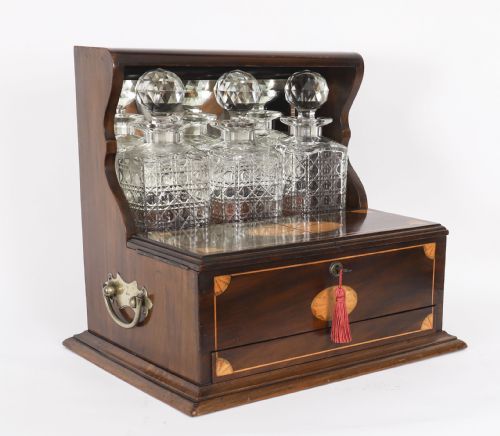
The assortment includes Georgian mahogany and satinwood boxes, Dutch tallboys, and Victorian Tunbridge Ware examples alongside larger oak mule chests and commodes. Smaller vessels often feature fitted interiors for tea or gaming, while larger case pieces provide substantial drawer capacity.
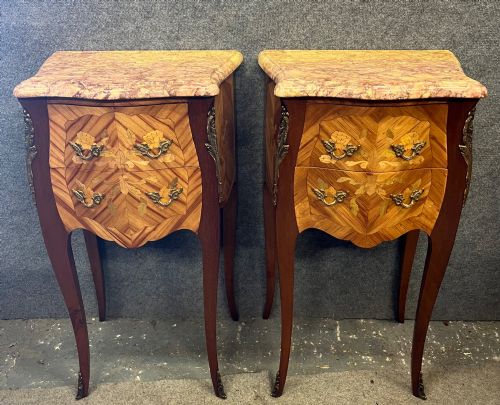
Continental origins appear alongside English examples, showing distinct regional preferences in wood choice and decorative motifs. Buyers frequently find bedside cabinets and side tables incorporating the same detailed inlay work seen on larger storage chests.
Evaluating execution
The distinction between tiers of work lies in the precision of the timber fitting and the complexity of the veneer patterns. Finer pieces demonstrate seamless integration of contrasting woods where individual elements align without gaps or visible adhesive.
The choice of primary and secondary timbers dictates the grade of the piece, with burr woods and highly figured grain reserved for superior examples. Hardware execution, from brass escutcheons to secret drawer mechanisms, further separates standard production from exceptional craftsmanship.
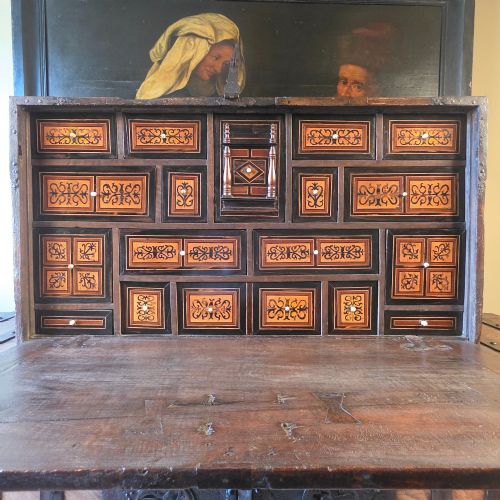
Several chests conceal hidden compartments and secret drawers designed to keep valuables safely out of sight.
Henry Hollamby
The Marquetry Wooden Chest Glossary
- Marquetry
- A decorative technique where small pieces of veneer are assembled into pictorial or geometric patterns on a wooden ground. This method differs from inlay by covering the entire surface of the carcase.
- Caddy
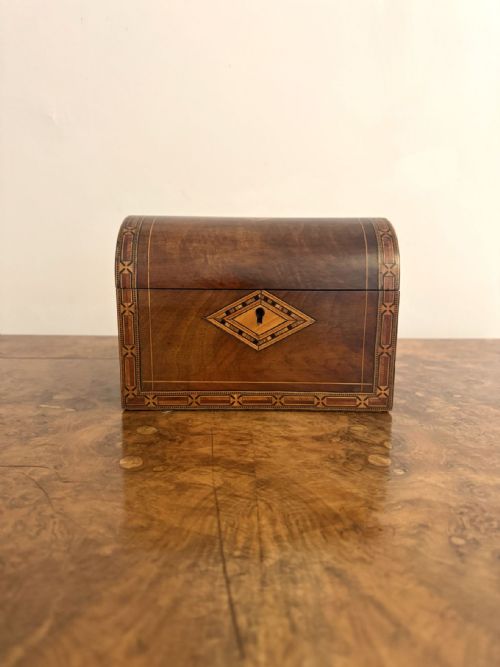
- A small box originally designed for storing tea leaves, often fitted with internal compartments and a lock. They frequently showcase high levels of decorative veneer and marquetry.
- Commode
- A low chest of drawers or cabinet developed in the eighteenth century, commonly featuring decorative wood veneers and sometimes topped with marble. They served both utilitarian and decorative roles in formal rooms.
- Tunbridge Ware
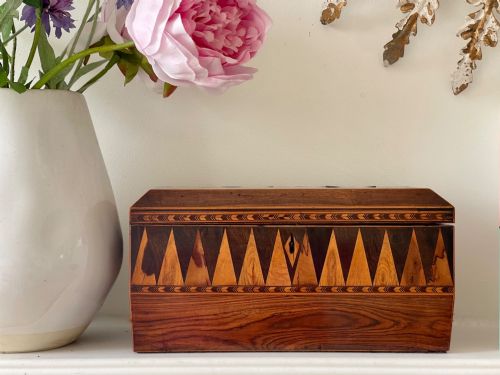
- A distinct type of woodworking originating from Kent, characterised by mosaics made from tiny dyed wood blocks to form geometric or pictorial scenes. These appear frequently on nineteenth-century boxes and tea chests.
- Mule chest
- A traditional storage chest featuring one or two drawers at the base beneath a main lift-top compartment. Early examples often incorporate panelled construction and inlaid decoration.
Marquetry Wooden Chest: Frequently Asked Questions
What periods do these chests come from?
The pieces span multiple centuries, starting from seventeenth-century oak and continental caskets up through Georgian and Victorian examples. Twentieth-century bedside cabinets and side tables also appear in the selection.
Design characteristics shift across these eras, moving from heavy structural oak to refined mahogany and satinwood veneers with complex pictorial marquetry.
How were tea caddies used historically?
Tea caddies served as secure containers for expensive tea leaves when tea was a luxury commodity. They typically included lockable lids and internal lidded canisters to protect the contents from moisture and theft.
Many examples feature divided interiors and small glass mixing bowls, reflecting the social rituals of tea preparation in the home.
How do I distinguish Tunbridge Ware?
Tunbridge Ware is identifiable by its mosaic surface decoration composed of thousands of precisely cut tiny wooden squares and triangles. These tiles form detailed geometric borders or pictorial motifs.
This technique appears predominantly on nineteenth-century boxes, tea caddies, and small decorative items associated with makers such as Henry Hollamby.
Where should I place a marquetry chest?
These chests suit various living spaces depending on their scale, from small bedside cabinets and table-top caddies to large commodes and tallboys. They function effectively as storage furniture or display surfaces.
Placement should avoid direct sunlight and extreme temperature fluctuations to protect delicate wood veneers and historic finishes.