
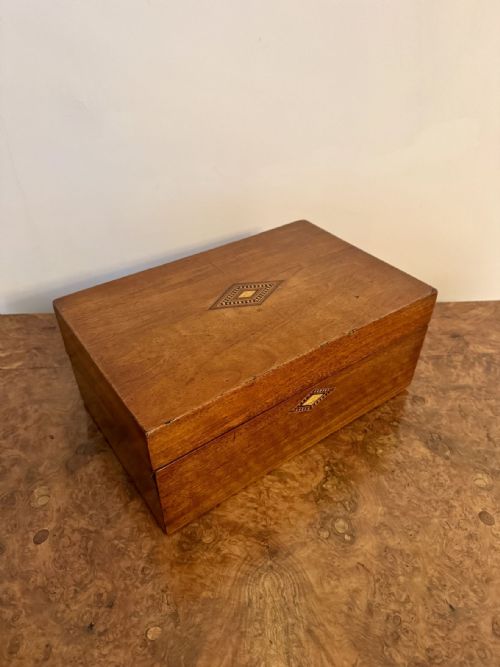
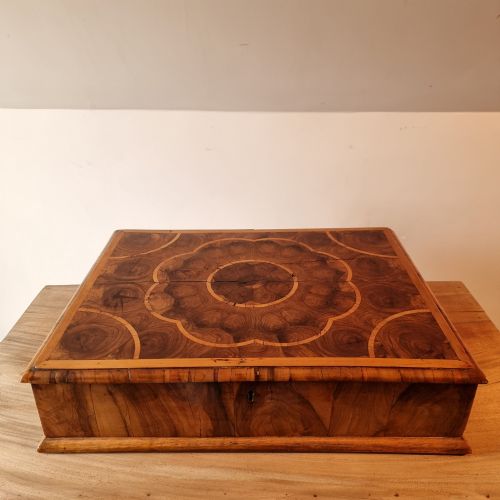
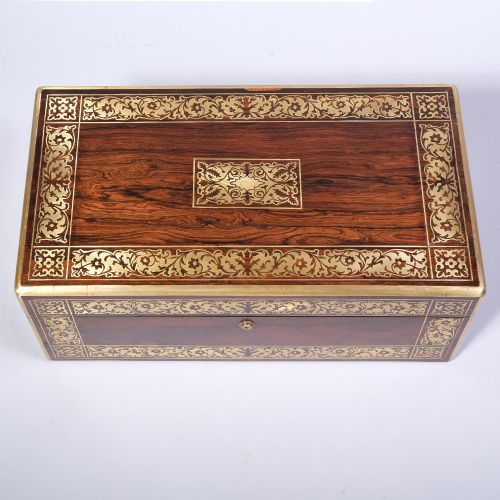
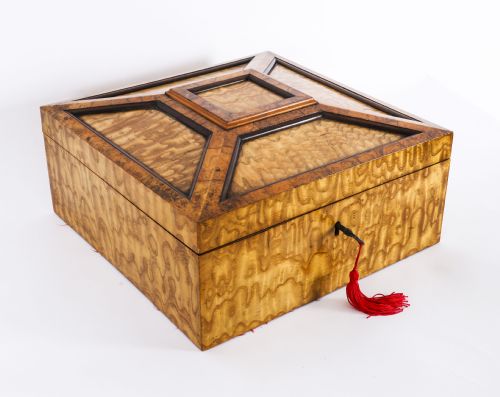
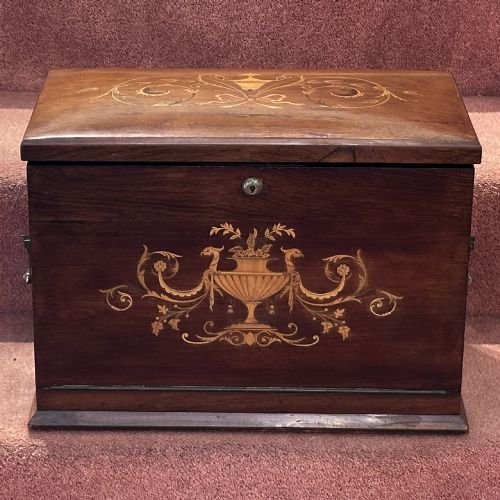


Marquetry Document Box
These marquetry document box pieces combine intricate wood veneers and practical storage, offering a tangible link to historical desktop organisation.
Marquetry Document Box
A marquetry document box is a container designed for storing papers and letters, surfaced with decorative wood veneers arranged in pictorial or geometric patterns. When you examine this selection, you encounter forms ranging from compact 17th century lace boxes to expansive Victorian correspondence chests and writing slopes.
The material evidence shows pieces spanning the 17th century through the Victorian era, alongside Regency, Art Deco, and Italian Grand Tour examples. Walnut, rosewood, fruitwood, and olive wood provide the foundational structure for these varied receptacles.
Materials and veneering techniques
Craftsmen built the carcase from timbers such as walnut, mahogany, or rosewood, applying thinner contrasting veneers of fruitwood, boxwood, and satinwood to create the surface imagery. This technique relies on precision cutting of contrasting woods fitted together into a paper pattern before gluing to the solid foundation.
Metal elements like brass mounts, handles, and inlay lines frequently accompany the timber work, particularly on Regency and 19th century iterations. Iron mechanics sometimes appear within locking mechanisms, while bone or ebony occasionally supplements the primary wood palette.
One unexpected survival hides paperwork inside a secret safe disguised as an Art Deco book.
Quality factors in veneered boxes
The refinement of the veneer work dictates the standing of a piece, specifically the tightness of the joinery between contrasting woods and the complexity of the floral or geometric motifs. Richly figured timbers like burr walnut or burr maple elevate the baseline material quality.
Originality of surface finish and internal fittings also divide standard examples from exceptional ones. Boxes retaining their fitted compartments, original keys, or documented regional origins carry distinct attributes of superior workshop production.
The Marquetry Document Box Glossary
- Marquetry
- The art of applying decorative pieces of veneer to a structural carcase to form geometric or pictorial designs. This technique differs from simpler inlay by covering the entire surface with fitted wood segments.
- Veneer
- A thin slice of figured wood applied to a secondary timber base. Higher quality boxes utilise substantial veneers that endure centuries of cleaning.
- Writing slope
- A desktop box featuring a hinged slanted lid that opens to reveal a writing surface and compartment storage. Many examples incorporate secret drawers beneath the primary stationery wells.
- Casket
- A box designed for valuables, often featuring a secure lock and ornate exterior decoration. Historical examples range from small lace receptacles to heavy table chests.
- Stationery box
- A standing or desk-bound cabinet designed to hold writing paper and envelopes upright. These typically date to the Victorian period.
Marquetry Document Box: Frequently Asked Questions
What is a marquetry document box?
A marquetry document box is a lidded container surfaced with intricate wood veneers, built to store letters, papers, or valuables.
Such pieces range from small 17th century lace boxes to larger Victorian correspondence chests.
How were these boxes used historically?
These receptacles served upper and middle-class households for keeping personal correspondence, legal papers, and lace secure and organised on desks or tables.
Many incorporated compartments for inkwells, pens, and stationery alongside lockable lids.
How do I date a document box?
Dating relies on identifying the underlying timber, the style of the marquetry motifs, and the construction methods used for the carcase and interior fittings.
Reference points include the distinct veneers of 17th century floral pieces versus the heavier rosewood and burr walnut of Victorian examples.
How should I care for a wood veneer box?
Maintain stable indoor humidity levels away from direct heat sources to prevent the thin wood veneers from lifting or cracking.
Apply occasional traditional wax polish with a soft cloth to nourish the historic timber surface.