
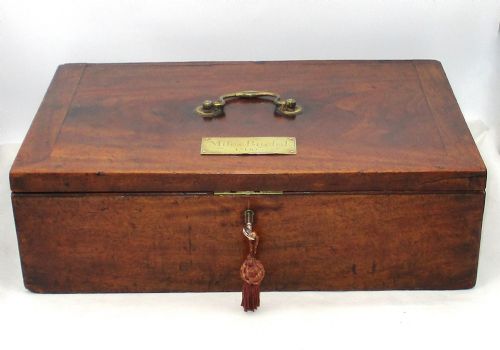
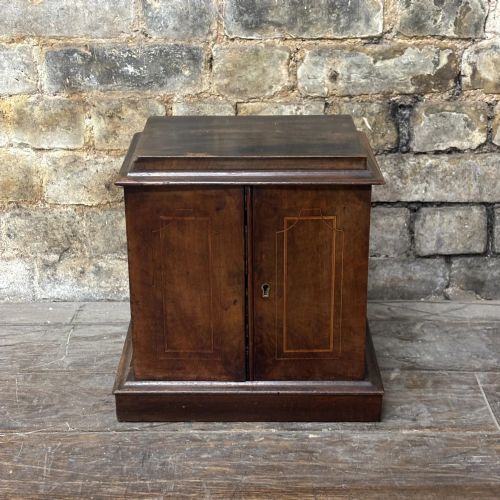


Lockable Writing Box
These lockable writing box pieces offer secure storage for correspondence and papers, combining period craftsmanship with practical utility.
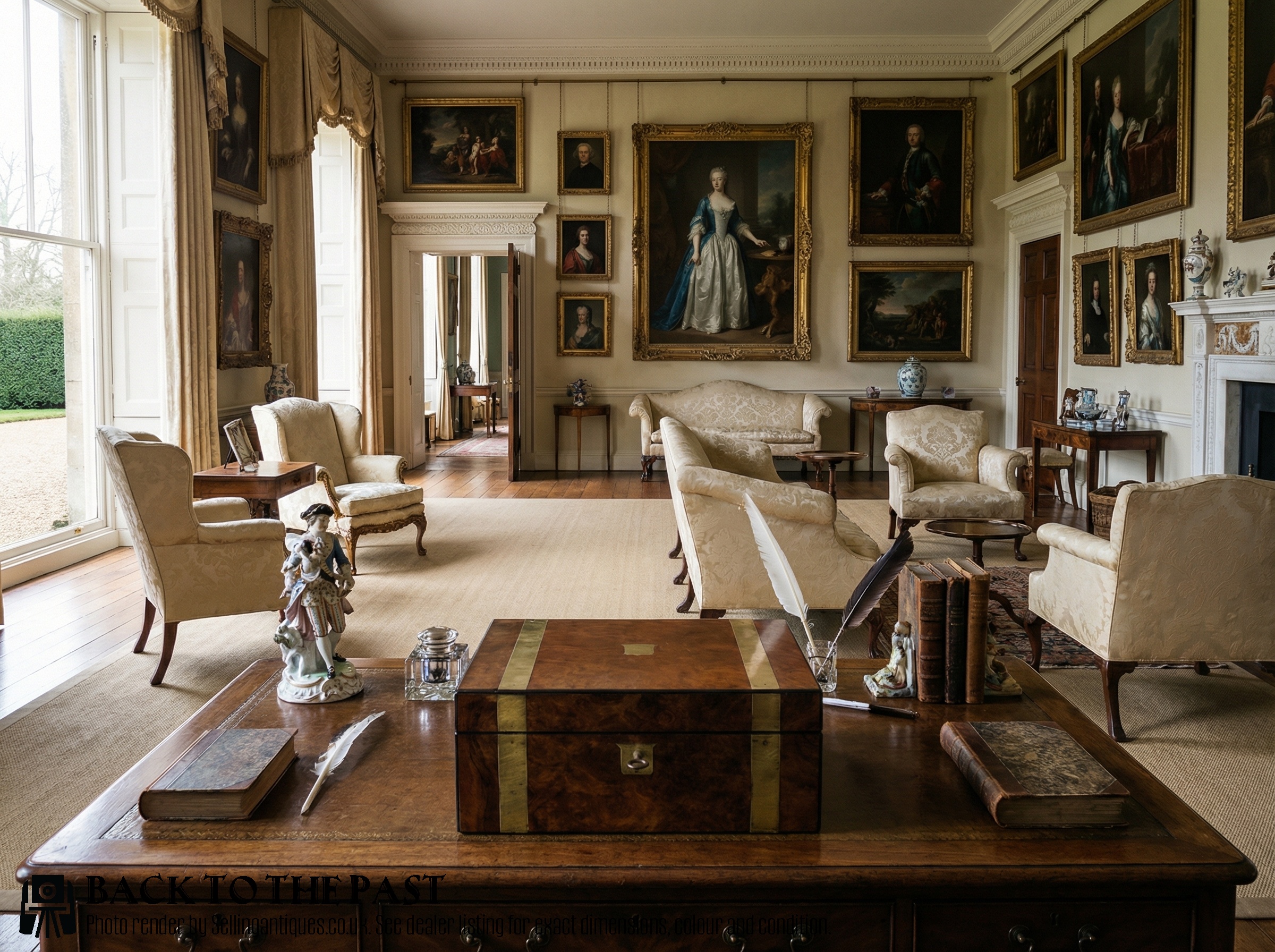
Lockable Writing Box
A lockable writing box provides a private, secure repository for letters, documents and personal stationery. When browsing this selection, buyers frequently encounter Victorian and 19th-century examples alongside earlier Georgian pieces.
The assortment on this page spans several distinct forms including traditional writing slopes, stationery cabinets, document boxes and travelling cases. These items originate from periods ranging from the mid 18th century through to the Edwardian era.
Rosewood and mahogany feature prominently among the timber choices, frequently paired with brass hardware or mother of pearl inlay. Interior fittings often include leather writing surfaces and compartments for inkwells and pens.
How they were made
Cabinet makers utilised dense hardwoods such as mahogany, rosewood, walnut and satinwood to construct the carcass of each box. These timbers were selected for durability and finished to highlight natural grain patterns.
Metalwork played a functional and decorative role, with brass employed for bound edges, corners, escutcheons and carrying handles. Inlaid details in boxwood, ebony and mother of pearl were meticulously set into the wooden surfaces.
Interiors were lined with materials like leather for writing surfaces, while specialised compartments accommodated stationery, documents and writing implements. Lock mechanisms were integrated into the woodwork to secure the contents.
Victorian travellers trusted tiny brass keys to protect their deepest secrets from curious hotel staff and snooping travelling companions.
What varies in quality
The standard of timber selection and complexity of internal arrangement distinguish finer examples from standard items. Superior pieces display carefully matched wood veneers and precise joinery throughout the construction.
Houghton and Gunn·P and F Shafer
The Lockable Writing Box Glossary
- Writing slope
- A box with a slanted lid that opens to reveal a sloping surface for writing and storage compartments beneath. These were designed for portability and desk use.
- Stationery cabinet
- An upright cabinet featuring shelves or compartments specifically organised for holding paper, envelopes and writing accessories. These often include drop-front doors.
- Document box
- A secure container built primarily for storing papers and certificates rather than writing correspondence. They frequently feature robust brass bindings and locks.
- Marquetry
- The art and craft of applying pieces of veneer to a structure to form decorative designs and patterns. This technique utilises various woods to create pictorial or geometric motifs.
Lockable Writing Box: Frequently Asked Questions
What is a lockable writing box?
A lockable writing box is a portable or stationary desk accessory designed to hold paper, letters and writing implements securely. These containers typically feature a hinged lid or drop-front and incorporate a functioning lock and key.
Historically, they provided a private space for correspondence in shared households or during travel. Interiors are organised with compartments for inkwells, pens and folded documents.
How were writing boxes used?
Owners used these boxes to store personal stationery, important documents and writing tools in an organised manner. The sloping lids on slope variants provided an angled surface for writing letters.
Many examples were portable, allowing owners to pack up their writing materials for travel. Others remained stationary on a desk or table in a library or parlour.
How do I date a writing box?
Dating a box involves examining the timber species, construction techniques, hardware style and overall design period. For instance, brass bound rosewood boxes are frequently associated with the Regency and Victorian eras. Nylon screws or modern adhesives indicate later alterations or reproductions. Maker marks, signatures or manufacturer plaques can also provide specific chronological reference points.
What materials are common?
Mahogany and rosewood are the predominant hardwoods found in these pieces, alongside walnut, satinwood, oak and coromandel. Secondary woods often include pine or mahogany for internal linings.
Decorative elements frequently incorporate brass for banding and escutcheons, alongside mother of pearl, boxwood and ebony inlay. Writing surfaces are typically lined with leather.