
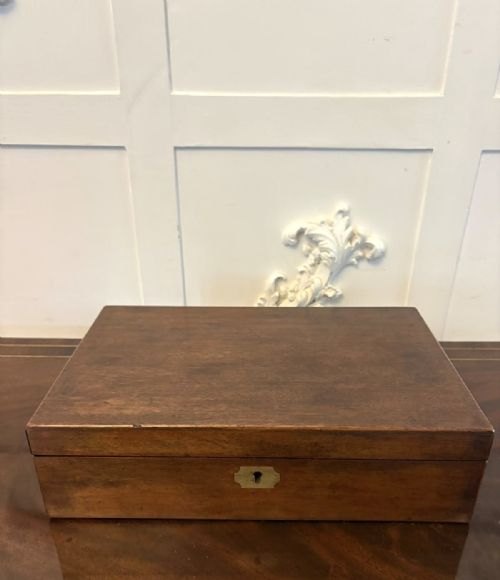


Fitted Wooden Writing Box
A fitted wooden writing box provides a portable desk built from timber and brass.
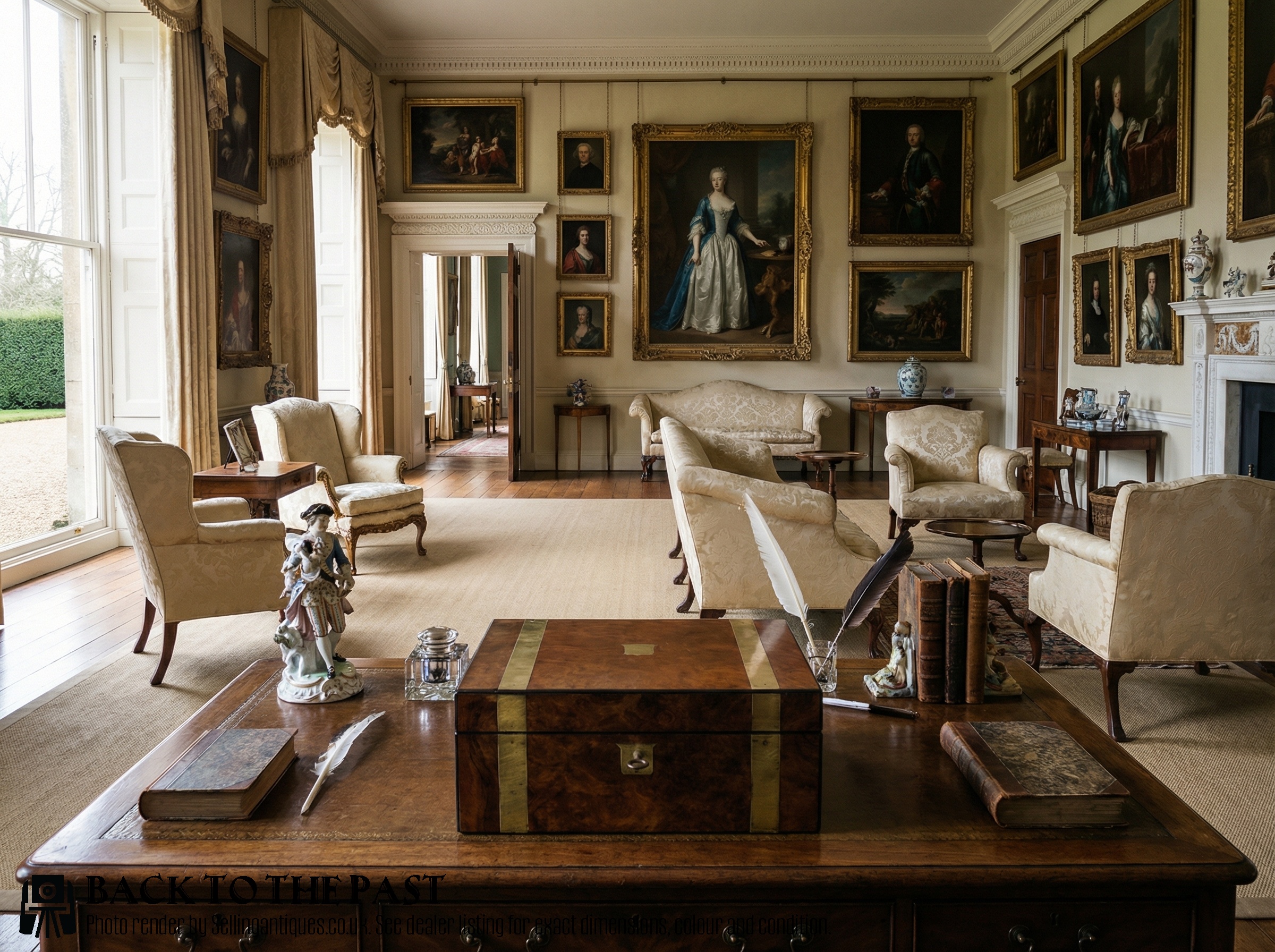
Fitted Wooden Writing Box
A fitted wooden writing box is a portable desk designed to hold paper, ink, and correspondence while offering a slant for writing. Examples range from compact travel boxes to larger stationery cabinets and document chests.
The versions most commonly met on this page belong to the Victorian and Georgian periods, alongside Regency and 19th Century examples. These pieces typically take the form of writing slopes, lap desks, or correspondence boxes.
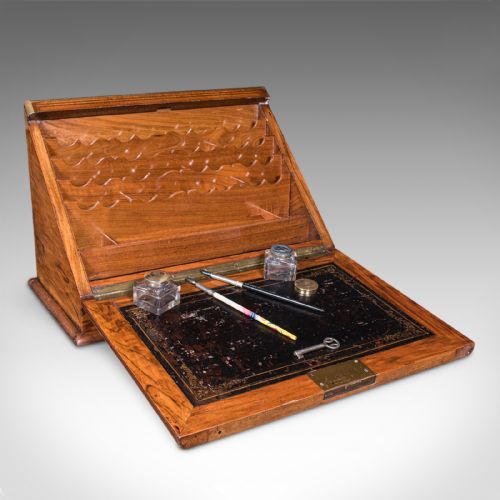
Makers constructed these boxes for mobility and home use alike, incorporating compartments for ink bottles, pens, and paper. Many feature hinged lids that fold down to create a sloping writing surface lined with leather.
How they were made
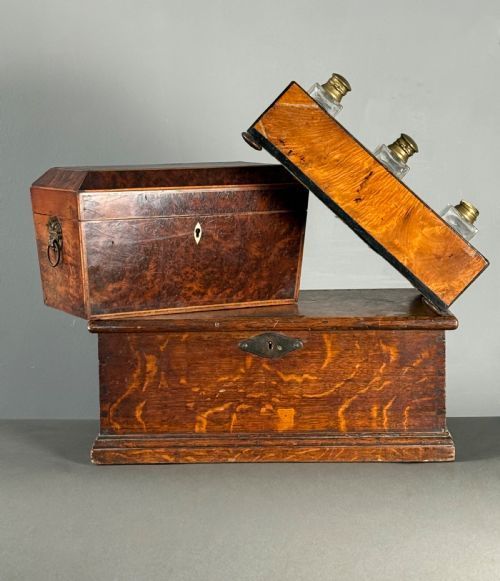
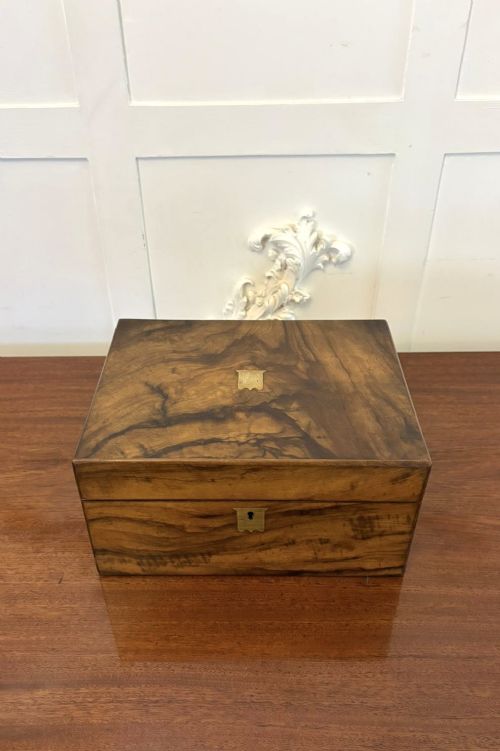
Cabinet makers utilised dense hardwoods such as mahogany, walnut, rosewood, burr walnut, oak, and camphor wood as the primary body materials. These timbers were selected for durability and finished to highlight natural grain patterns.
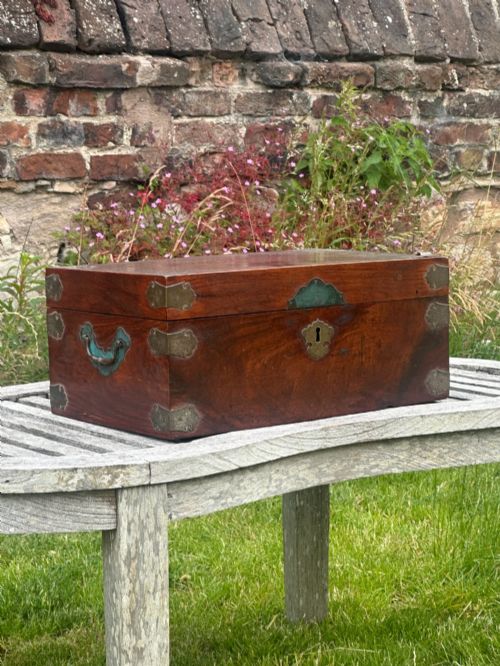
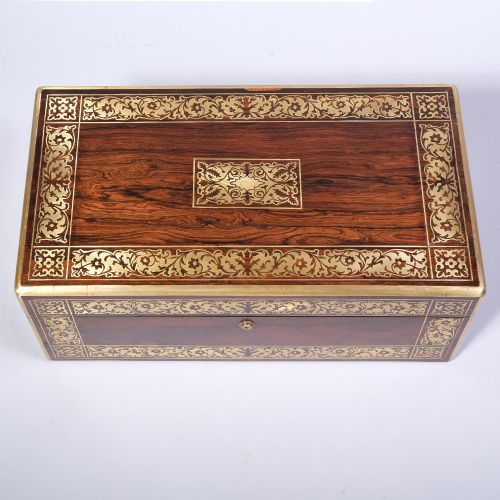
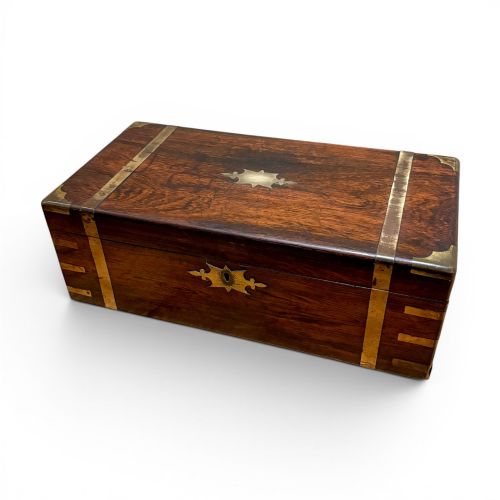
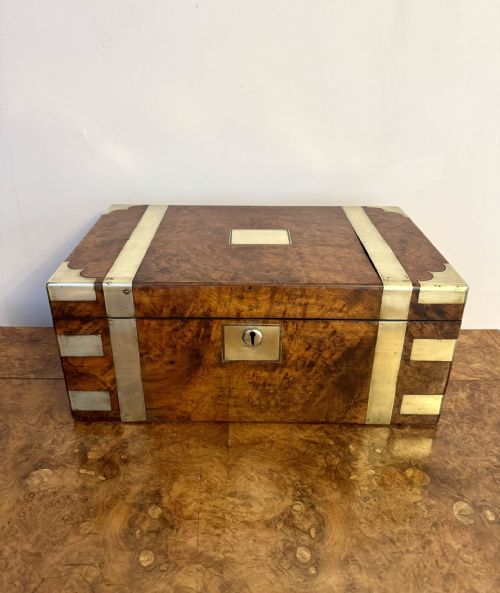
Brass corners, straps, and inlay reinforced the timber construction for travel, frequently paired with flush carrying handles and secure locks. Interiors often combined polished wood compartments with leather writing surfaces and glass ink bottles.
More elaborate pieces incorporated bone, mother of pearl, ivory, or ebony details for decorative contrast. Secret drawers and concealed compartments were integrated into the wooden framework behind sliding panels or false bottoms.
Listings span periods from the Georgian era through the 19th Century to 1920, utilising mahogany, walnut, rosewood, oak, and camphor wood.
What varies in quality
The selection of timber grain defines visual appeal, with figured burr walnut and richly grained rosewood sitting at the upper end of the range. Plain mahogany and oak form more utilitarian examples.
Hardware execution separates standard boxes from finer pieces, visible in heavy brass binding, flush-fitting components, and proprietary locks. The complexity of internal fittings, such as secret drawers and stationery tiers, also elevates a piece.
The Fitted Wooden Writing Box Glossary
- Writing slope
- A portable box with a hinged lid that opens to form an angled writing surface. Inside compartments store stationery, ink, and pens.
- Campaign style
- Furniture designed for military travel, characterised by sturdy brass bindings, inset handles, and portable construction. These boxes withstand transport on expeditions.
- Secret compartment
- A hidden drawer or concealed space built into the wooden interior. They are accessed through removable panels or clever mechanical releases.
- Stationery cabinet
- A desktop piece with doors or a drop front enclosing shelves, letter racks, and pigeonholes for paper storage. They organise correspondence in a fixed location.
- Bramah lock
- A high-security cylindrical lock mechanism invented in the late eighteenth century. These locks utilise slotted keys and appeared on superior travel boxes.
Fitted Wooden Writing Box: Frequently Asked Questions
What is inside a writing box?
Fitted interiors usually contain compartments for ink bottles, pen trays, and slots for stationery. Many examples include a hinged leather-lined writing slope that opens to reveal storage underneath.
More complex models incorporate secret drawers, sovereign sections for coin storage, or candle sconces for working after dark.
How do campaign boxes differ?
Campaign boxes were built for travel, featuring robust brass bindings and reinforced corners to protect the timber during transport. Recessed handles and flush fixtures prevented damage while moving.
These pieces often utilise sturdy woods like mahogany or camphor wood, prioritizing durability for life on the move.
Where were these boxes used?
Owners used them on large desks at home, in offices, or while travelling across the British Empire and beyond. Their portable nature allowed writers to maintain correspondence from temporary lodgings.
Stationery cabinets and larger chests remained stationary on desktop surfaces to hold household or executive papers.
How do I date a writing box?
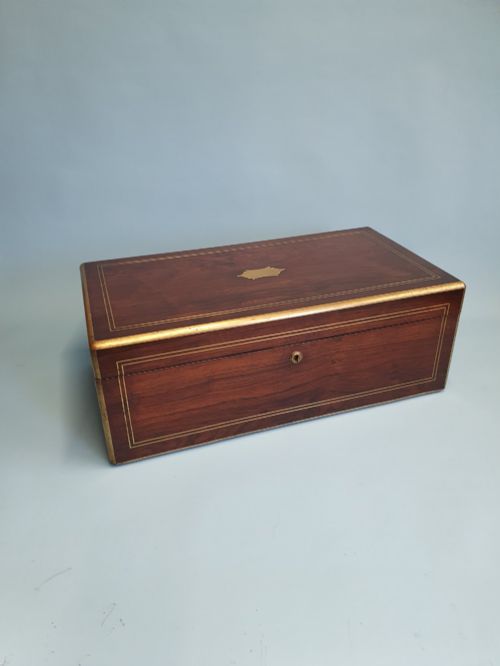
Dating relies on combining timber choices, hardware styles, and construction methods. Georgian examples often display simple mahogany framing with brass stringing, while Victorian pieces frequently utilise burr walnut and elaborate brass corner mounts.
Specific locks and internal stationery arrangements also provide clues to the decade of manufacture.