


Marquetry Standing Corner Cupboard
A marquetry standing corner cupboard turns wasted angles into focal points through figured timbers and intricate floral inlays.
Marquetry Standing Corner Cupboard
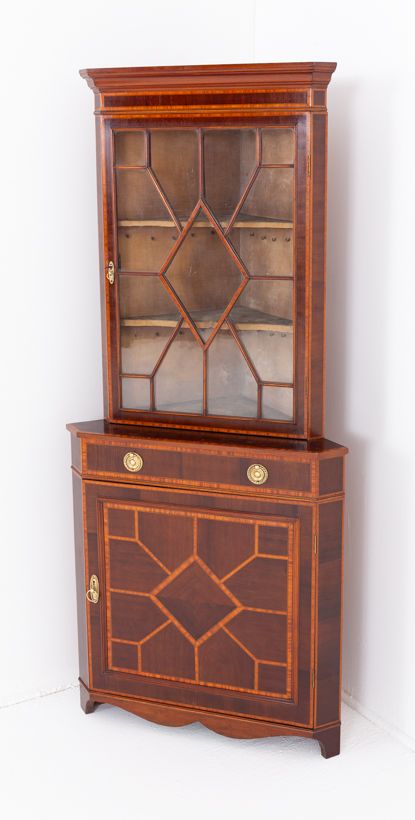
The versions met most often on this page belong to the Edwardian era and the Sheraton Revival period around nineteen hundred, alongside nineteenth-century examples and earlier Georgian styles. Makers built them either as single tall units or as double-height two-piece display cabinets with glazed upper doors.
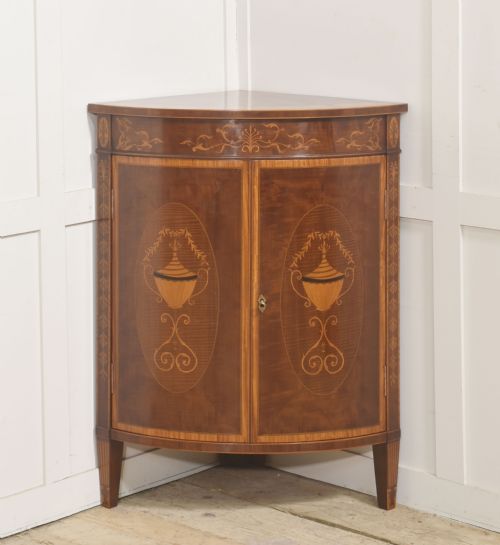
Woods such as mahogany, walnut and rosewood form the primary carcases, providing dark, rich backdrops for lighter decorative inlays. They appear as corner cabinets or corner cupboards, taking up minimal room while offering substantial shelving space inside.
How they were made
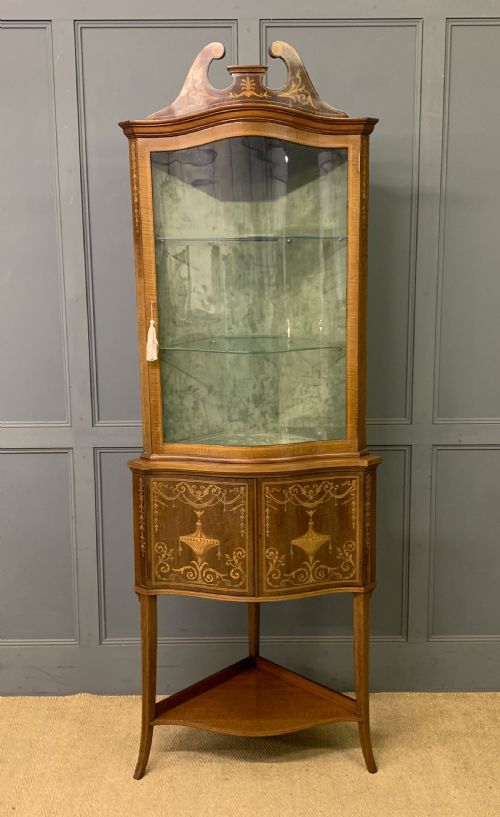
Cabinet makers constructed the main carcases from solid and veneered timbers including mahogany, walnut and rosewood, ensuring structural stability for tall standing forms. They shaped serpentine fronts and fitted curved glass doors to upper display sections where the design demanded greater visual movement.
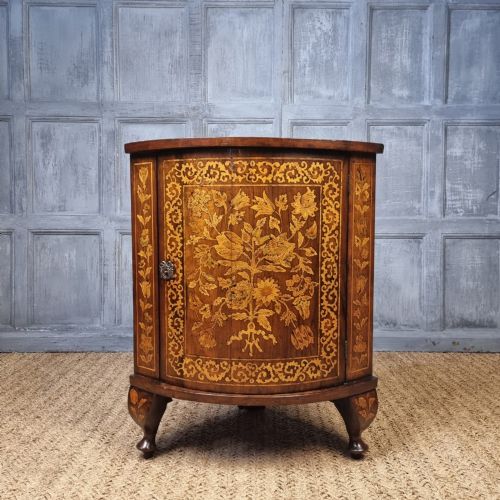
Craftsmen applied satinwood inlay and complex marquetry panels directly onto the timber surfaces, creating floral and geometric motifs that catch the light. Brass hardware such as hinges, escutcheons and handles completed the construction, anchoring the doors and adding functional detail.
One Edwardian standing cupboard arrives in two separate stacking sections, proving that even corners appreciate a good two-part harmony.
What varies in quality
The ambition of the marquetry design sets the baseline, ranging from simple stringing lines to elaborate floral pictorial panels spread across the doors and pediment. Dense, varied natural timbers like figured walnut and rosewood elevate a piece above standard mahogany builds.
Structural complexity marks the upper tier, particularly double-height two-piece formats and serpentine-shaped fronts that require advanced carpentry skills to execute cleanly. Swan neck pediments and glazed doors with individual glazing bars further distinguish the most accomplished examples from simpler single-door cupboards.
Edwards And Roberts
The Marquetry Standing Corner Cupboard Glossary
- Marquetry
- The art of applying decorative pieces of veneer to a structure to form intricate pictorial or geometric patterns. It differs from inlay by covering the entire surface rather than resting within hollowed-out recesses.
- Serpentine
- A curved furniture front shaped with a convex centre flanked by concave wings. This contour adds rhythmic movement to tall corner furniture.
- Pediment
- The decorative crown or gable positioned at the very top of a cabinet. Examples on these cupboards frequently take a swan neck or broken arch form.
- Satinwood
- A durable, lustrous tropical timber with a golden-yellow hue, frequently utilised for contrasting inlay work on darker cabinet woods.
- Double Height
- A standing cupboard built in two separate stacked sections, typically featuring a glazed display upper tier above a closed lower base.
Marquetry Standing Corner Cupboard: Frequently Asked Questions
How do I fit a tall corner cabinet into a modern room?
Measure the wall depth and corner angle carefully before purchasing a standing cupboard, as height and cornice projection vary significantly across periods. Ensure your chosen spot allows the doors to swing open fully without hitting adjacent furniture or skirting boards.
Position the cupboard where natural light strikes the marquetry and glass panels to best reveal the timber grain and inlay work. Avoid placing damp or overly sunny walls directly behind antique timbers to maintain the condition of the wood.
What is the difference between single and double height cupboards?
Single height corner cabinets provide enclosed storage in a unified vertical unit, often sitting beneath a simple top moulding or pediment. They suit smaller rooms where tall double-tier furniture might visually overwhelm the space.
Double height examples split into two stacked sections, combining an upper glazed display cabinet with a lower wooden cupboard base. These grander pieces offer dual functions for showing china while hiding everyday items out of sight.
How do I date a Sheraton Revival corner cabinet?
Sheraton Revival pieces generally date from around nineteen hundred, echoing eighteenth-century neo-classical designs through lighter proportions and satinwood inlay. Look at the secondary timbers inside the drawers and the construction methods of the backboards to confirm the Victorian or Edwardian manufacturing period.
Examine the type of glass in the display doors and the wear on the brass hinges for additional clues regarding age. Makers during the revival era combined older aesthetic principles with contemporary workshop practices.
What timber types are most common in these cupboards?
Mahogany forms the primary carcase material for the majority of these corner cabinets, offering a stable and rich brown foundation for decorative work. Walnut and rosewood also appear frequently, particularly on nineteenth-century and Dutch marquetry examples.
Satinwood and various fruitwoods serve as the contrasting inlay mediums used to create floral motifs and banding lines across the doors. The interplay between these dark and light woods defines the visual appeal of each piece.