




Inlaid Corner Standing Cupboard
An inlaid corner standing cupboard solves the problem of dead room space while offering a stately focal point.
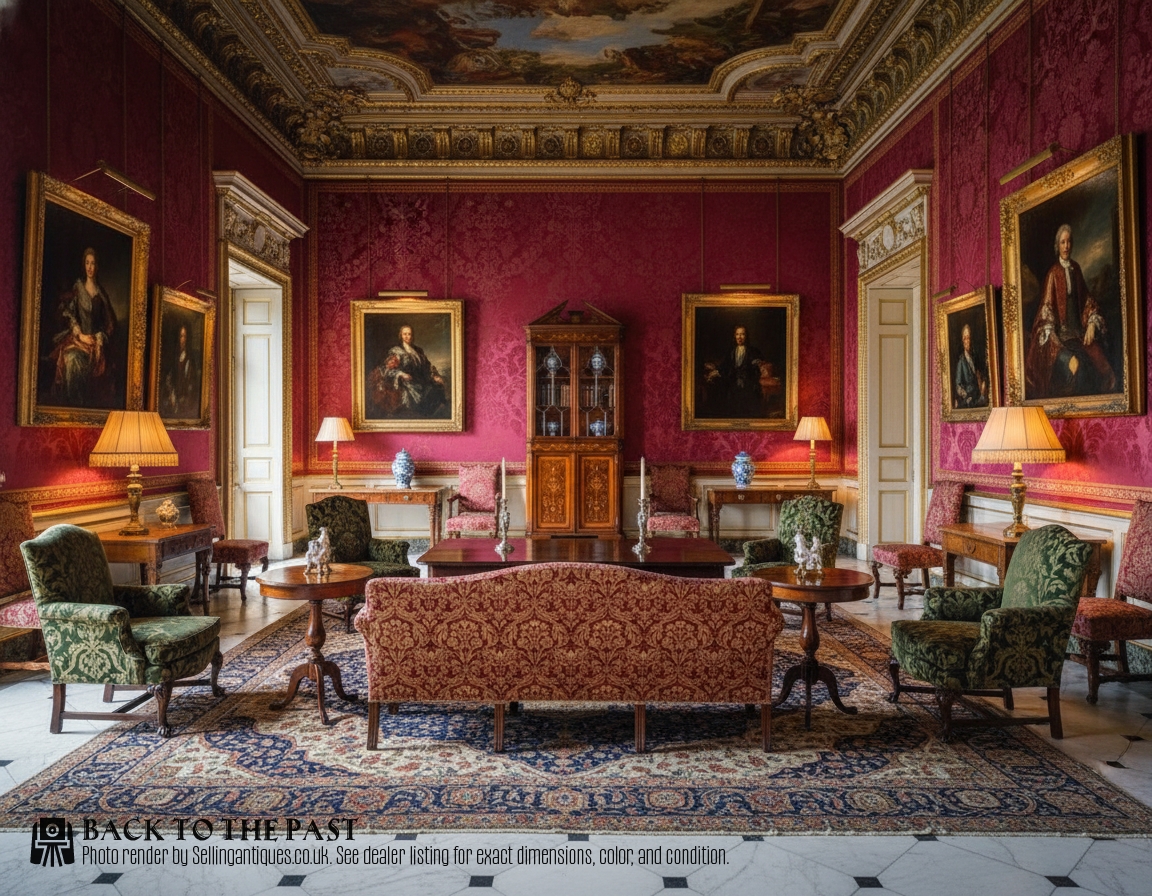
Inlaid Corner Standing Cupboard
An inlaid corner standing cupboard brings architectural presence to unused room angles, turning awkward junctions into display areas. The pieces meeting you here span periods from the Georgian era through to the Edwardian and Sheraton Revival phases, with floor standing and double height options appearing frequently.
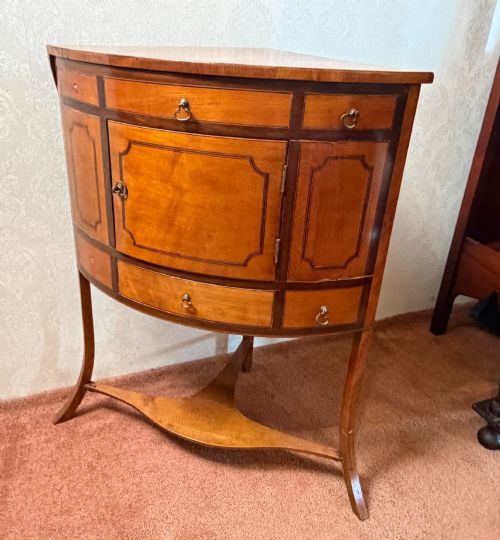
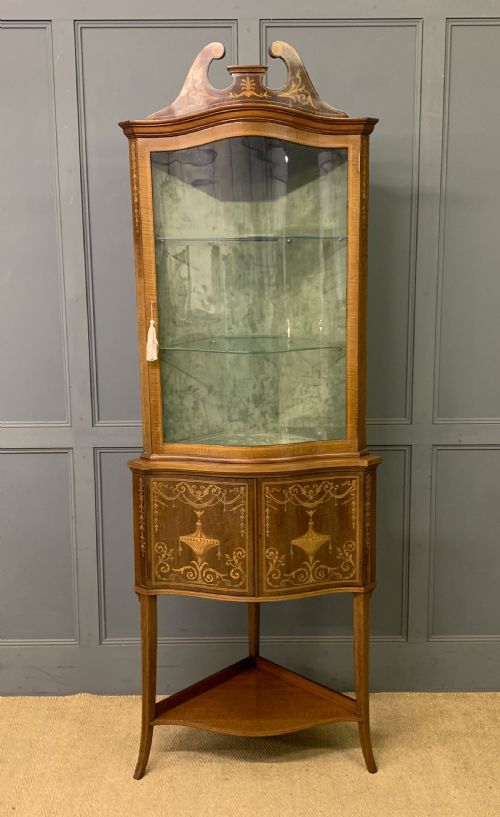
Makers often configured these as single units or two-part break-down cabinets, sometimes featuring glazed doors for china or lower cupboard bases for concealed storage. You will encounter straightforward triangular footprints alongside bow front and serpentine shaped variations that project further into the room.
Materials and construction
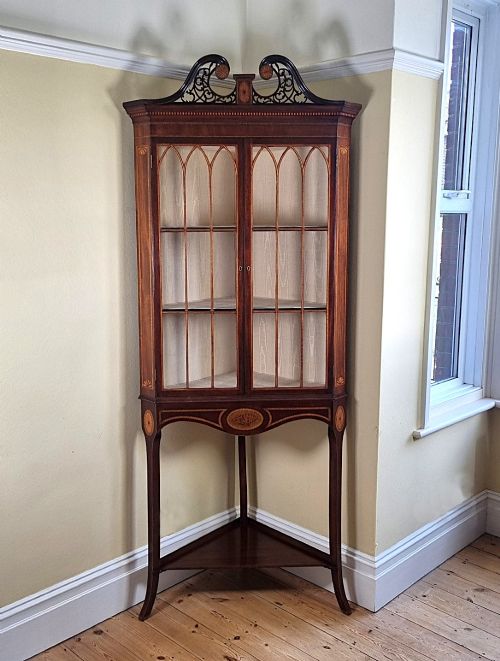
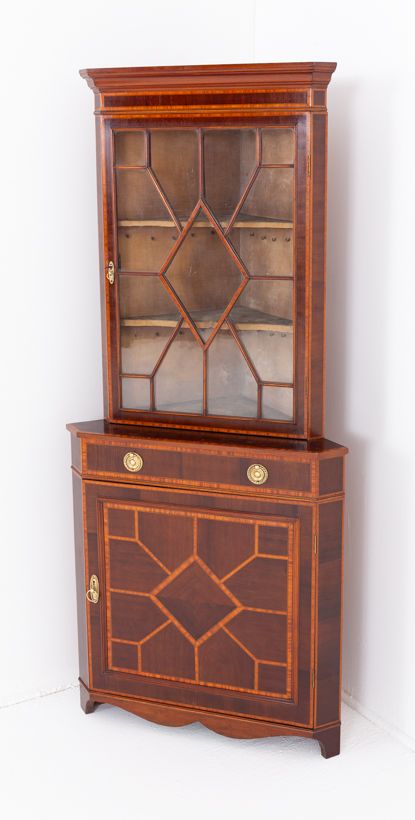
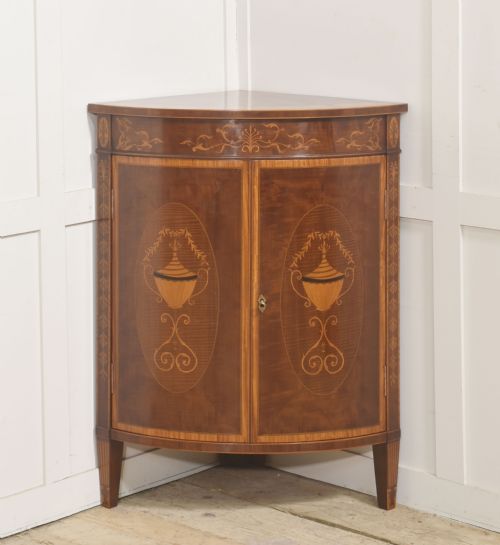
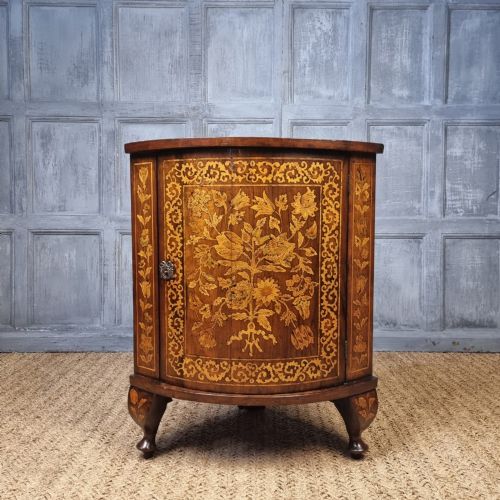
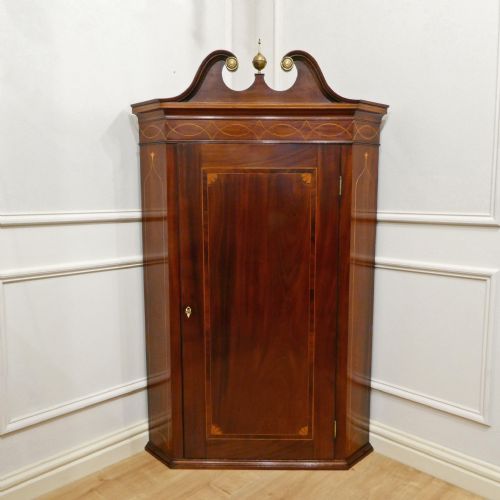
Cabinet makers relied primarily on mahogany and walnut as foundational timbers, frequently incorporating satinwood, boxwood and brass details. The surfaces often display elaborate marquetry or string inlay work tracing the door panels, cornices and friezes.
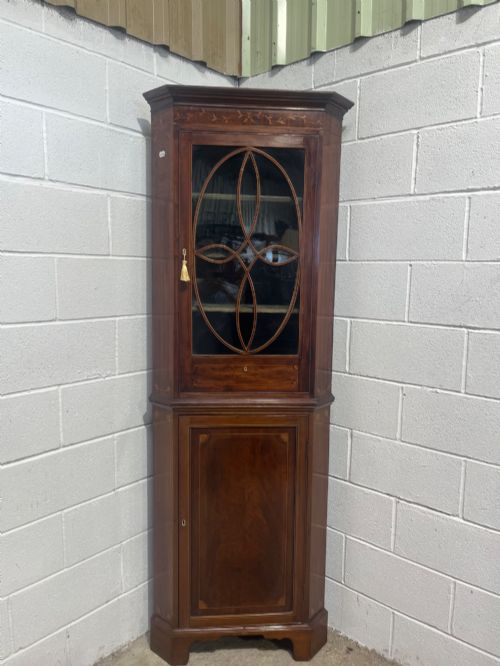
Glazing bars divide door glass into geometric panes, while bracket feet or shaped plinths support the substantial weight of the taller double height carcasses. Interior shelving provides fixed or adjustable tiers designed for display or utility.
A few well-travelled corners still hide original brass keys waiting to click the old cabinet doors shut.
Distinctions in execution
The degree of refinement in the marquetry and the choice of secondary timbers establish the tier of a piece. Finer examples exhibit crisp, tightly fitted boxwood and satinwood inlays that integrate smoothly into the primary mahogany grain.
Structural complexity also dictates standing value, where serpentine or bow front profiles demand advanced joinery compared to flat-fronted triangular carcases. Maker attribution, such as work originating from established workshops, elevates the execution further.
Edwards And Roberts·Gillows Lancaster
The Inlaid Corner Standing Cupboard Glossary
- Marquetry
- Decorative patterns formed by fitting together thin veneers of various woods onto a structural surface. This technique allows for elaborate floral or geometric motifs across the cabinet doors.
- Serpentine
- A furniture front curving outward at the centre and inward at the sides in a continuous wave. This profile requires expert woodworking to shape accurately.
- Sheraton Revival
- A late nineteenth and early twentieth century design movement drawing inspiration from late eighteenth century neoclassical furniture. Pieces from this period often utilise delicate satinwood inlay and light proportions.
- Bracket foot
- A simple foot shape resembling a bracket, often shaped with a mitred corner to support case furniture. They provide a stable elevation above floor level.
- Swan neck pediment
- A broken scroll pediment curving upward and inward from opposing sides, frequently terminating in a central finial or floral carving. It crowns the top of taller standing cabinets.
Inlaid Corner Standing Cupboard: Frequently Asked Questions
What rooms suit an inlaid corner standing cupboard?
These tall cabinets fit naturally into empty corners of dining rooms, drawing rooms or large hallways where vertical storage is required without blocking central floor space.
Because they utilise angles that typically remain bare, they anchor the room layout while drawing the eye upward.
How do single and double height cupboards differ?
Single height versions consist of one continuous cupboard or display section rising from the floor, whereas double height models feature an upper glazed section resting upon a lower cabinet base.
Double height pieces offer significantly more volume and visual weight, often requiring two-part construction for easier movement.
How do I distinguish Georgian from Edwardian revival pieces?
Georgian examples display the heavier timber construction, hand-cut joinery and aged patination characteristic of the eighteenth and early nineteenth centuries. Edwardian Sheraton Revival pieces, built around nineteen hundred, often employ lighter satinwood contrasts and machine-assisted precision in the inlay work.
Examining the internal secondary woods and backboards helps clarify the exact period of manufacture.
What is the purpose of a glazed door on these cupboards?
Glazed doors protected valuable porcelain, glassware and books from dust while keeping them visible for display in reception rooms. The wooden glazing bars created structured panes that reflected light across the room.