

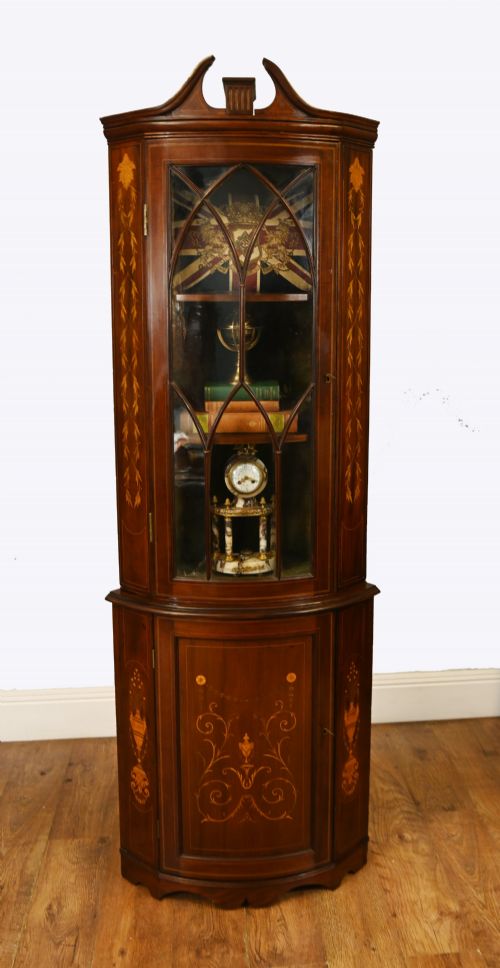


Vintage Corner China Cabinet
A vintage corner china cabinet turns unused wall angles into display space, housing ceramics behind glass.
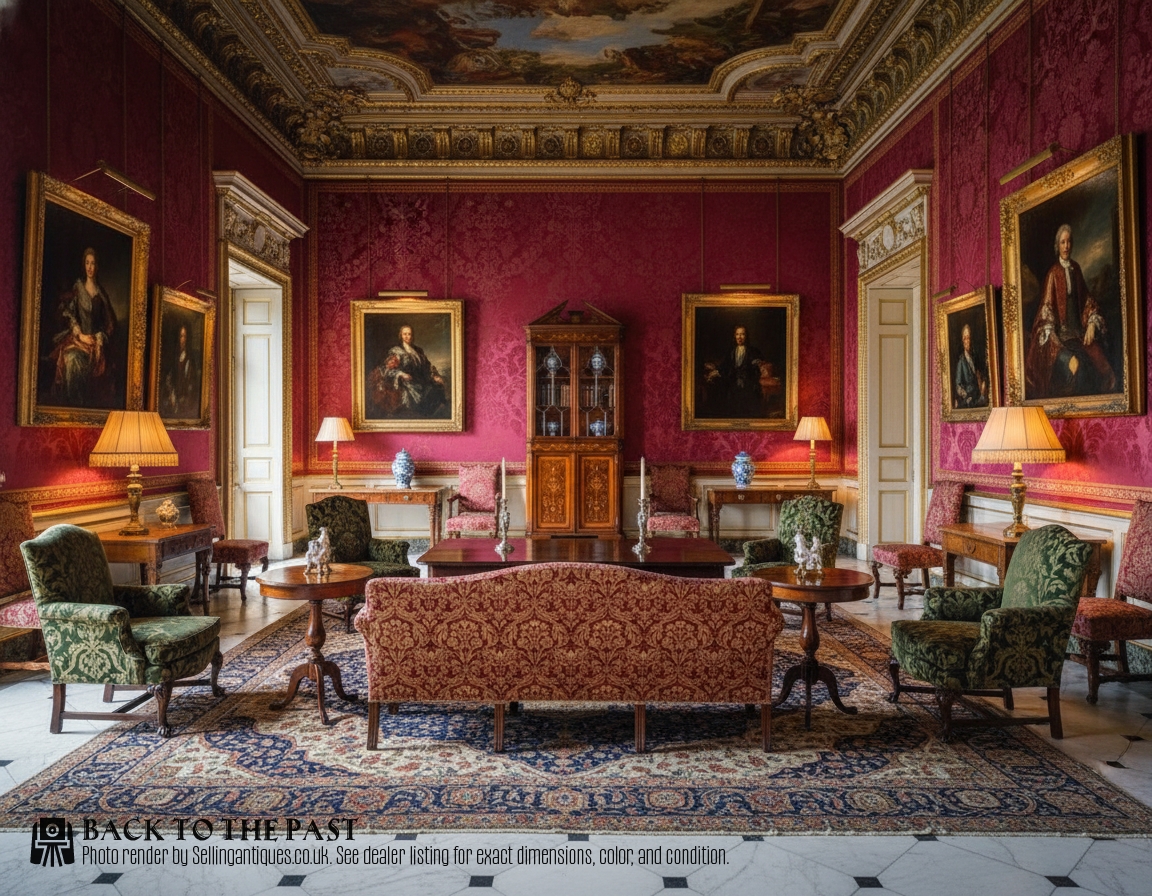
Vintage Corner China Cabinet
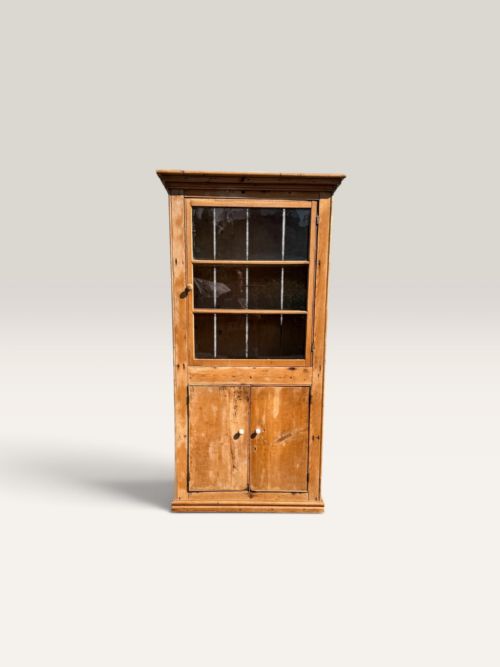
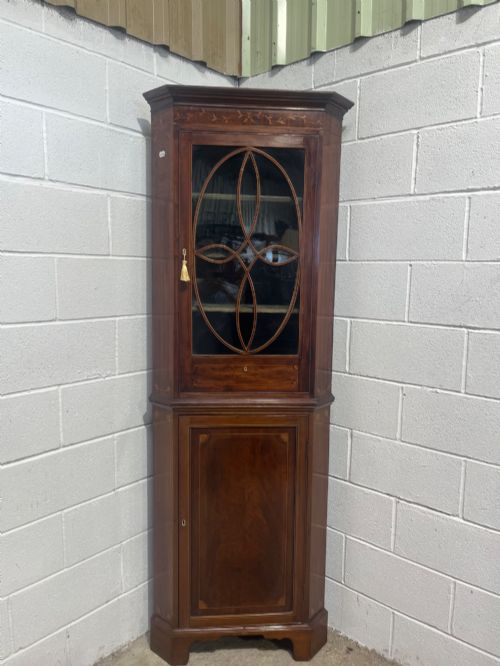
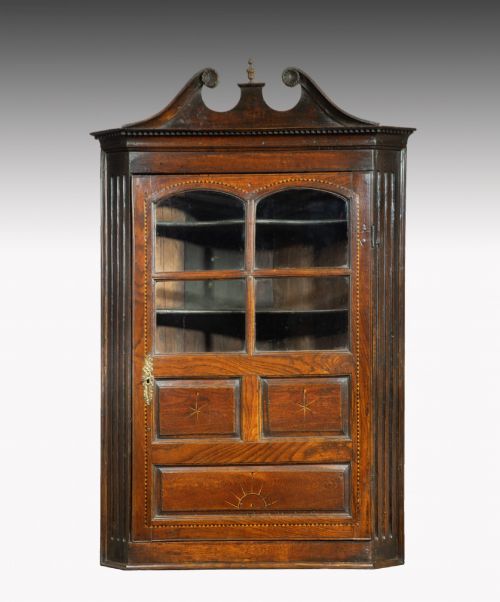
A vintage corner china cabinet is a storage piece designed to fit neatly into room angles, making efficient use of space while showcasing ceramics and glass. These items appear across multiple periods, ranging from eighteenth-century Georgian oak examples to Edwardian mahogany pieces and later nineteen-thirties interpretations.
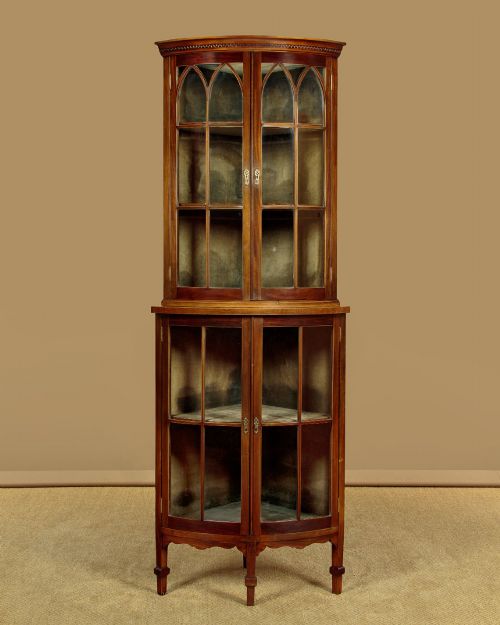
The selection includes floor-standing models, two-part configurations, and cupboards mounted on stands. Buyers encounter varied forms such as bow front units, glazed display cabinets, and double corner variants featuring distinctive inlaid decoration.
Origins span formal revival styles like Sheraton and Queen Anne alongside simpler Victorian country designs and Art Deco creations. Each piece serves to utilise overlooked room angles whilst providing enclosed shelving for precious items.
How they were made
Construction relies heavily on timber framing using mahogany, oak, and walnut, frequently enhanced by contrasting satinwood inlay or marquetry details. Cabinetmakers utilised these sturdy hardwoods to build stable triangular bodies capable of supporting heavy glass doors and internal shelving.
Glazing techniques allow light to enter the interior compartments, protecting stored tableware whilst maintaining visibility from across the room. Brass hardware appears on doors and hinges, providing functional closures that complement the polished timber surfaces.
Listings feature oak, mahogany, and walnut woods paired with glass, brass, and satinwood inlay across multiple historical periods.
What varies in quality
Quality rests upon the selection of timber figures and the precision of the inlaid details, where finer examples display intricate satinwood patterns against rich mahogany. The execution of the woodwork, from the fit of the glazed doors to the proportion of the cornices, distinguishes standard cabinetmaking from finer craftsmanship.
Structural integrity also dictates worth, as well-joined corners and original glass panes indicate a higher standard of manufacture. Pieces retaining their original brass fittings and stable timber construction represent superior historical examples.
Maurice Adams
The Vintage Corner China Cabinet Glossary
- Bow front
- A convex curved cabinet facade that projects outward. This shape softens the angular geometry typical of corner furniture.
- Marquetry
- Decorative veneer applied in pictorial patterns using various coloured woods. It often decorates the doors and friezes of revival cabinets.
- Vitrine
- A glass-fronted cabinet designed specifically for displaying objects. These pieces prioritise visibility through large glass panels.
- Sheraton Revival
- A late nineteenth and early twentieth century design movement inspired by late eighteenth century neoclassical furniture. Pieces from this era often feature delicate mahogany and satinwood inlay.
- Two-part
- A cabinet constructed in separate upper and lower sections. This modular approach aided transportation and placement in domestic interiors.
Vintage Corner China Cabinet: Frequently Asked Questions
How do I clean the glass?
Use a soft cloth and a gentle glass cleaner applied directly to the cloth rather than the wood. This prevents moisture from damaging the polished timber frame surrounding the panes.
Take care around delicate inlay work and aged brass fittings during the cleaning process to preserve the original materials.
Can I adjust the shelves?
Many older corner cabinets feature fixed wooden shelving integral to the structural stability of the triangular frame. Altering these supports is rarely straightforward.
Consider the height of your ceramics before purchasing to ensure they fit comfortably within the static compartment dimensions.
Where should I place it?
Position the cabinet in an empty room angle where the two back panels can sit flush against adjoining walls. This placement maximises floor space whilst anchoring the tall furniture securely.
Keep the unit away from direct sunlight and strong heat sources to protect the polished wood veneers and antique timber.
How do I date the wood?
Examine the secondary timbers inside the cabinet, the style of the brass hardware, and the complexity of the inlay work. Eighteenth-century examples typically feature solid oak or mahogany construction with hand-cut joinery.
Later Edwardian revival and nineteen-thirties pieces often incorporate machine-cut elements and distinctively bright satinwood veneers characteristic of their production era.