

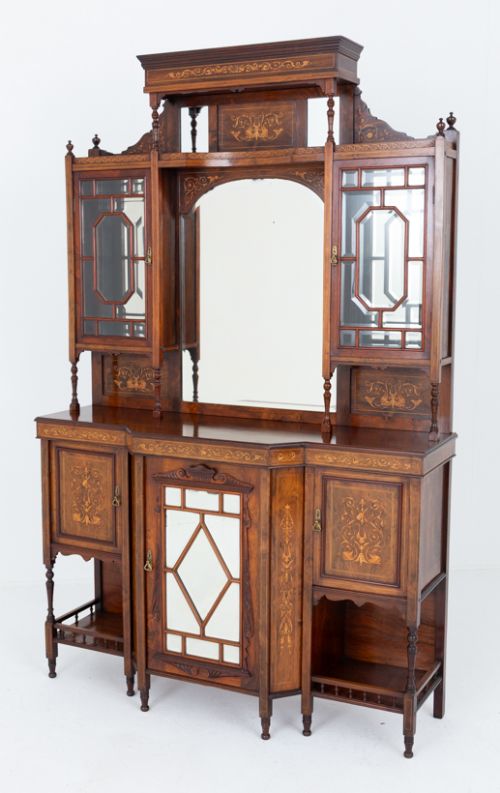


Marquetry Rosewood Credenza
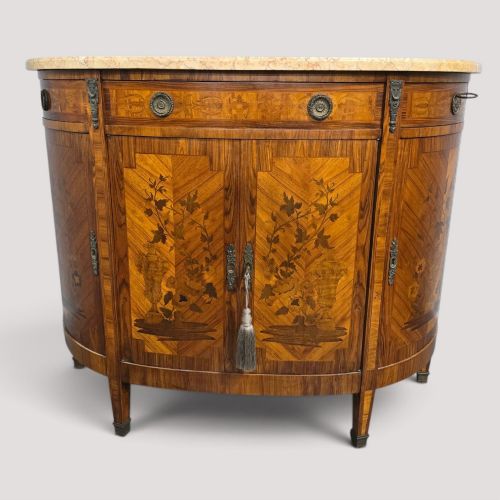
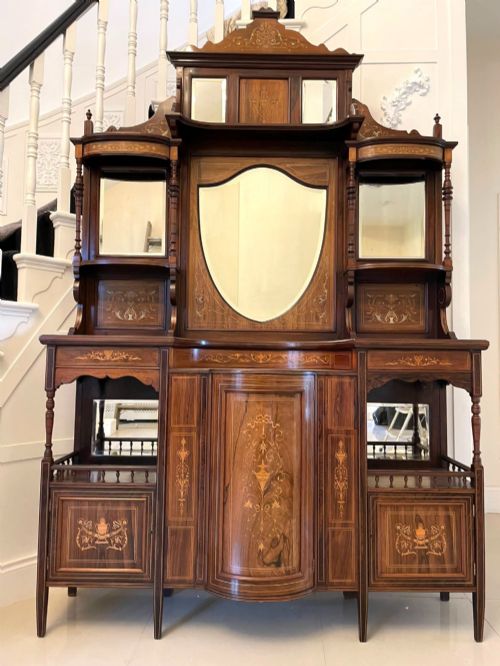
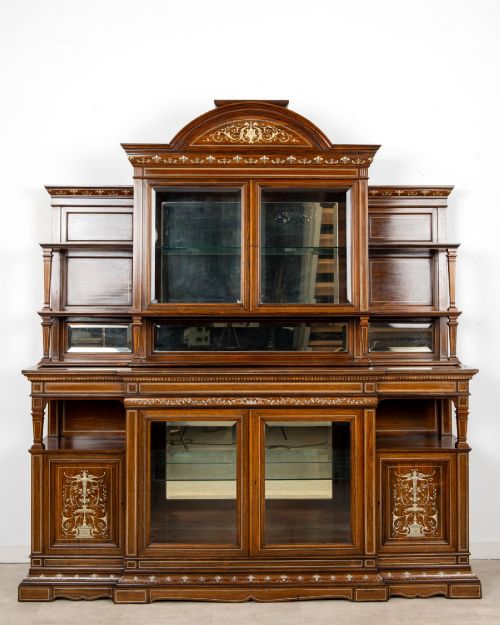
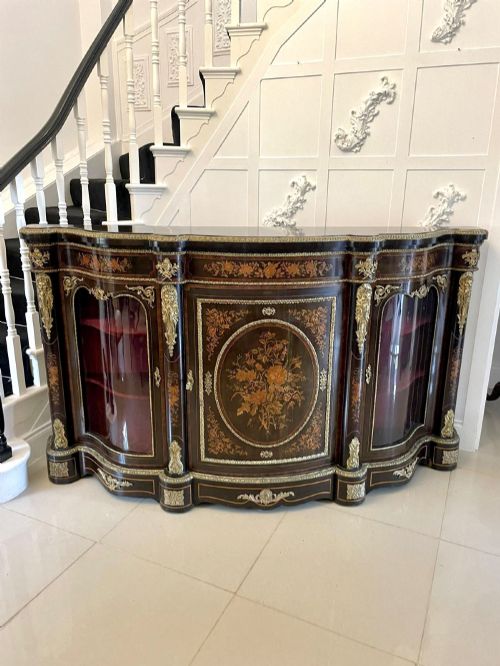
A marquetry rosewood credenza combines rich botanical timber with precise wood-inlay, offering a commanding focal point for storing and displaying treasured objects in a principal room.
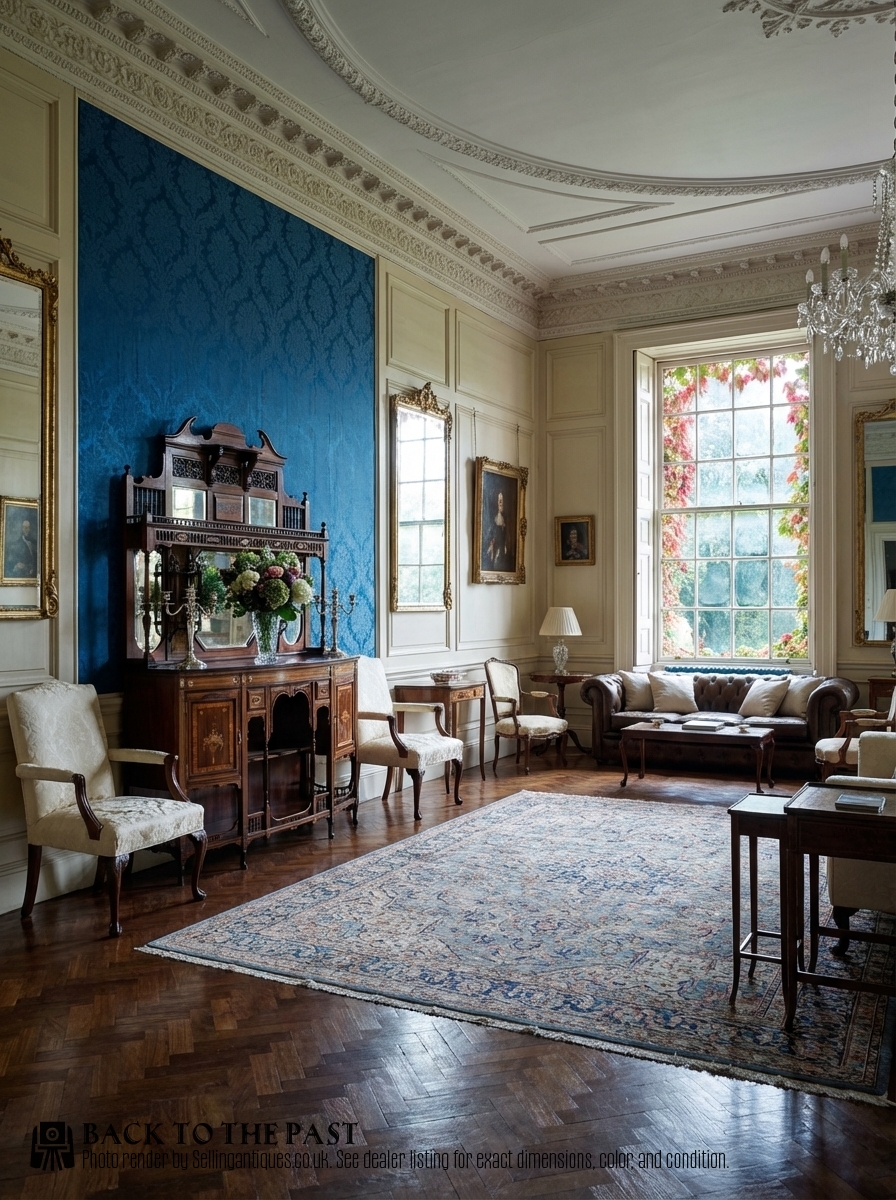
Marquetry Rosewood Credenza
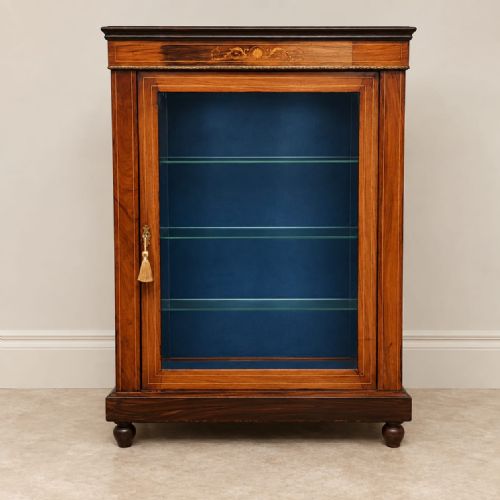
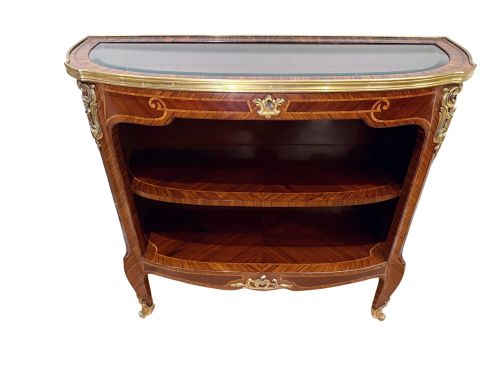
A marquetry rosewood credenza search typically reveals low-profile Victorian and nineteenth-century side cabinets, display cabinets, and chiffoniers built for formal entertaining spaces. These low timber units often incorporate glazed doors, mirror backs, and serpentine shapes designed to reflect light and display porcelain or silver.
The pieces span various revival aesthetics including French Louis XV, Louis XVI, and George III styles alongside indigenous British Victorian cabinet-making. Makers utilised exotic timbers like rosewood as a dark canvas for contrasting light wood inlays, creating statement furniture for nineteenth-century drawing rooms.
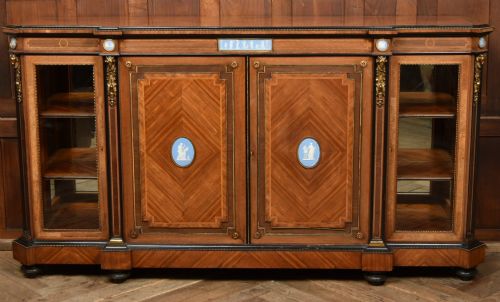
Buyers frequently encounter variants featuring brass stringing, ormolu mounts, and intricate floral or pictorial marquetry panels on the doors and friezes. While some stand as traditional credenzas and sideboards, others take the form of pier cabinets or vitrines with glass shelving.
Materials and Technique
Craftsmen built these cabinets using dense rosewood veneers applied over sturdy secondary timbers, often accenting the rich grain with contrasting boxwood, satinwood, and ebony inlay. The meticulous art of marquetry involved cutting fine botanical or geometric motifs from dyed and natural veneers and fitting them tightly into precise recesses within the main timber surface.
Metalwork played a structural and decorative role, with heavy cast ormolu mounts, brass gallery rails, and delicate brass stringing outlining door panels and corners. Glass panels, mirrored backs, and occasional porcelain plaques were integrated into the framework to catch light within the principal compartments.
Carcase construction relied on traditional joinery techniques, housing heavy marble tops or shaped timber surfaces above multi-door cupboards and open display shelves. Surface finishes were hand-polished to a high sheen, accentuating the deep reddish-brown tones and complex figure of the rosewood.
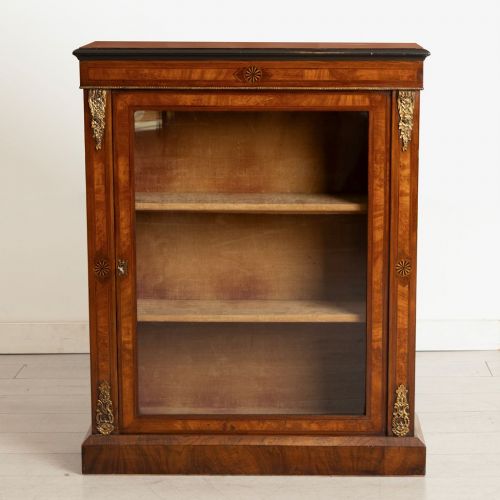
Sheet music cabinets tucked quietly among these larger sideboards remind us that nineteenth-century evenings relied on home-played piano recitals rather than digital screens.
Design and Execution
The standard of a marquetry rosewood credenza rests primarily on the depth and complexity of the inlay work, where crisp, tightly fitted botanical or pictorial motifs distinguish superior examples from simpler geometric banding. The crispness of the cast ormolu mounts and the weight of the underlying bronze or brass hardware further separate standard production from master workshop output.
Cabinet-making execution shows in the fluidity of serpentine or demi-lune curves and the seamless alignment of book-matched rosewood veneers across complex drawer fronts and doors. Superior pieces often bear attribution to noted cabinet-makers, exhibiting meticulous interior secondary woods and refined finishing touches that endure through centuries of use.
Collinson and Lock·Edwards and Roberts·Mercier Frères·James Plunckett·Stephen Webb
The Marquetry Rosewood Credenza Glossary
- Marquetry
- The decorative technique of applying thin veneers of wood, ivory, or shell to a structural carcase to form intricate pictorial or geometric patterns. This method requires extreme precision in cutting and fitting individual pieces together.
- Ormolu
- Gilded bronze used for decorative mounts, handles, and feet on nineteenth-century furniture. It provides a bright metallic contrast against dark rosewood surfaces.
- Credenza
- A low cabinet or sideboard, typically featuring a central cupboard flanked by side compartments or glass-fronted display areas. Originating in Italy, the form became central to Victorian formal interior decoration.
- Chiffonier
- A compact sideboard or cabinet equipped with shelves and enclosed storage, popular during the Regency and Victorian eras. These units often incorporated mirrored backs and brass gallery rails.
- Vitrine
- A glass-fronted display cabinet designed for showcasing porcelain, glassware, and small objets d'art. They frequently sit atop low cabinet bases in nineteenth-century salon furniture.
Marquetry Rosewood Credenza: Frequently Asked Questions
What is a marquetry rosewood credenza used for?
These cabinets served historically in grand parlours and dining rooms for storing fine tableware, linens, and serving implements while displaying prized decorative items on top and behind glass.
Today, they function as substantial credid-storage units in modern living spaces, offering surface space for lamps and art alongside concealed shelving.
How do I identify a Victorian credenza?
Victorian examples typically feature dense rosewood veneers combined with elaborate floral marquetry, gilt ormolu mounts, and serpentine or demi-lune timber shaping.
They frequently include mirrored backs or glazed side compartments intended to amplify light in nineteenth-century reception rooms.
What is the difference between a credenza and a chiffonier?
A credenza is generally a low, symmetrical cabinet featuring central doors flanked by side cupboards or display sections, designed primarily for formal presentation.
A chiffonier is often more compact, historically incorporating a raised shelf or gallery rail on top alongside enclosed lower storage.
How should I care for rosewood furniture?
Rosewood benefits from stable indoor humidity and protection from direct sunlight, which can fade the rich reddish-brown timber tones over time.
Regular dusting with a soft, dry cloth maintains the polished finish without requiring heavy modern chemical polishes.