


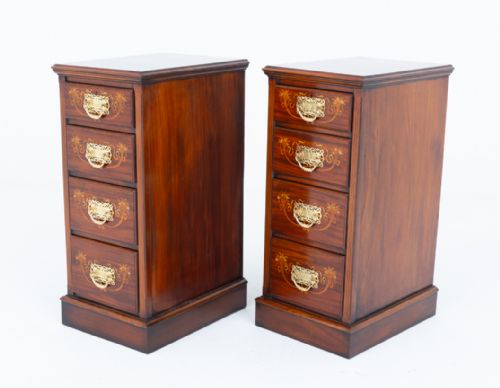


Marquetry Pedestal Cabinet
A marquetry pedestal cabinet brings together intricate wood veneers and compact proportions, offering practical storage with distinct decorative presence.
Marquetry Pedestal Cabinet
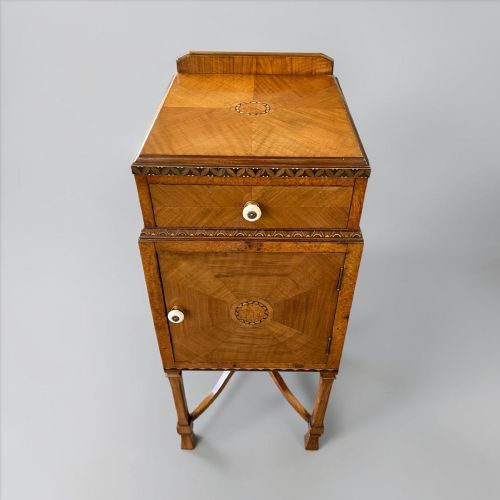
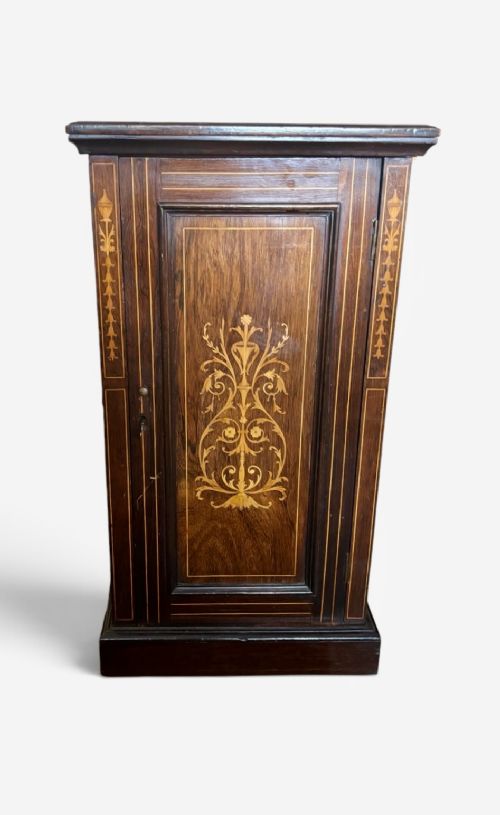
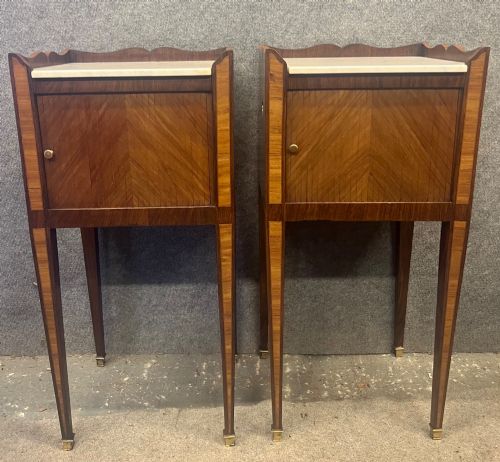
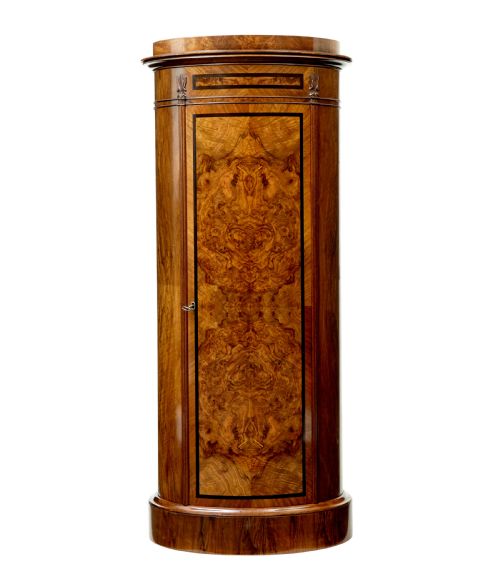
A marquetry pedestal cabinet stands as a compact, vertical storage piece, frequently encountered as a bedside cupboard, nightstand, or narrow side cabinet. These pieces serve primarily to introduce refined surface pattern and enclosed storage into smaller domestic spaces.
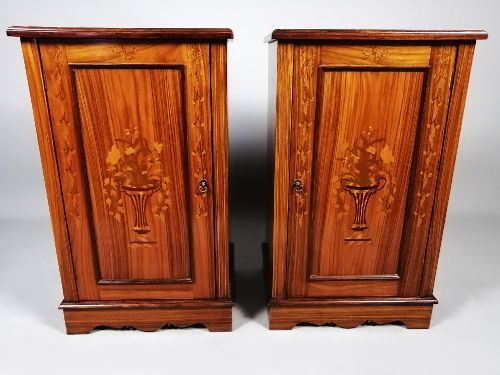
The selection ranges from Victorian and Edwardian examples to earlier 19th Century and 18th Century designs, encompassing styles such as Sheraton Revival, Louis XV Style, and Louis XVI Style. Buyers frequently discover pairs designed for symmetrical bedside placement.
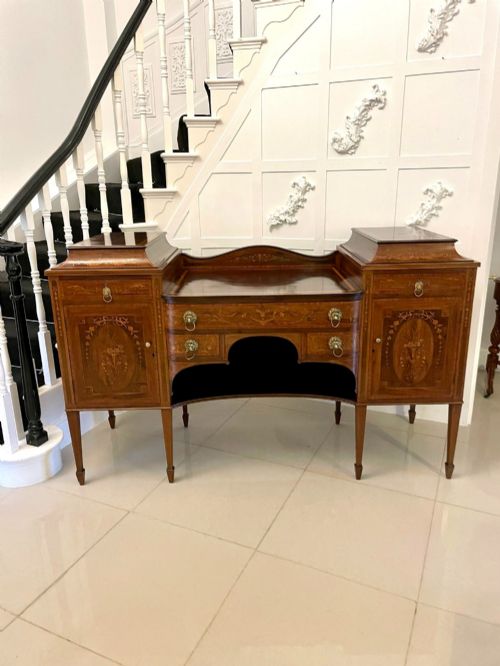
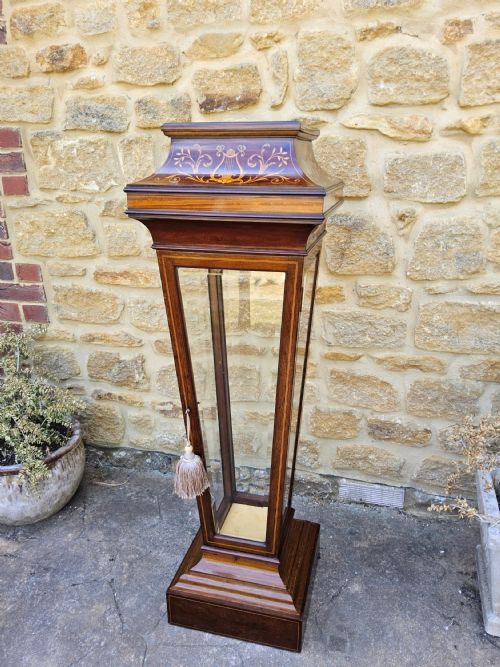
Beyond bedside use, related forms appear across the inventory as display cabinets, desks, and occasional tables, all united by figured wood construction and inlaid floral or geometric ornamentation.
Materials and Construction
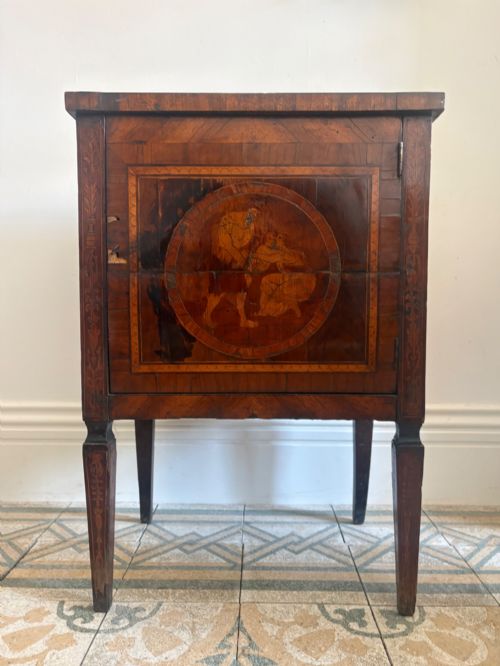
Cabinet makers utilised a foundation of solid timbers such as mahogany, walnut, and satinwood, applying contrasting veneers of rosewood, kingwood, and tulipwood to create pictorial or geometric marquetry panels. Surface enrichment frequently incorporates brass, ormolu mounts, marble tops, and glass panels.
The technique relies on precision cutting of contrasting wood veneers assembled into paper patterns before being glued to the carcase. Subsequent hand polishing with French polish highlights the natural grain variations of the underlying timbers.
Current listings span the Victorian, Edwardian, and Art Deco periods, utilising mahogany, walnut, rosewood, and marble.
Distinctions in Quality
Excellence in a marquetry pedestal cabinet rests upon the intricacy and precision of the veneer work, where tightly fitted joints and subtle tonal shading separate standard production from exhibition pieces. The choice of primary timbers, such as figured walnut or rosewood, dictates the visual depth of the carcase.
Integration of secondary materials also separates the grades of execution, visible in the weight of cast ormolu mounts, the selection of solid marble tops, and the neatness of internal mahogany or oak drawer linings.
Hewetsons London·Edwards and Roberts
The Marquetry Pedestal Cabinet Glossary
- Marquetry
- The art of applying decorative pieces of veneer to a structure to form geometric patterns or pictorial designs. This technique defines the visual character of these cabinets.
- Ormolu
- Gilded bronze mounts applied to furniture edges, feet, and corners for architectural definition. French cabinet makers favoured this material to accent kingwood and mahogany surfaces.
- Satinwood
- A dense, lustrous timber with a golden yellow sheen, frequently used as a primary veneer or background for darker floral marquetry. It gained popularity during the late 18th Century and later Sheraton Revival periods.
- Carcase
- The main structural body or frame of a cabinet before drawers, doors, and surface veneers are applied. Sound carcase construction ensures the longevity of veneered furniture.
- Kingwood
- A richly coloured Brazilian timber marked with dark violet-brown streaks, utilised extensively in French cabinet making. Its distinct grain lends high contrast to inlaid panels.
Marquetry Pedestal Cabinet: Frequently Asked Questions
Where do I place a pedestal cabinet?
These compact pieces fit easily beside a bed or in narrow hallways where floor space is limited. Their finished backs sometimes allow them to stand freestanding in a room.
They function well as lamp tables or nightstands, providing a concealed compartment for small items while displaying decorative objects on top.
How do I care for marquetry surfaces?
Protect the polished wood from direct sunlight and excessive moisture by using coasters and mats. Regular dusting with a soft, dry cloth preserves the French polish.
Avoid silicone-based sprays, opting instead for traditional beeswax applied sparingly to nourish the grain without building up residue.
Are these cabinets sold in pairs?
Many listings feature matching pairs intended for symmetrical placement on either side of a bed. Single cabinets also appear frequently for standalone use.
Pairs often command higher interest due to the difficulty of matching wood grains and marquetry patterns across two separate pieces.
How do I distinguish Edwardian from Victorian pieces?
Victorian cabinets often display heavier proportions and rich, dark rosewood or walnut veneers with deep floral marquetry. Edwardian examples tend to feature lighter satinwood or mahogany with more restrained neoclassical inlay.
Construction methods inside the drawers and the style of the brass hardware offer further clues to the manufacturing decade.