
Mahogany Curio Display
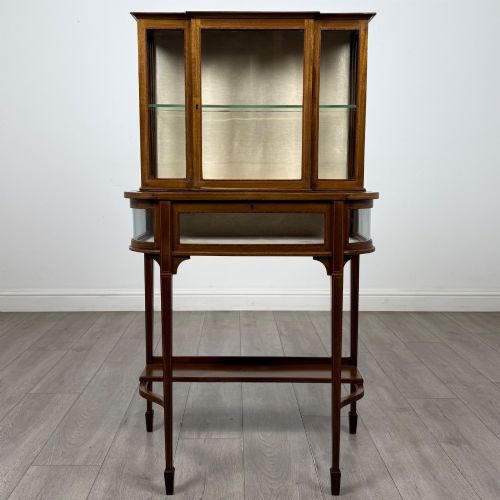
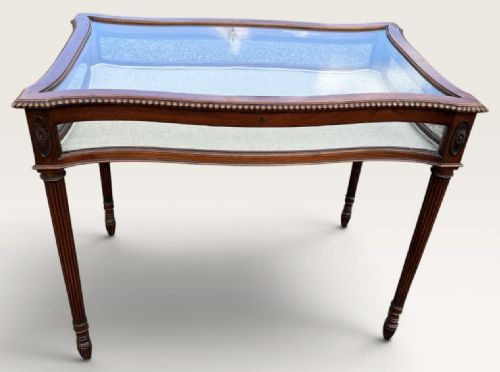
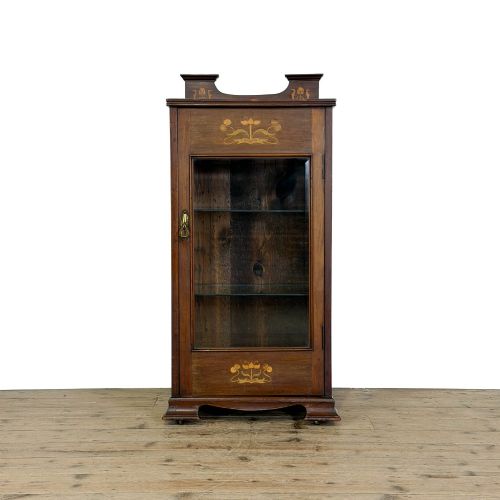
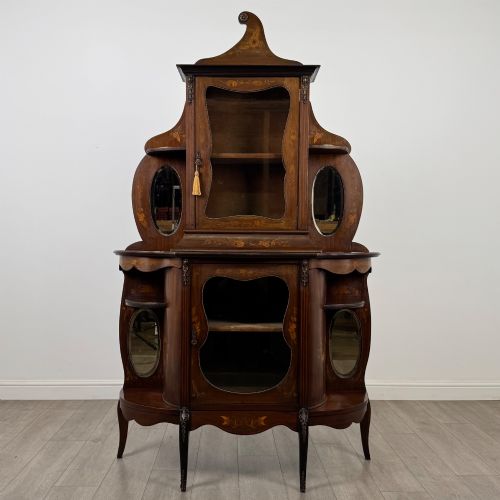
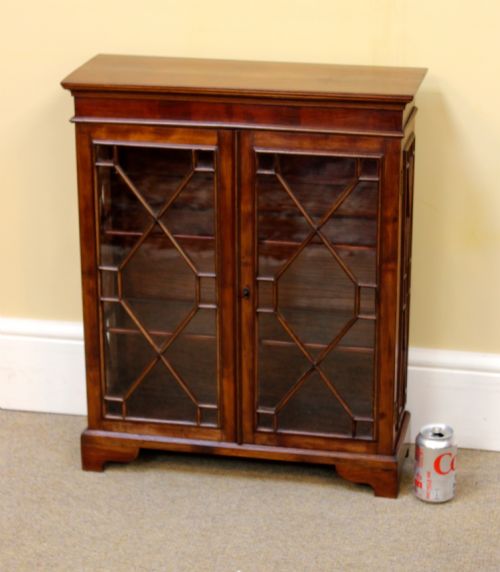
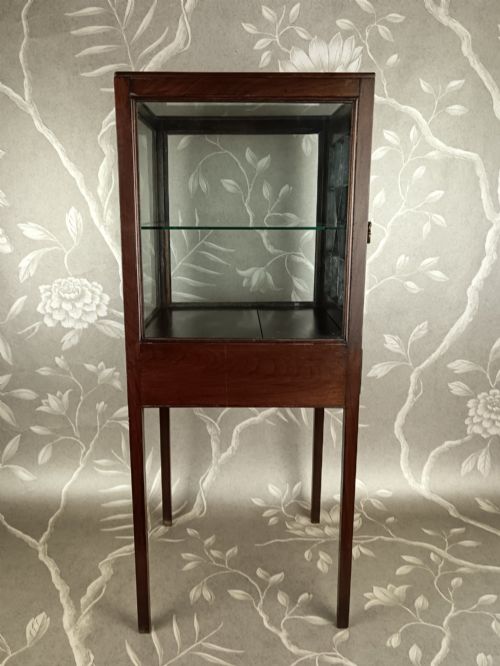
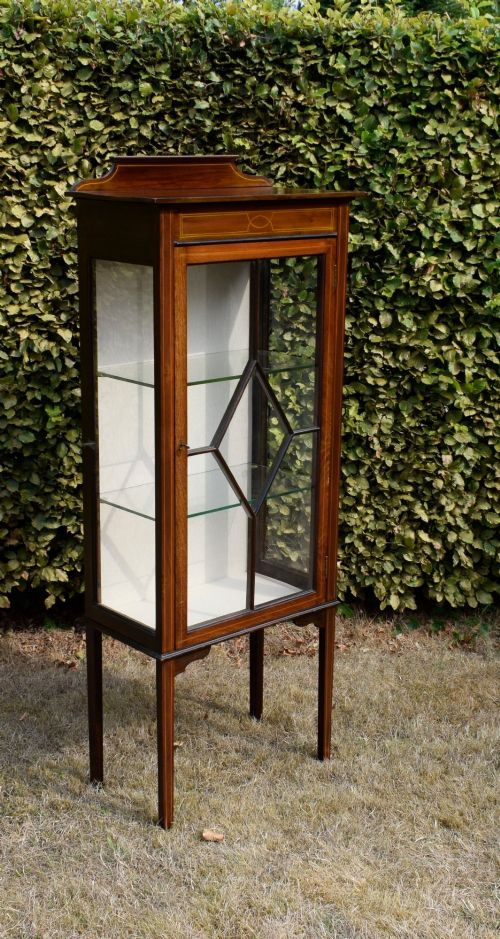
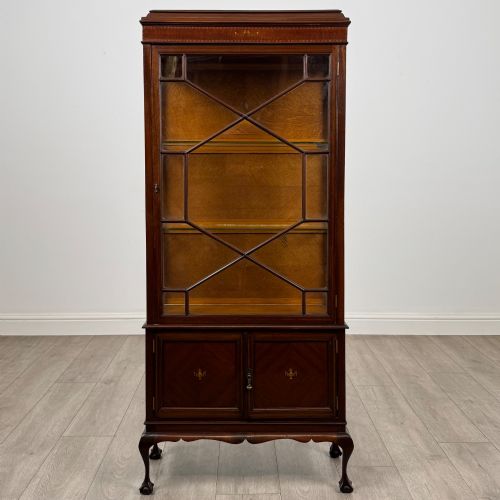
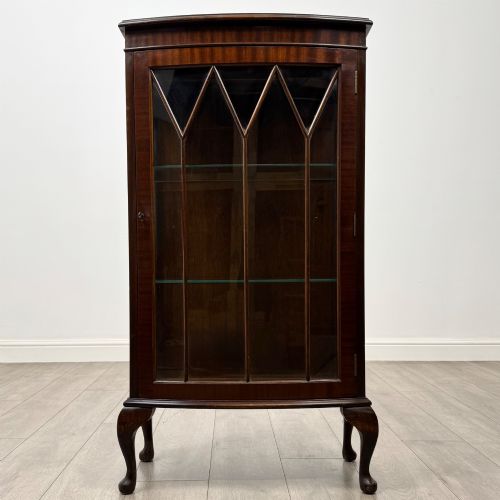
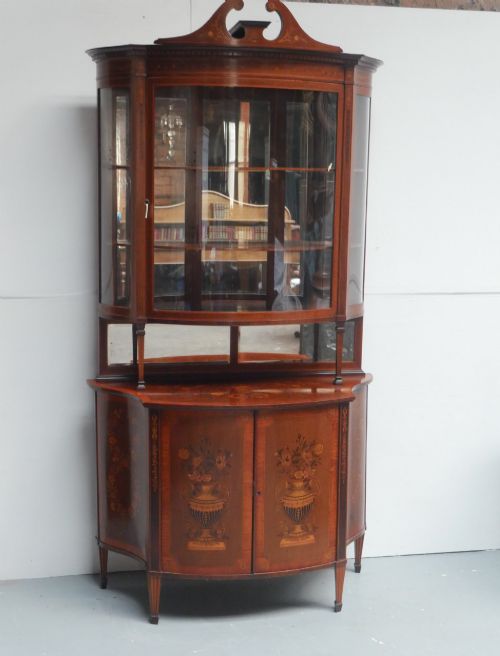
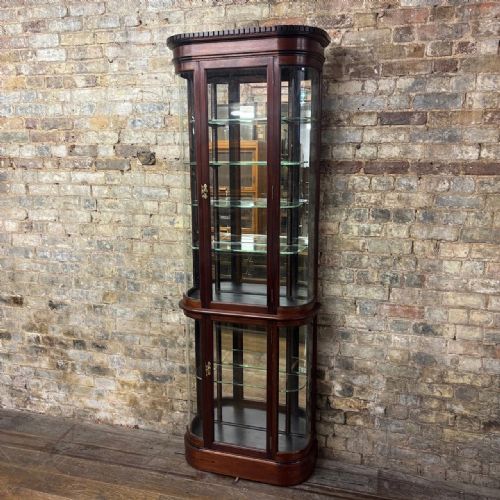
These mahogany curio display pieces are glass-fronted cabinets and glazed tables designed to hold small treasures.
Mahogany Curio Display
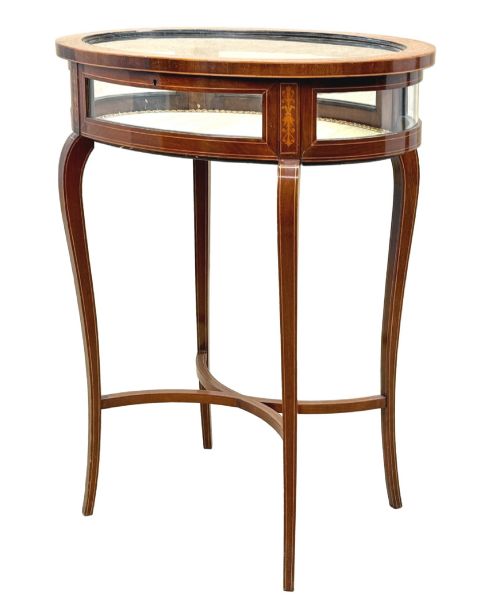
A mahogany curio display search brings up a range of glazed cabinets and glass-topped tables designed to show off small collectables. You will find upright display cabinets, bow-fronted vitrines, and tabletop bijouterie pieces.
The pieces on this page lean heavily towards the Edwardian era and the late nineteenth century. Alongside these, you meet earlier Georgian examples and revival styles drawing on French and English traditions.
Materials and construction
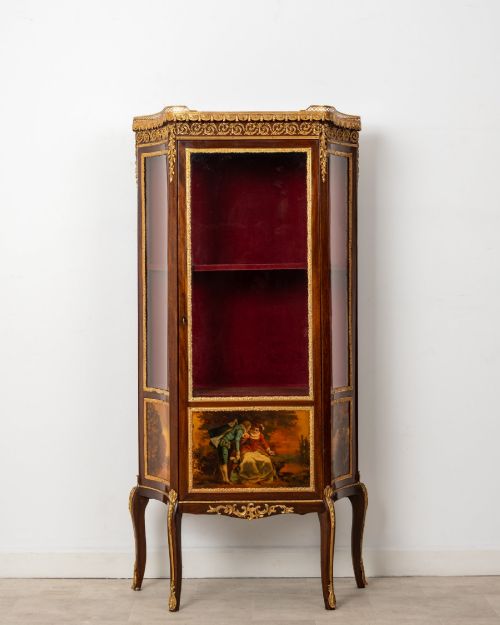
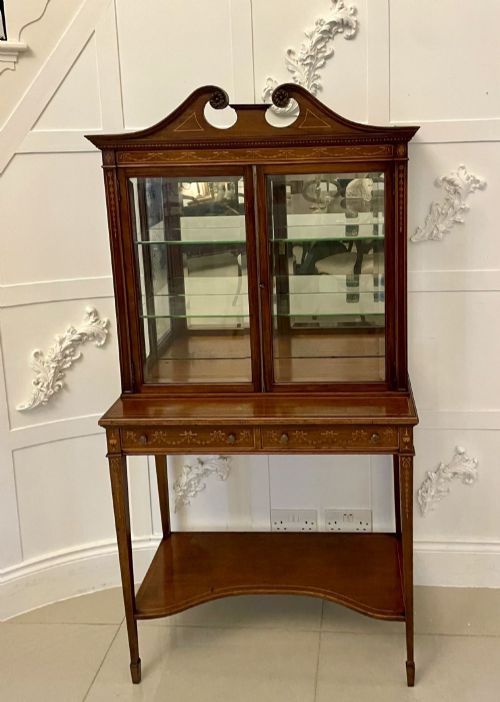
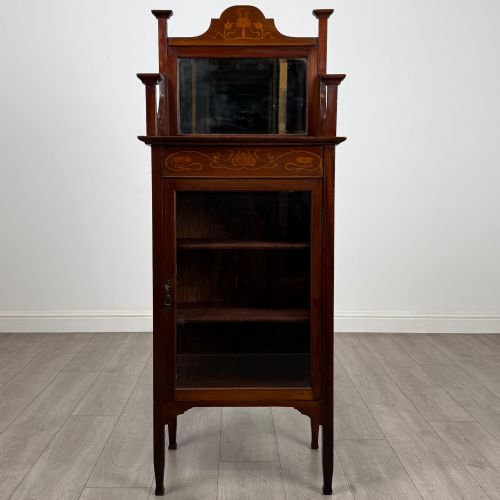
Makers utilised solid and veneered mahogany as the primary timber, often framing the structure with glazed doors and panels. Satinwood, marquetry inlay, and fabric or velvet linings add contrast to the interior display space.
Metal mounts in brass and ormolu decorate French and English pieces alike. Glass forms the shelves and viewing surfaces, sometimes paired with mirrored backs to reflect light through the interior.
Some tables were built shallow enough to display only the flattest family secrets.
Assessing the pieces
The distinction between ordinary and exceptional pieces lies in the crispness of the carving, the finesse of the marquetry, and the selection of figured mahogany. Cabinets with serpentine fronts or complex curved glass demand greater joinery skill than flat-sided carcases.
Hardware and mounts also separate the tiers of manufacture. Finely chased ormolu and robust brass fittings indicate a workshop that spent more time on the finishing details.
Edwards and Roberts·Shapland and Petter·François Linke
The Mahogany Curio Display Glossary
- Bijouterie table
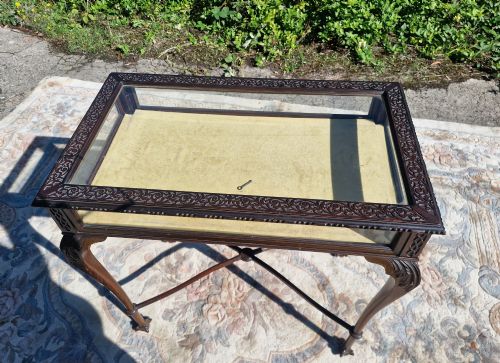
- A glass-topped display table designed for holding small items of jewellery and trinkets. These tables often feature hinged lids lined with velvet.
- Vitrine
- A glass cabinet used specifically for displaying porcelain, curios, and objets d'art. The term comes from the French word for glass.
- Vernis Martin
- A type of simulated Japanese lacquer popular in eighteenth-century France and copied in later revival furniture. It uses resin-based varnishes to create luminous painted scenes on the cabinet body.
- Marquetry
- Decorative woodwork where pieces of contrasting veneer form intricate patterns and pictures. It is frequently seen on Edwardian cabinet doors and table tops.
- Ormolu
- Gilt bronze mounts applied to furniture for decoration. High-quality examples are hand-chased after casting to sharpen the detail.
Mahogany Curio Display: Frequently Asked Questions
What is a bijouterie table?
A bijouterie table is a low display piece with a glazed top designed for viewing small collectables from above. They were traditionally placed in drawing rooms for guests to inspect rings, medals, and miniatures.
Most examples open via a hinged lid, often revealing a velvet-lined interior floor. Their legs are frequently slender, matching the lighter aesthetic of the Edwardian period.
How do I light a display cabinet?
Traditional cabinets relied entirely on ambient room light passing through glass sides and doors. Placing them perpendicular to a window allows daylight to flood the interior shelves.
Modern LED strip lights can be discreetly installed inside the top frame if extra illumination is required. Ensure any added lighting generates minimal heat to protect delicate antique contents.
Where should I place a vitrine?
Vitrines work best away from direct sunlight and heat sources to prevent timber from drying out and fabrics from fading. A stable internal wall in a drawing room or study offers the safest environment.
Because these cabinets often feature delicate legs or glazed sides, choose a spot where they will not be bumped by foot traffic.
How do I care for mahogany?
Mahogany benefits from dusting with a soft, dry cloth and occasional treatment with quality beeswax to nourish the timber. Avoid silicone sprays and excessive moisture, which can damage polished surfaces.
Keep the room humidity relatively stable to prevent the wood from expanding or contracting, which can stress the glass joints.