


Vintage Glass Pedestal Stand
These vintage glass pedestal stand pieces bring height and presence to a room, offering a distinct way to display objects or serve food.
Vintage Glass Pedestal Stand
When you search for a vintage glass pedestal stand, you encounter elevated vessels and tazze from periods spanning the eighteenth century through to the Edwardian era. These pieces generally feature a raised foot supporting a shallow bowl or flat top, designed to elevate items.
The selection includes examples from the nineteenth century and around 1900, alongside related display objects. They appear in clear glass and etched designs, often decorated with motifs such as grapevines.
How they were made
The evidence shows construction utilising glass, alongside supportive structures of brass, mahogany, and satinwood in related pieces. Items often incorporate decorative elements like gold leaf and etching.
Makers shaped the glass into tazze and candlesticks, utilising moulding and free-blowing techniques alongside surface engraving.
Some items carry patent designs, proving that Victorians loved securing a clever mechanical improvement just as much as a pretty bowl.
What varies in quality
Quality rests in the crispness of the glass etching and the depth of the decorative motifs, such as grapevine patterns. Heavier, clearer metal content in the glass indicates a finer piece.
The proportion between the pedestal foot and the upper tray dictates the overall elegance. Superior examples maintain balanced weight distribution and clean lines throughout.
The Vintage Glass Pedestal Stand Glossary
- Tazza
- A shallow bowl or plate mounted on a pedestal foot, used historically for serving food or displaying items. These pieces date from the eighteenth century to around 1900.
- Edwardian
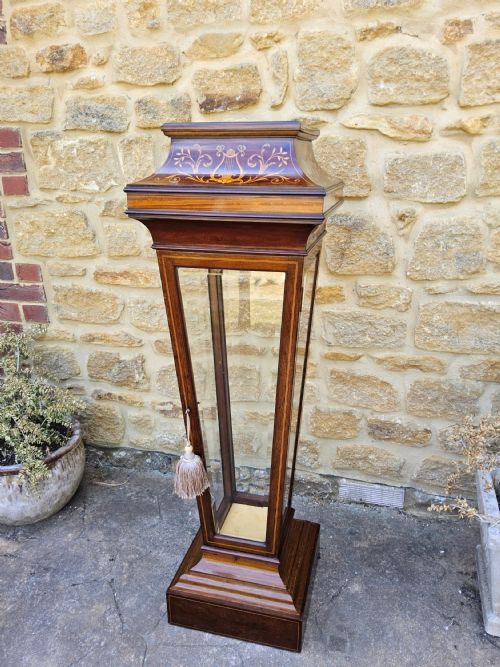
- A stylistic period spanning the reign of King Edward VII, noted here through inlaid mahogany and floor-standing pieces. Objects from this time often show lighter proportions than Victorian designs.
- Victorian
- The period of the reign of Queen Victoria, represented by patent lighting and glassware. Pieces from this era display diverse revival styles.
- Etched glass
- Glass decorated by applying acid to create frosted patterns beneath the surface. This technique produces detailed ornamentation like grapevine designs on tazze.
Vintage Glass Pedestal Stand: Frequently Asked Questions
What is a tazza?
A tazza is a small pedestal plate or shallow bowl raised on a foot. They serve to elevate items for display or dining.
Examples on this site range from eighteenth-century items to pieces from around 1900.
How old are these glass stands?
The pieces span multiple centuries, including eighteenth-century items, Victorian pieces, and Edwardian examples.
Dates are established through stylistic evidence and historical markers associated with the makers.
How do I clean antique glass?
Wash glass items gently in lukewarm water using mild soap. Avoid harsh abrasives that might damage etched surfaces.
Pat dry with a soft cloth to preserve the clarity of the material.
Where were these pieces used?
These items functioned in domestic settings for serving food, holding candles, or displaying valued objects. They sat on dining tables, sideboards, or countertops.
Their elevated design helped save surface space while adding height to a room.