
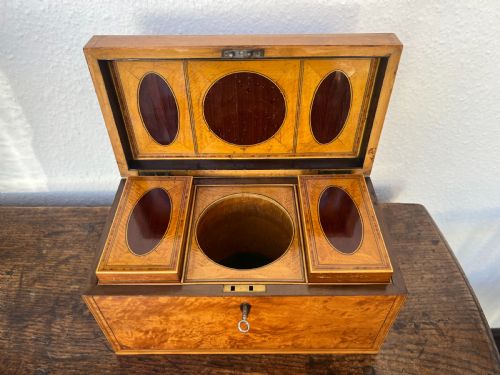
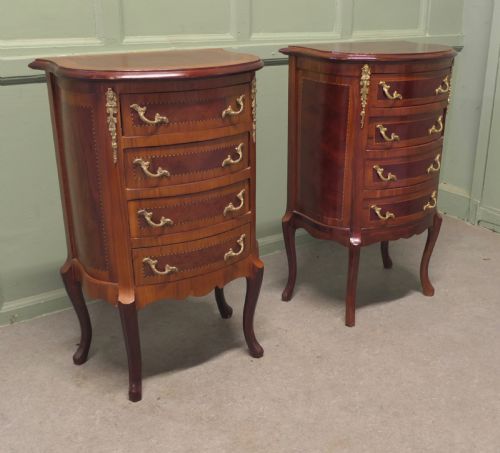
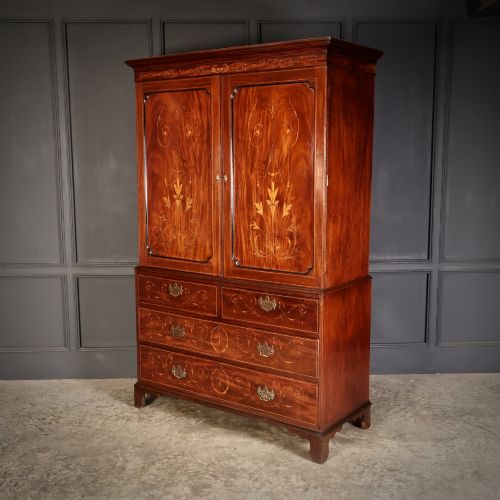
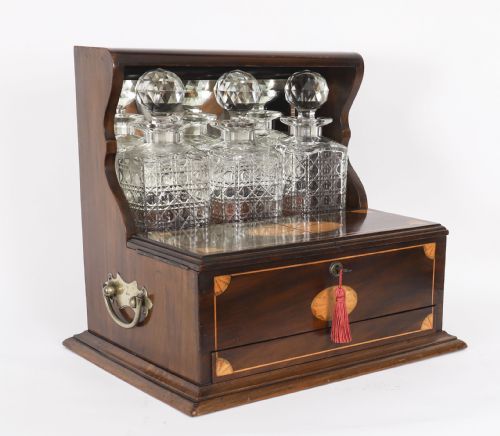
Marquetry Mahogany Chest
A marquetry mahogany chest brings together rich timber and intricate floral or pictorial inlay across Georgian, Victorian, and Edwardian forms.
Marquetry Mahogany Chest
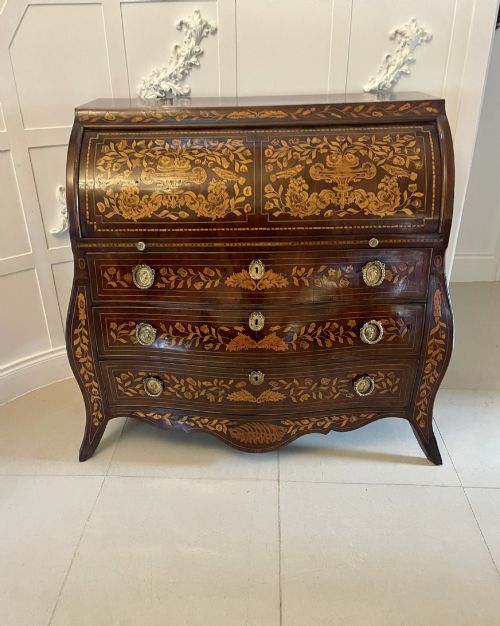
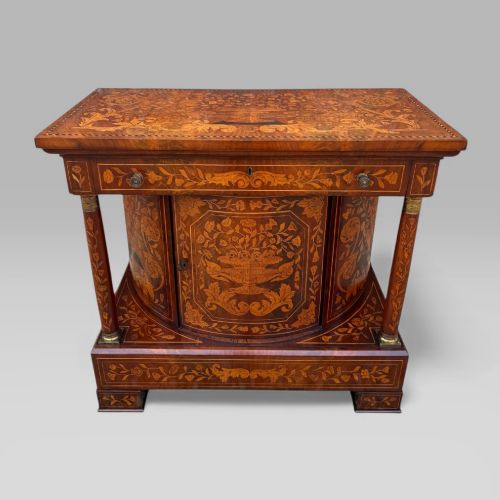
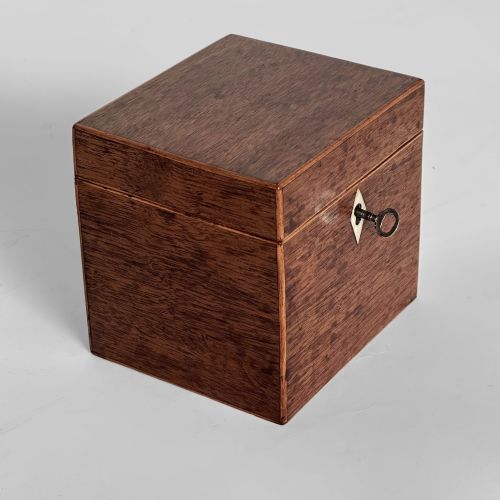
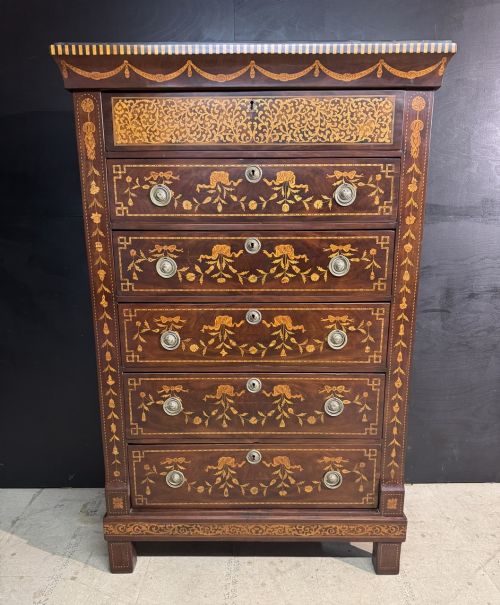
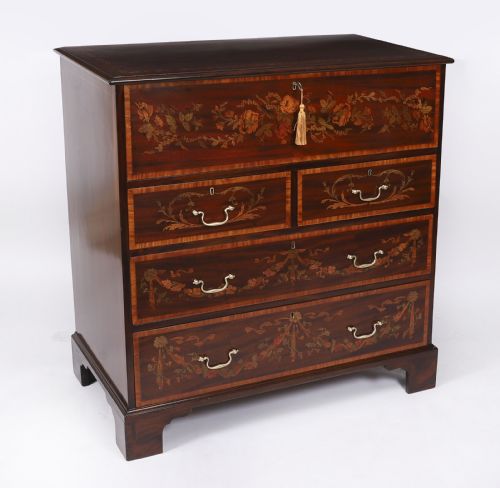
When searching for a marquetry mahogany chest, buyers encounter a variety of storage forms spanning the eighteenth, nineteenth, and twentieth centuries. These pieces range from tall chests of drawers and commodes to bedside cabinets and bureau cabinets, originating from British workshops as well as Dutch and French makers.
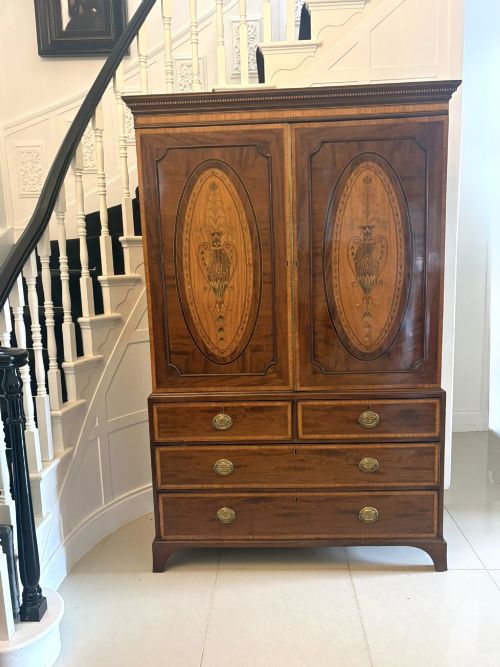
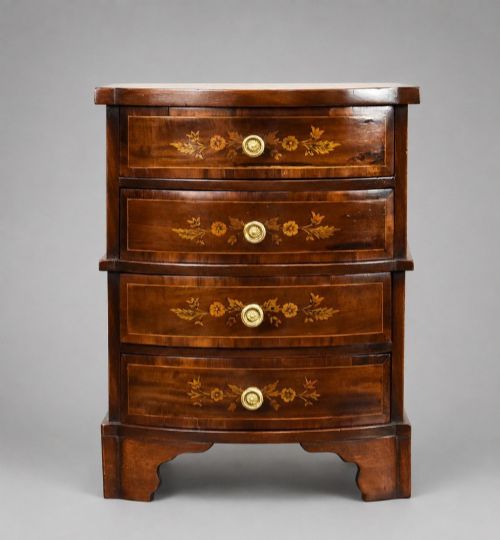
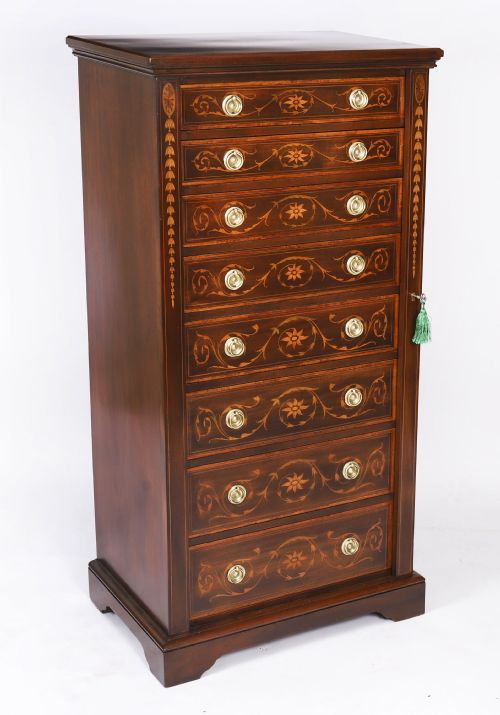
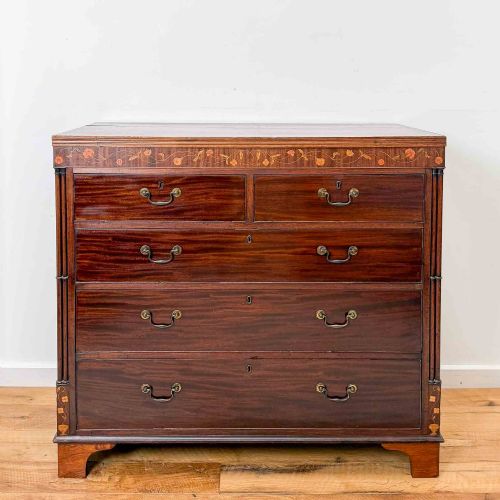
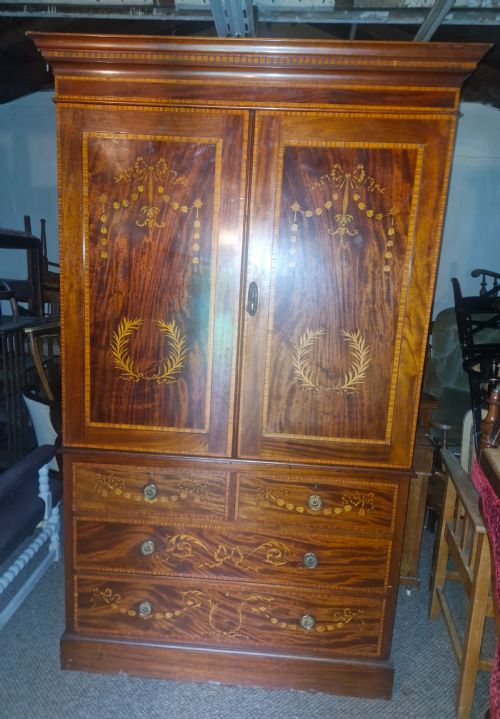
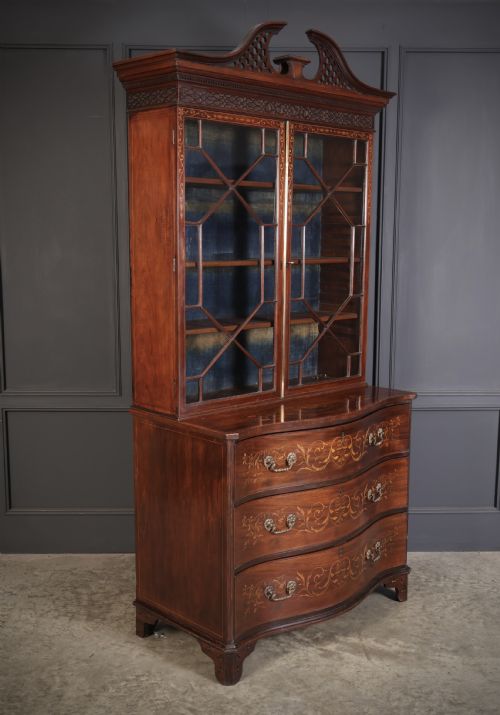
The version most commonly met on this page is the chest of drawers, often featuring satinwood, boxwood, or fruitwood floral inlay set into a solid mahogany carcass. Alongside standard chest formats, variations include bureau bookcases, linen presses, and serpentine or bombe shapes dating from Georgian to Edwardian periods.
How they were made
Construction relies heavily on solid mahogany and mahogany veneers applied to secondary timbers, providing a stable dark ground for decorative work. Cabinet makers utilised contrasting woods such as satinwood, boxwood, and fruitwood to form intricate marquetry patterns.
Inlay techniques involve cutting delicate floral, scroll, or pictorial motifs from thin sheets of contrasting timber and fitting them precisely into recesses carved into the mahogany surface. Brass hardware, glass elements, and occasionally gilt bronze mounts complete the construction of these cabinets and chests.
Listings feature mahogany chests incorporating satinwood, boxwood, and fruitwood inlay across Georgian, Victorian, and Edwardian periods.
What varies in quality
Quality in these pieces depends largely on the precision of the marquetry and the choice of timbers used for the inlay work. Finer examples display tight, crisp floral or pictorial details with minimal filler, whereas lesser pieces show simpler or more repetitive geometric patterns.
The architectural integrity of the carcass and the crispness of the drawer linings separate standard production from superior cabinet making. Well-executed Dutch floral marquetry or crisp Georgian satinwood banding commands attention through balanced proportions and careful timber selection.
J Shoolbred·Druce & Co·Edwards & Roberts·Keeble London·Jean Henri Riesener
The Marquetry Mahogany Chest Glossary
- Marquetry inlay
- Decorative patterns formed by fitting small pieces of veneer into a prepared surface. This technique allows cabinet makers to create complex floral and pictorial designs.
- Satinwood
- A durable, yellowish timber native to India and Ceylon. It provides a bright contrast against darker mahogany in stringing and panel details.
- Bombe
- A swollen or bulging convex shape found on the front and sides of certain chests and commodes. This French-influenced form requires advanced woodworking skill.
- Linen press
- A tall piece of furniture featuring upper sliding trays enclosed by doors and lower drawers. These cabinets were traditionally used for storing folded textiles.
- Serpentine front
- A furniture front curving inward centrally and outward at the sides. This fluid shape demands precise cutting and fitting of wood veneers.
Marquetry Mahogany Chest: Frequently Asked Questions
How do I date a mahogany chest?
Dating relies on examining construction methods, drawer linings, and the style of the hardware and feet. Earlier eighteenth-century pieces often feature hand-cut dovetails and distinct timber patination compared to later Victorian or Edwardian examples.
Secondary woods and the complexity of the marquetry inlay also offer clues to the period of manufacture. Georgian chests tend to display restrained satinwood stringing, whereas Dutch and Continental pieces often feature dense floral marquetry.
Where should I place a marquetry chest?
These chests serve as focal points in drawing rooms, hallways, or bedrooms where their inlaid surfaces can be fully appreciated. Keep them away from direct sunlight and strong heat sources to protect the delicate veneer and timber.
Positioning the chest against an interior wall helps maintain stable humidity levels around the antique wood. Avoid placing damp items directly onto the polished mahogany top.
What is the difference between marquetry and inlay?
Inlay generally involves inserting pieces of wood into a solid cavity carved directly into the furniture carcass. Marquetry is a broader picture-building technique where entire veneer assemblies are cut together and applied to the surface.
Both methods decorate the mahogany ground with contrasting timbers like boxwood and fruitwood. Marquetry specifically allows for pictorial scenes and elaborate floral arrangements across drawer fronts.
How do I care for inlaid furniture?
Maintain the finish by dusting gently with a dry, soft cloth and occasionally applying traditional beeswax. Avoid modern silicone sprays or harsh chemical cleaners that can damage the antique polish.
Protect the surface from moisture by using coasters under any decorative objects placed on top. Consistent indoor humidity prevents the mahogany and its delicate marquetry from shrinking or warping.